



Victorian Toilet Bottle
These Victorian toilet bottle items are the glass scent containers and silver-topped jars that populated nineteenth-century dressing tables and travel cases, offering functional elegance for the boudoir.
Victorian Toilet Bottle
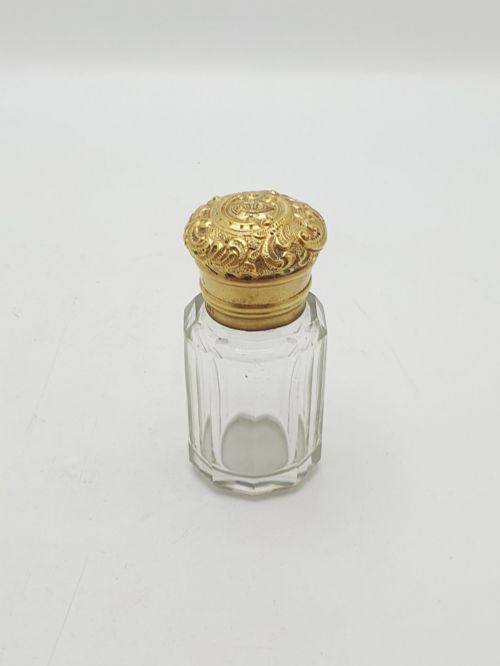
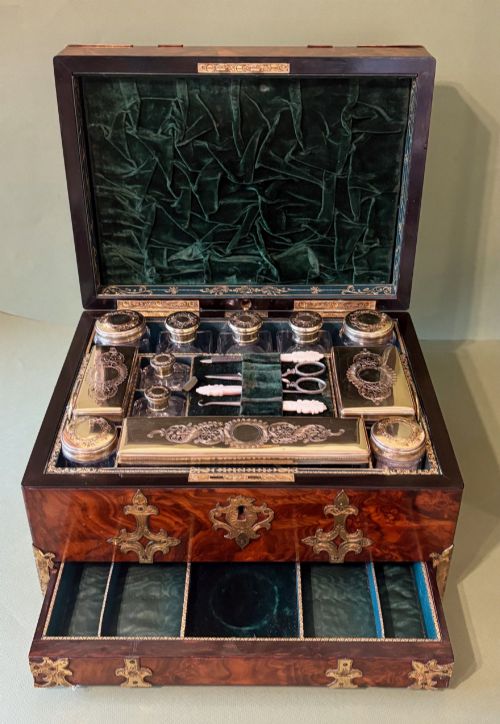
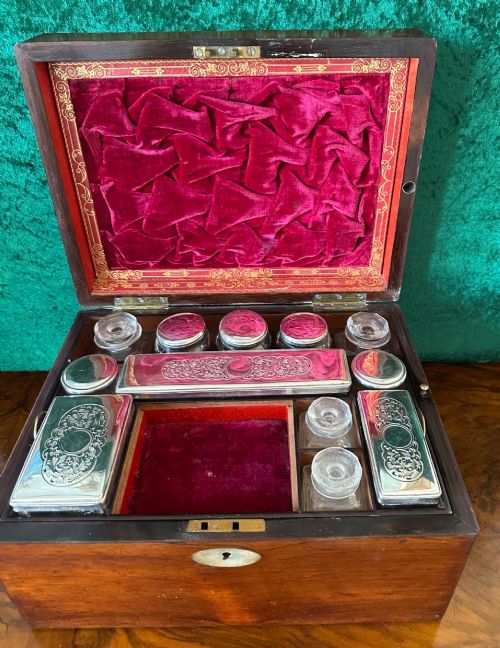
A Victorian toilet bottle encompasses the various glass scent bottles, cologne containers, and vanity jars that populate nineteenth-century dressing table sets and travelling cases. Buyers searching for a victorian toilet bottle will encounter standalone perfume flasks alongside those housed within fitted coromandel and burr walnut dressing boxes.
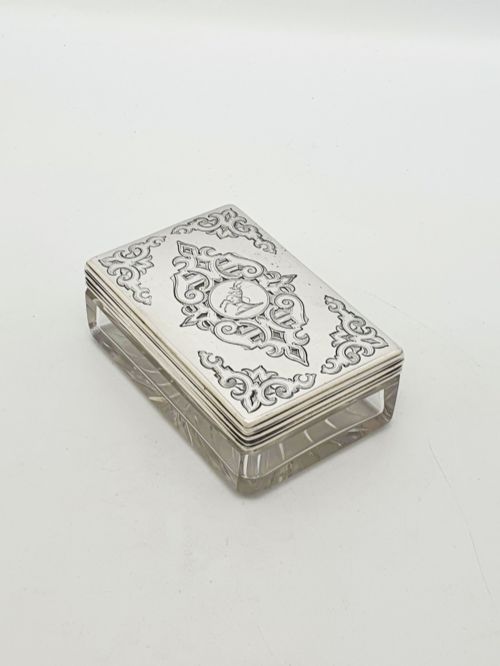
The selections span the nineteenth century, taking the form of tall vanity jars with solid silver tops or cut glass perfume bottles accompanied by velvet interiors. These containers served a practical domestic purpose for storing cosmetics and fragrances during the Victorian era.
Materials and construction
Makers utilised heavy cut glass and crystal, often shaped with deep facets that catch the light on a dressing table. These glass bodies are frequently paired with solid sterling silver mounts, screw caps, or hinged lids.
Wooden cases utilise exotic timbers like coromandel and burr walnut, lined internally with velvet to secure the glass bottles and trays. Metalwork involves cast and chased silver alongside brass hardware for locks and hinges.
Victorian Toilet Bottle Retail Price Guide 2026
Typical asking prices for victorian toilet bottle among the pieces listed under this phrase on Sellingantiques today, from the lower quarter to the upper quarter. They describe what is for sale here now, not the wider market.
The listings on this page span the nineteenth century, incorporating materials such as cut glass, sterling silver, coromandel wood, and velvet.
Assessing quality
Quality rests in the weight and depth of the glass cutting, alongside the thickness and purity of the sterling silver mounts. Finer examples display crisp hallmarks and precise fitting within elaborate wooden travel cases.
The distinction between standard containers and superior pieces lies in the integration of materials, such as matched Clichy glass components and fully appointed velvet compartments designed for travelling.
Asprey
The Victorian Toilet Bottle Glossary
- Coromandel
- A dense, heavily grained dark timber imported from Asia, frequently used for luxury Victorian vanity and jewellery cases. It provides a rich, polished surface that contrasts with silver mounts.
- Sterling silver
- An alloy containing ninety-two point five percent silver by mass, standard for the secure lids and collars fitted to nineteenth-century vanity bottles. Hallmarks stamped into this metal indicate the assay office and year of creation.
- Cut glass
- Glassware shaped by grinding and polishing wheels to create geometric patterns that refract light. This technique adds substantial weight and brilliance to perfume flasks and dressing table jars.
- Vanity case
- A portable fitted box designed to hold glass bottles, jars, and grooming implements during travel. These pieces often feature secret drawers and velvet-lined compartments.
Victorian Toilet Bottle: Frequently Asked Questions
What is a Victorian toilet bottle?
A Victorian toilet bottle is a glass container used for perfumes, colognes, or cosmetics during the nineteenth century, often featuring a metal screw cap or hinged lid. These items formed part of larger dressing sets or fitted travelling cases.
They sat upon dressing tables or travelled inside luxury boxes lined with velvet and fitted with exotic woods like coromandel.
How were these bottles used?
Owners used them to store and dispense liquid scents, oils, and powders for personal grooming and hygiene. The heavy glass and secure silver tops prevented evaporation and spilling during transit.
In domestic settings, they provided an ornamental function on dressing trays alongside matching jewellery boxes and trinket containers.
How do I clean the glass?
Warm soapy water and a soft bottle brush suffice for clearing dust from the interior of glass scent bottles. Avoid submerging silver-topped pieces entirely to protect cement adhesives inside the caps.
Dry the glass thoroughly with a lint-free cloth to restore the clarity of the cut facets.
How can I date a piece?
Sterling silver mounts often bear hallmarks that indicate the specific assay office and year of manufacture. Stylistic clues such as the depth of glass cutting and the choice of wood veneer also point to specific decades within the Victorian period.