
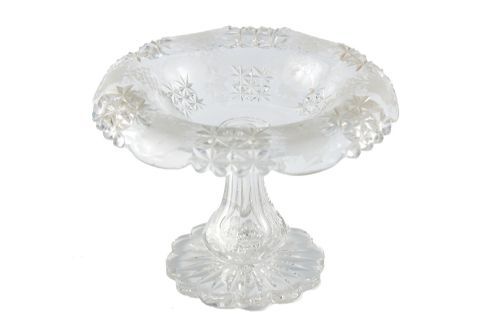


Victorian Glass Compote
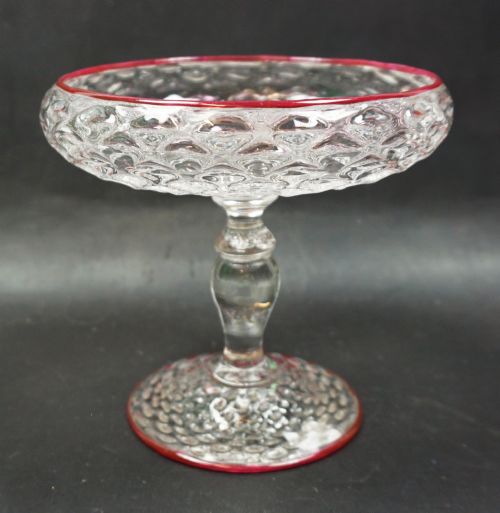
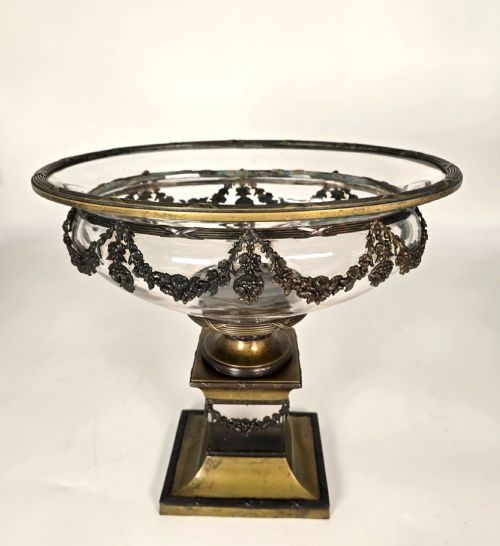
These victorian glass compote pieces bring high-relief sparkle and height to a table, combining clear or coloured glass with bronze mounts and silver plate.
Victorian Glass Compote
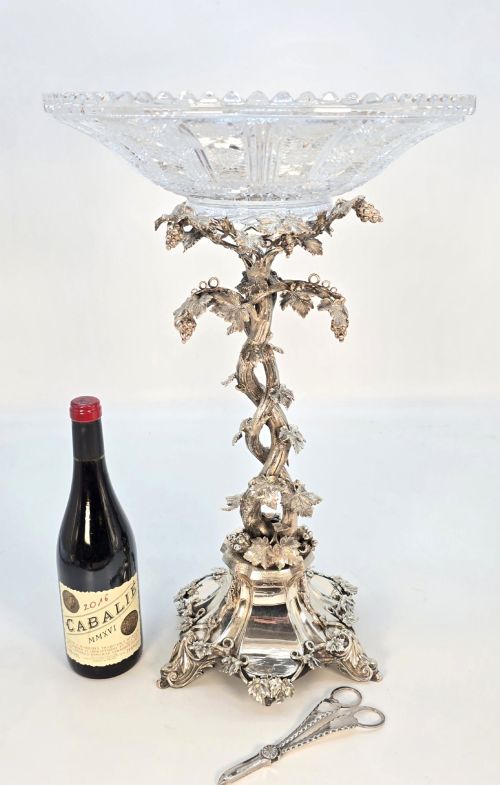
A victorian glass compote takes the form of a raised pedestal bowl, tazza, or table centrepiece designed to hold fruit or sweetmeats. The versions met on this page span the nineteenth century and into the early twentieth century, originating from English, French, and Bohemian workshops.
The materials range from clear cut crystal and lead crystal to coloured glass in ruby, green, cranberry, and yellow. Many pieces incorporate silver plate, gilt bronze, or gold leaf mounts, alongside cut, etched, moulded, and hand-blown techniques.
Materials and construction methods
Glass production relies on blowing and moulding, followed by wheel-cutting and acid etching to create facets and surface patterns. Lead crystal provides the weight and refractive clarity seen in the heavier pedestal bowls.
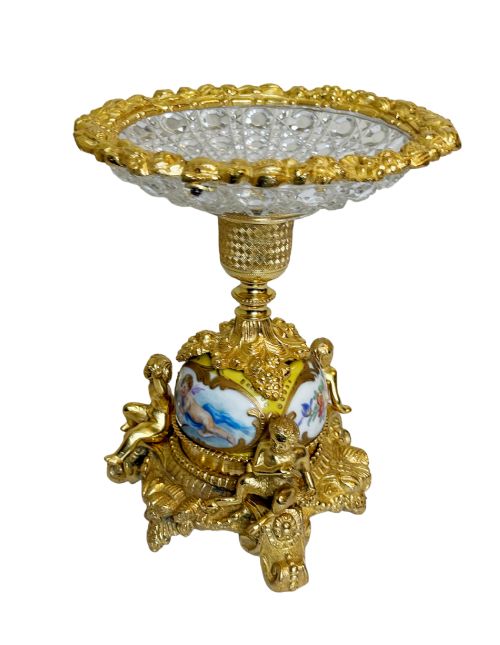
Metal mounts in silver plate and gilt bronze attach to the glass bodies, frequently employing cast figures like cherubs or structural pedestal stems to support the heavy crystal bowls.
Several pieces feature winged cherubs perched directly beneath heavy crystal bowls, keeping watch over the fruit.
Distinctions in quality and finish
Depth and crispness of the wheel-cut facets separate standard moulded items from deeply carved crystal. Sharp lines in the glass and substantial weight indicate finer material composition.
The integration of metal mounts defines the upper tier of these pieces. Cast gilt bronze and fitted silver plate with secure mechanical joints show greater workshop investment than simple glass pressings.
The Victorian Glass Compote Glossary
- Tazza
- A shallow bowl on a raised pedestal, often used for serving fruit or sweets. It forms one of the principal shapes found among these compotes.
- Centrepiece
- A large decorative vessel placed in the middle of a dining table. These often feature elaborate silver-plated or bronze bases supporting cut crystal bowls.
- Lead crystal
- Glass containing lead oxide that increases refractive index and weight. This material allows for deeper, sharper facet cutting.
- Gilt bronze
- Bronze coated with a thin layer of gold, providing a stable, decorative metal mount. It appears frequently on French and English pedestal bowls.
Victorian Glass Compote: Frequently Asked Questions
What is a glass compote?
A glass compote is an elevated bowl on a stem, historically used for serving fruit, compotes, or confectioneries at the dining table.
These pieces combine decorative height with practical serving capacity, often functioning as the main decorative focal point for a room.
How do I date a glass compote?
Dating relies on stylistic clues, cutting techniques, and the materials used for mounts and bases. Pieces span the mid nineteenth century through the Edwardian period.
Examining the pontil mark, wear on the base, and the depth of the glass cutting helps narrow down the decade of manufacture.
Where were these glass compotes made?
Production centres primarily in England, France, and Bohemia during the nineteenth century. Each region utilised distinct glass colouring and mounting styles.
English makers often paired cut crystal with silver plate, while continental workshops favoured gilt bronze and coloured overlay glass.
How do I care for antique glass?
Wash antique glass by hand in lukewarm water using a mild detergent, avoiding sudden temperature changes to prevent cracking. Dry promptly with a soft linen cloth to maintain clarity.
Take care around silver-plated or gilt bronze mounts, keeping moisture away from metal joints and antique patination.