


19th Century Glass Tazza
A 19th century glass tazza brings tiered height and sparkling display to a table, offering both decorative presence and practical service.
19th Century Glass Tazza
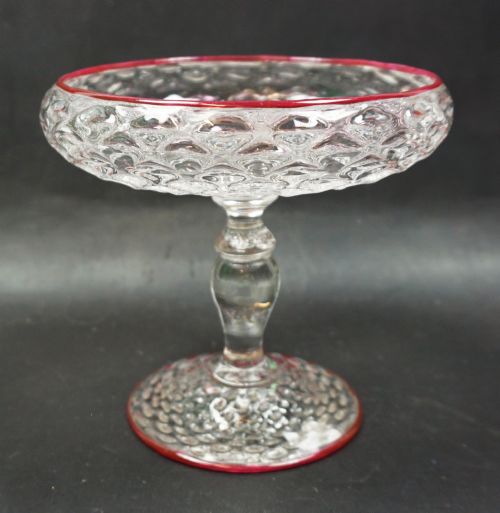
A 19th century glass tazza stands on a central foot, raising bowls and dishes above the surface for fruit or display. The form appears across the Victorian and Georgian eras, often combining glass bowls with metal mounts.
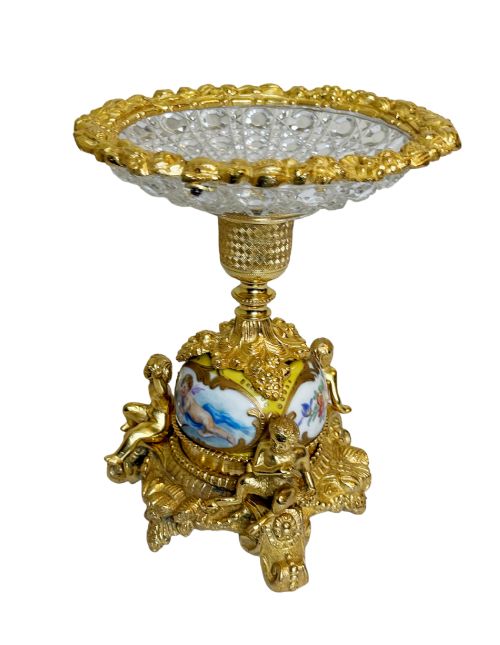
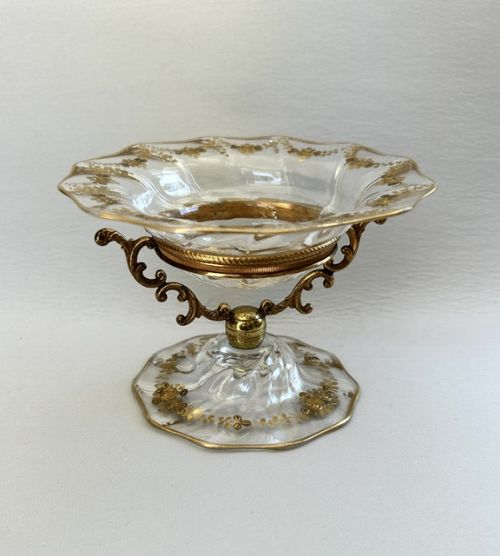
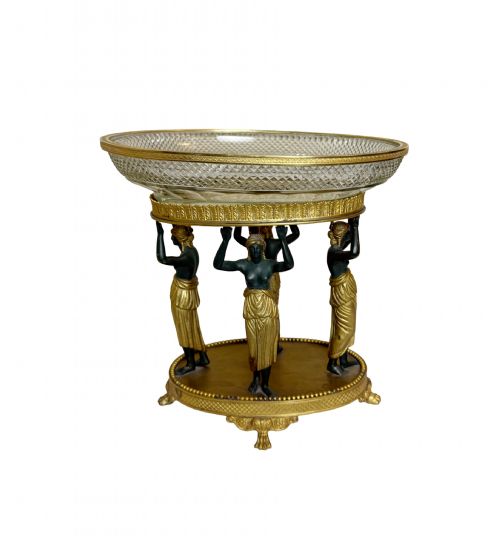
Most examples combine clear or coloured glass with bronze, ormolu, or silver plate. English and French makers produced these footed dishes in various scales, from intimate sweetmeat stands to grand table centrepieces.
How they were made
Glass production relied on blowing, moulding, and cutting techniques to create honeycombed textures, crackle effects, and sharp crystal facets. Etched decoration and applied canes added colour and pattern to the bowls.
Metal components involved cast bronze and ormolu, sometimes gilt or patinated, shaped into cherubs, mermen, or structural stands. These metal mounts were secured to the glass bowls with threaded rods and pins.
Some nineteenth-century glass tazzas feature startled glass snakes coiled defensively around the stem, proving that Victorian table service had a wild side.
What varies in quality
The refinement of the casting in the bronze or ormolu mounts separates standard pieces from finer examples. Crisp detailing in figures like cherubs and mermen indicates careful hand-chasing after casting.
Glass quality depends on the clarity of the crystal, the precision of the wheel-cut facets, and the integrity of applied elements like coloured canes and snakes. Heavier metal weight and secure structural integration elevate the standing of the piece.
The 19th Century Glass Tazza Glossary
- Tazza
- A shallow bowl or plate mounted on a stem and foot. This elevated serving vessel dates back centuries and became popular for dessert displays in the nineteenth century.
- Ormolu
- Gilded bronze used widely in French and English decorative metalwork. The technique involves applying a mercury-gold amalgam to cast bronze.
- Vaseline glass
- Uranium glass that exhibits a distinct yellowish-green fluorescence under ultraviolet light. It gained popularity during the nineteenth century for decorative tableware.
- Centrepiece
- A large decorative object placed in the middle of a dining table. Nineteenth-century examples often combined glass tazzas with elaborate bronze or silver-plated stands.
19th Century Glass Tazza: Frequently Asked Questions
What is a 19th century glass tazza used for?
These elevated dishes originally served fruit, sweetmeats, or small cakes during formal nineteenth-century dining. Today, they function primarily as decorative centrepieces or display items on sideboards and tables.
Their raised profile adds vertical interest to a room while reflecting light through cut crystal or coloured glass.
How do I tell French and English tazzas apart?
French examples often incorporate elaborate ormolu or patinated bronze mounts featuring figural work like cherubs or mermen. These reflect French styles such as Rococo Revival and Empire.
English pieces tend to focus on the glass itself, showcasing cut crystal, etched lead glass, or honeycomb moulding with simpler silver plate or ceramic supports.
How should I clean a glass tazza with metal mounts?
Clean the glass portion gently with warm soapy water and a soft cloth, avoiding harsh abrasives that could damage etched or enamelled surfaces. Keep water away from metal mounts and older adhesives.
Dust bronze and ormolu parts with a dry, soft brush to preserve their patination and gilt surfaces without moisture damage.
What periods do these tazzas come from?
The pieces span the nineteenth century, covering Georgian beginnings through the Victorian era up to around nineteen hundred. Styles shift from early Grand Tour classical influences to later Victorian moulded and coloured glass.
Design motifs track through French Empire, Rococo Revival, and aesthetic movements of the eighteen-eighties and nineties.