


Victorian Red Rimmed Glass
Victorian red rimmed glass brings vibrant colour and distinct nineteenth-century craft into a room, offering striking decorative presence for any collector.
Victorian Red Rimmed Glass
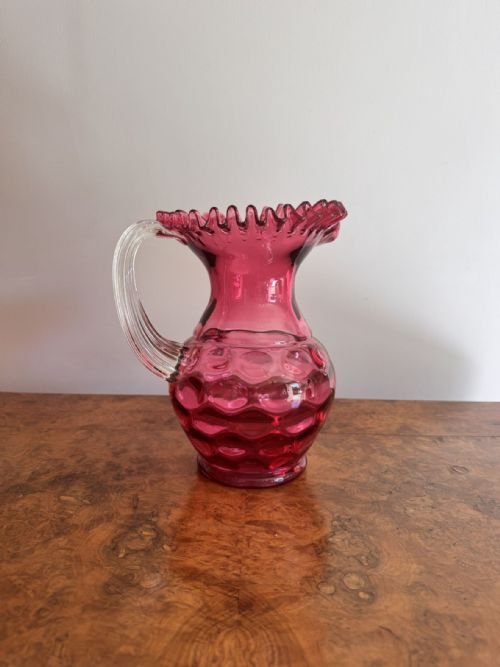
When you search for victorian red rimmed glass, you encounter a selection of nineteenth-century decorative glassware characterised by rich crimson and cranberry tones paired with clear, milk, or crystal glass. These items span domestic and display forms, bringing bold chromatic contrast to a cabinet or table.
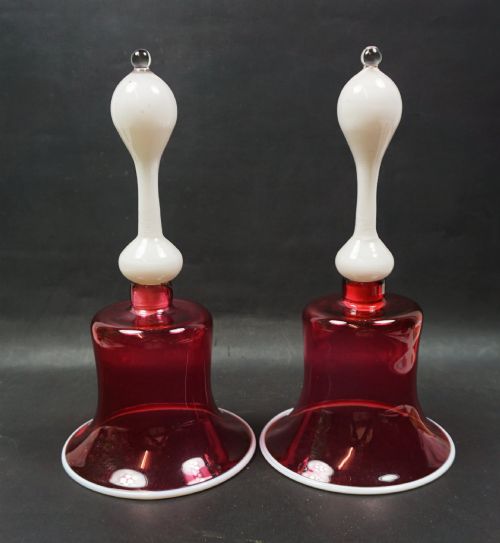
The objects on this page include vases, tazzas, decanters, jugs, bells, bonbon dishes, lampshades, and lustres originating from the nineteenth century, including specific dates around 1860, 1870, 1880, and 1900. Styles range from Victorian and Edwardian to Art Nouveau, often featuring applied white enamel, gold leaf, or multi-coloured cane decoration.
How these pieces were made
Makers utilised hand-blown glass, crystal glass, and milk glass techniques to shape vessels, utilising gold leaf and white enamel for surface embellishment. The incorporation of red cane decoration and moulded honeycomb patterns demonstrates traditional nineteenth-century glasshouse methods.
Vessels often combine distinct components, such as bells featuring white glass handles alongside crimson rims, or lustres hung with glass drops. The deep red coloration in cranberry glass relies on the addition of gold chloride to the molten batch during blowing.
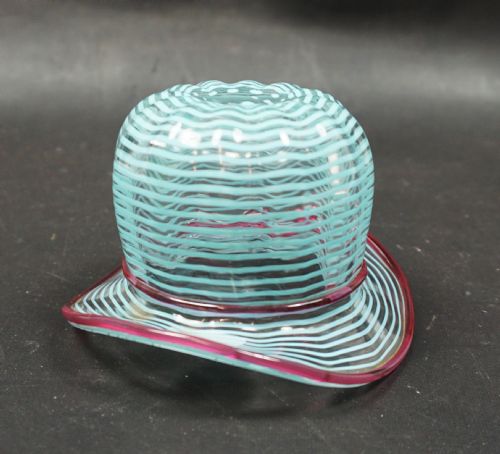
A glass hat from Nailsea preserves the playful whimsy of Victorian novelty glass, complete with delicate red and pale blue cane threads.
What varies in quality
The standard of a piece rests upon the crispness of the mould work, the precision of the applied red cane or enamel detailing, and the overall balance of the form. Hand-blown items display individual character through slight variations in wall thickness and pontil mark finishing.
Decoration such as hand-painted white enamel or gold leaf application distinguishes finer examples from simpler production. The clarity of the base metal, whether clear crystal, opaque milk glass, or rich cranberry, dictates the visual depth of the object.
The Victorian Red Rimmed Glass Glossary
- Cranberry glass
- A type of transparent red glass produced by adding gold to the molten batch. It forms the primary material for many nineteenth-century tablewares and decorative objects.
- Tazza
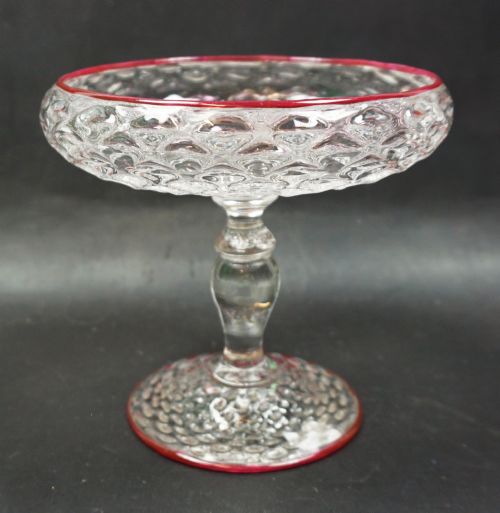
- An elevated shallow bowl or plate standing upon a central foot or pedestal. Used for serving sweets or displaying fruit.
- Lustre
- A decorative glass vase fitted with a matching set of hanging glass prisms or pendants. They reflect light and ornate colour around the room.
- Mary Gregory
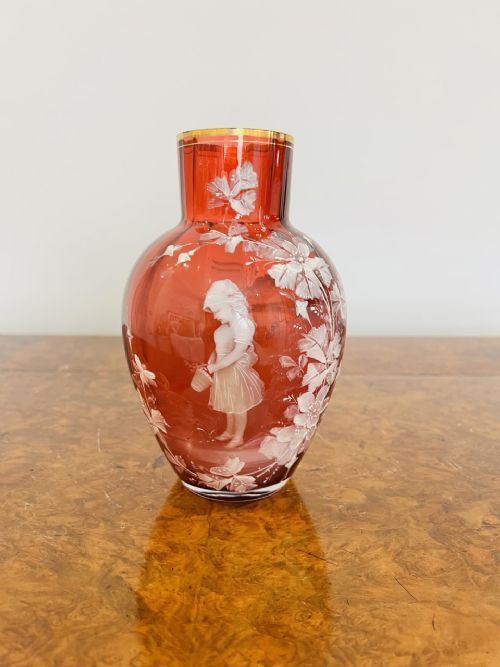
- A style of decorative glass featuring silhouette figures, usually children, painted in white enamel. Pieces typically depict natural scenes.
- Nailsea
- A style of glass associated with nineteenth-century English production noted for looped or threaded cane decoration. It frequently incorporates coloured glass strands within clear metal.
Victorian Red Rimmed Glass: Frequently Asked Questions
What is cranberry glass?
Cranberry glass is a transparent crimson glass created by introducing gold into the molten glass mixture. It became immensely popular during the nineteenth century for decorative tableware and display items.
This distinct red colour varies in shade from pale pinkish tones to deep ruby red, depending on the glasshouse recipe and the quantity of gold used.
How were glass lustres used?
Glass lustres served as decorative mantelpiece ornaments rather than functional vases for holding water and fresh stems. Their purpose was purely aesthetic.
Pendants hung from the rim catch and refract ambient candlelight or daylight, adding a sparkling visual display to nineteenth-century parlours.
How do I identify a tazza?
A tazza is an ornamental shallow dish or saucer supported by a central stem and a wide foot. It resembles a pedestal plate.
In nineteenth-century interiors, these pieces were placed on dining tables or sideboards to present small sweetmeats, bonbons, or seasonal fruit.
What is Mary Gregory glass?
Mary Gregory glass refers to glassware decorated with hand-painted white enamel silhouettes, typically depicting Victorian children amidst foliage or branches.
While often linked to an artist of that name, the style was produced by various English and American factories during the later nineteenth century.