



Clear Crystal Compote
These clear crystal compote pieces bring elevation and sparkle to a table, combining substantial footed pedestals with deep glass bowls for fruit and centrepiece displays.
Clear Crystal Compote
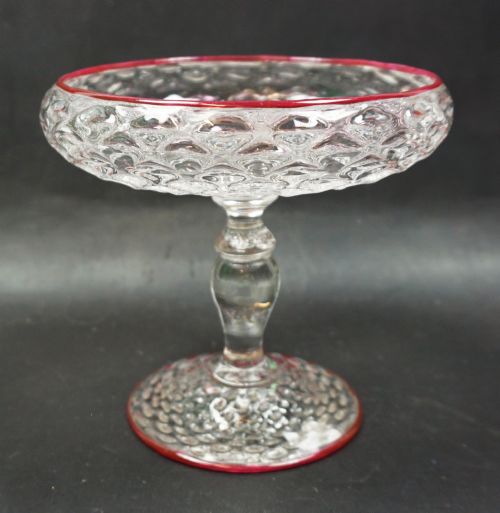
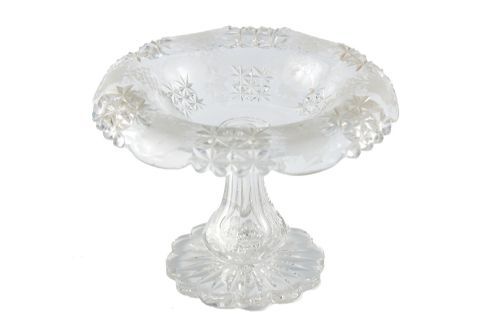
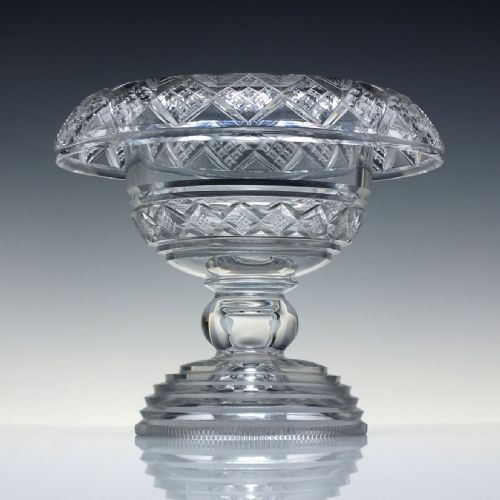
A clear crystal compote stands as a raised pedestal vessel designed to hold fruit, sweetmeats or floral arrangements on the dining table. The form appears across the Georgian, Victorian and Edwardian periods in various guises, ranging from small tazzas to large standing fruit bowls.
Most examples found here date from the nineteenth century into the early twentieth century, taking the shape of pedestals, comports and centrepiece bowls. They frequently feature deep bowls supported by thick stems and footed bases.
Origins stretch from traditional Irish glasshouses to English workshops, encompassing both plain blown glass and heavily faceted lead crystal. Buyers encounter everything from small individual dishes to monumental centrepieces meant for grand dining.
How they were made
Makers shaped these vessels through a combination of hand blowing into moulds and heavy wheel cutting. Craftsmen applied deep facets, hobnail patterns and linear fluting directly into the thick crystal walls.
Some pieces incorporate colour through cased glass techniques, layering yellow or red glass over clear crystal before cutting back to reveal the contrast. Pedestals and bowls were often formed separately and joined while hot before undergoing extensive hand polishing.
Listings feature clear crystal compote examples spanning the Georgian era through the Edwardian period, incorporating both lead crystal and cased glass.
What varies in quality
The weight and clarity of the metal dictate the baseline of quality, with high lead content producing greater refractive brilliance and heft. Superior pieces display crisp, deep wheel-cutting where the edges remain sharp to the touch.
Proportion and balance distinguish finer examples from standard production. A well-balanced pedestal bowl sits firmly on its foot, maintaining harmonious lines between the stem and the upper bowl without optical distortion in the glass.
Waterford
The Clear Crystal Compote Glossary
- Compote
- A raised bowl on a stem used for serving fruit or sweets at the table. It shares its function with the comport and the pedestal bowl.
- Tazza
- A shallow saucer or bowl mounted on a stem and foot. This Italian term denotes low, wide presentation vessels often used alongside taller compotes.
- Hobnail
- A raised, faceted pattern cut into the surface of glass resembling the hobnails on stout boots. It creates intense light refraction across the body of the bowl.
- Cased glass
- Glass made of two or more distinct layers of different colours. Cutting through the outer layer exposes the contrasting clear crystal underneath.
- Lead crystal
- Glass containing metallic lead oxide that increases the refractive index and weight. This material allows for deeper, sharper facet cutting.
Clear Crystal Compote: Frequently Asked Questions
What is a clear crystal compote used for?
These elevated vessels traditionally served fruit, preserves, or sweetmeats at the conclusion of a formal meal. Their raised profile kept dishes visible and accessible across a crowded dining table.
Today, they function well as standalone decorative centerpieces or practical containers for display on sideboards and tables.
How do I date an old crystal compote?
Dating relies on examining the weight of the metal, the style of cutting, and the formation of the base. Earlier Georgian and Regency pieces often feature heavier lead content and polished pontil marks on the underside.
Later Victorian and Edwardian examples frequently introduce machine-moulded elements or brighter, more uniform pattern repeats characteristic of industrial production.
Are these bowls made of lead crystal?
Many of the Victorian and Georgian examples utilise heavy lead crystal, which provides the substance required for deep wheel cutting. This material gives the glass its characteristic ring and heavy feel.
Some lighter nineteenth-century pieces employ standard clear glass or moulded crystal without the high lead content.
How do I clean an antique compote?
Wash these pieces gently in warm water using mild soap, avoiding sudden temperature changes that can crack old glass. A soft cloth prevents scratching the delicate surface and restores the shine.
Dishwashers should be strictly avoided, as heat and harsh detergents will permanently cloud antique crystal.