


Victorian Girl Picture
These pieces gather the Victorian girl picture from the nineteenth century and the Edwardian era, offering intimate windows into past childhoods.
Victorian Girl Picture
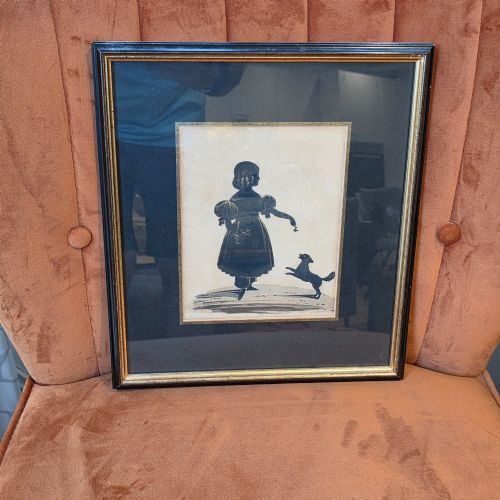
A victorian girl picture brings together framed artworks, oil paintings, watercolour paintings, and textile wall art created across the nineteenth century and into the early twentieth century. These works capture youthful subjects in various domestic, pastoral, and genre scenes, ranging from formal portraits to narrative depictions of daily life.
The selections on this page encompass diverse stylistic approaches including Victorian genre art, Victorian pastoral, and Victorian folk art. Pieces feature specific subjects such as girls with pets, children playing, and rural scenes like tending calves or feeding hens.
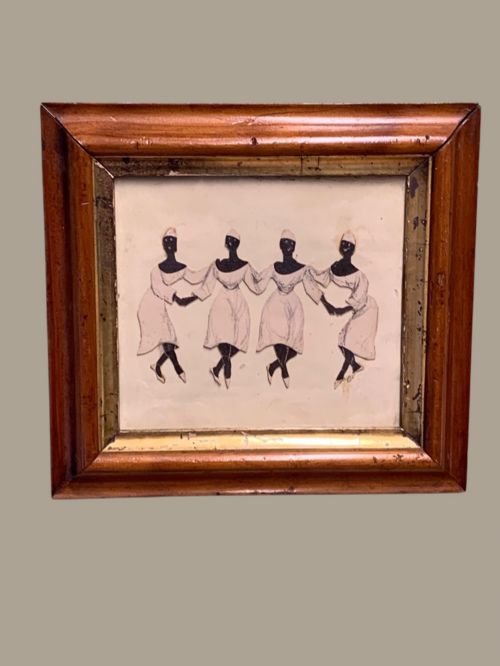
Origins span British studios and international subjects, reflecting both professional academic output and charming domestic craft. Buyers find everything from delicate cut paper and watercolor silhouettes to grand oil paintings and woolwork woolies.
How They Were Made
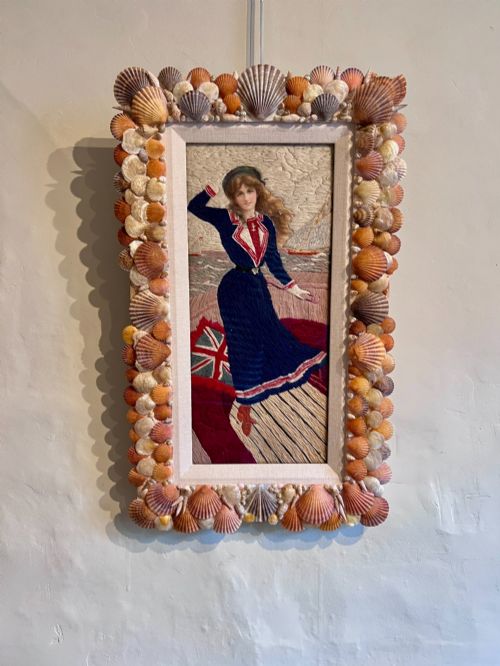
Artists and makers employed a rich variety of media including watercolour, oil paint, ink, and gouache applied to canvas or paper supports. Textile pieces utilise wool and gros point needlework, whilst specialised techniques like crystoleum involve hand-painting convex glass placed over a transparent print.
Framing utilised traditional materials such as wood and gold leaf to house these works securely. Collage work and cut paper silhouettes demonstrate the diverse manual skills practiced during the period.
Listings feature works spanning the nineteenth century, the Victorian era, and the Edwardian period, utilising media from wool and canvas to gold leaf.
What Varies in Quality
Execution and draughtsmanship distinguish standard decorative items from masterworks by recorded artists. The precision of brushwork in oil and watercolour, alongside the finesse of needlework stitching, determines the visual impact of the piece.
Condition of the original support, the retention of vivid pigments, and the integrity of period frames significantly influence the character of each work. Surviving provenance and attribution to known practitioners elevate the standing of individual examples.
William James Hubard·Charles Burton Barber·Joseph Kirkpatrick·Kathleen Winifred Molesworth·Fred Morgan·James Hughes Clayton·Thomas Mackay
The Victorian Girl Picture Glossary
- Crystoleum
- A technique popular in the late nineteenth and early twentieth centuries where a convex glass print was hand-coloured and backed to create a luminous image. This process required steady brushwork and exact alignment.
- Genre art
- Paintings that depict scenes from everyday life, often featuring ordinary people engaged in common activities. These works provide social historians with detailed records of period costume and custom.
- Gros point
- A needlepoint stitch executed on canvas, often creating durable pictorial textiles with a distinct tactile presence. It was frequently employed for domestic craft projects depicting pastoral or domestic subjects.
- Silhouette
- A portrait represented as a solid shape of a single colour, usually black, outlined or cut from paper. The form relies entirely on the outer profile to capture likeness.
Victorian Girl Picture: Frequently Asked Questions
What is a victorian girl picture?
A victorian girl picture is a historical artwork depicting young female subjects in oil, watercolour, textile, or print from the nineteenth or early twentieth century.
These pieces reflect the artistic conventions and domestic ideals of the period, ranging from studio portraits to narrative pastoral scenes.
How were these artworks displayed?
Period artworks were typically housed in wooden frames, sometimes accented with gold leaf, designed to protect the paper, canvas, or glass surface.
They hung in domestic parlours and sitting rooms as personal mementoes or decorative statements.
How do I care for antique watercolours?
Watercolour paintings and paper works require protection from direct sunlight to prevent the fading of delicate pigments.
Keeping them in stable environmental conditions away from excess moisture preserves the paper and mounting materials.
What distinguishes needlework from oil paintings?
Needlework pieces like woolies and gros point employ dyed threads stitched onto canvas to build up the image through texture and pattern.
Oil paintings rely on brushed pigments applied to canvas or panel, offering smoother gradations of tone and colour.
How can I tell the period of a framed print?
The framing materials, backing boards, and printing technology provide clues to the age of a piece.
Early twentieth-century items often exhibit specific framing styles and paper types distinct from mid-nineteenth-century examples.