
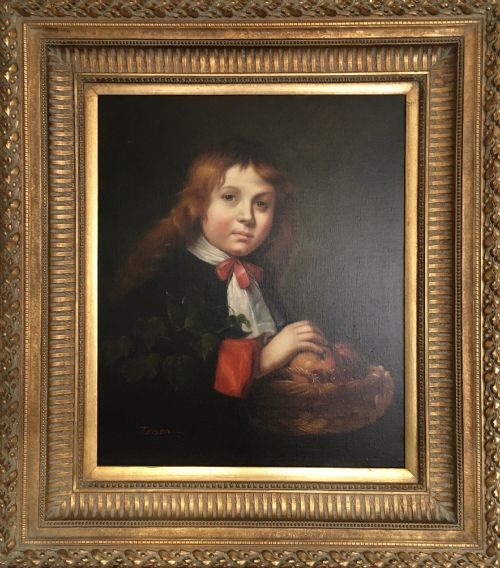
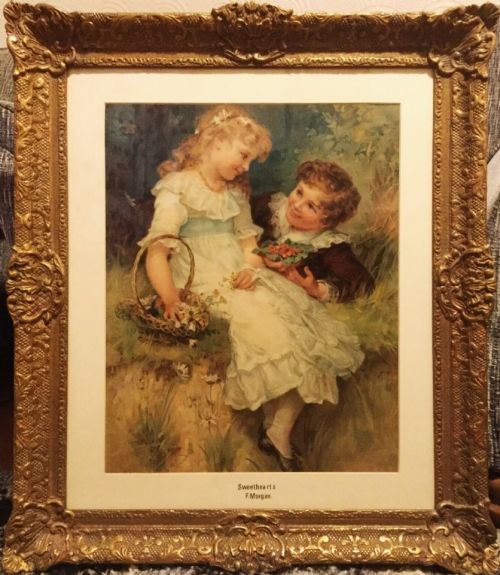
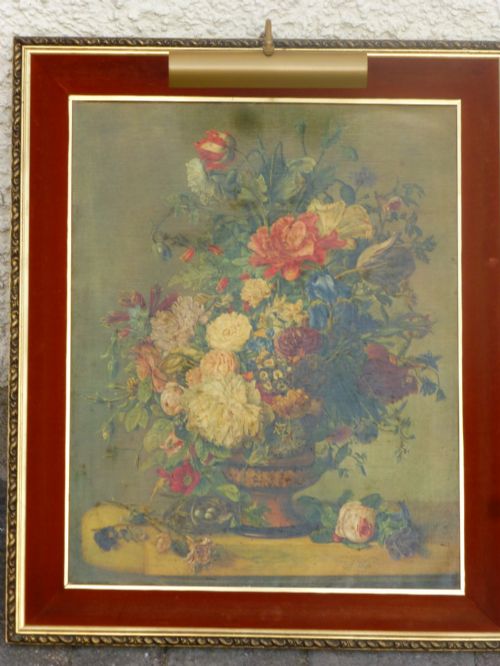
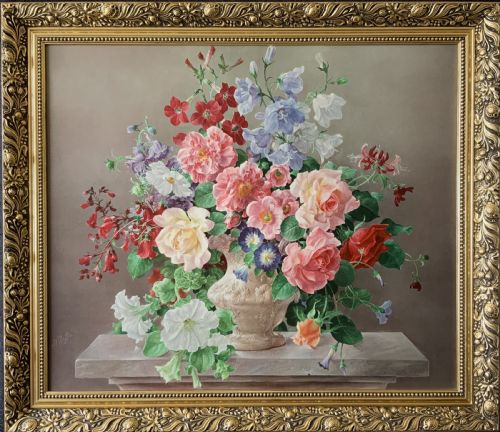
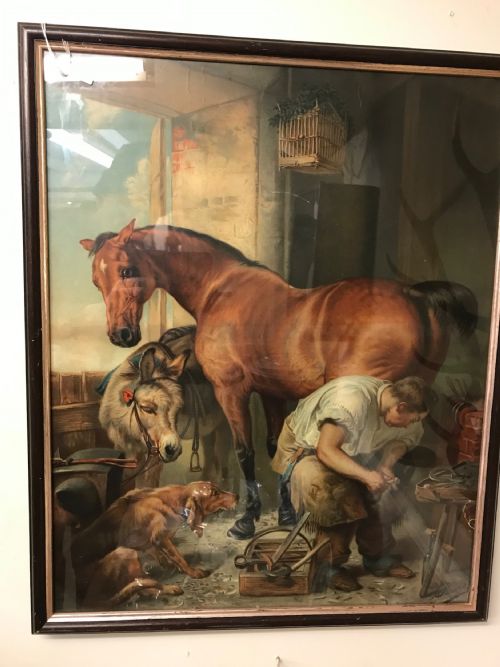
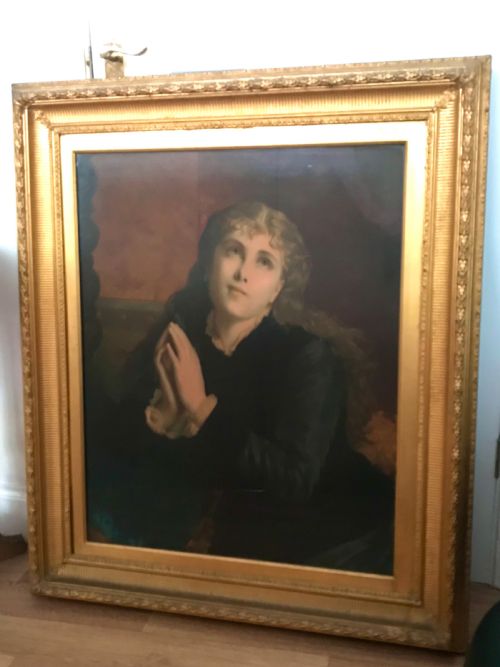


Framed Oleograph Print
These framed oleograph print pieces bring rich academic portraiture and textured still lifes directly to your walls.
Framed Oleograph Print
A framed oleograph print reproduces oil paintings through a complex mechanical chromolithographic process that builds textured ink layers to mimic genuine brushstrokes. When you search for framed oleograph print, you encounter wall art spanning the nineteenth century through the mid twentieth century, including Victorian portraits, Dutch Golden Age style flowerpieces, and French Neoclassical subjects.
The versions you meet most frequently on this page date from the nineteen-sixties and nineteenth century, taking the form of framed portraits, children subject studies, and still life compositions. These works draw upon celebrated academic artists and traditional painters like Jean-Baptiste Greuze, William Adolph Bouguereau, and Harold Clayton, translated into mass-reproduction print formats.
Framed examples utilise diverse presentation styles, ranging from simple timber frames to elaborate gilt wood and gesso settings under glass. The subject matter typically references classic European oil paintings, offering domestic interiors an accessible route to traditional academic realism and ornate decorative styling.
How they were made
Production relies on multi-layer chromolithography applied to canvas or paper supports, building chromatic depth to simulate the appearance of oil paint. Manufacturers often varnish or emboss the finished surface to create a tactile, textured topography that mimics actual canvas weave and artist brushwork.
Framing forms an integral part of the construction, employing wood, gilt wood, and moulded gesso to house the printed canvas or paper sheet. Many nineteenth-century and vintage examples incorporate protective glass glazing alongside ornate gilded frames designed to enhance the illusion of an original painting.
Listings span the nineteenth century through nineteen-sixty, featuring canvas and paper supports housed in wood, gilt wood, and gesso frames.
What varies in quality
Quality depends heavily on the precision of the lithographic registration and the subtlety of the colour separation used during printing. Finer examples display delicate tonal transitions and convincing textural brushstroke embossing, whereas simpler versions show flat ink application and coarse dot patterns.
The execution of the surrounding frame distinguishes different tiers of manufacture, with hand-finished gilt wood and gesso mouldings offering superior decorative presence compared to basic stained timber surrounds. Preservation of the underlying canvas or paper surface, alongside the integrity of the varnish layer, also determines the visual stability of the piece.
The Framed Oleograph Print Glossary
- Oleograph
- A mechanical chromolithographic reproduction printed on canvas to imitate an oil painting. This technique employs numerous lithographic stones to build up rich oil-like colours.
- Chromolithography
- A planographic colour printing process using multiple stones or plates, one for each colour used. It served as the primary method for producing commercial colour reproductions in the nineteenth and twentieth centuries.
- Gesso
- A plaster-like mixture applied to wood frames as a base for moulding and gilding. Skilled artisans carve and shape the dried gesso to create intricate decorative relief patterns.
- Embellished
- A print surface enhanced manually with varnishes, textures, or overpainting to simulate genuine artist brushstrokes. This treatment increases the tactile illusion of an original canvas.
- Pears Print
- A mass-produced chromolithograph issued by the Pears soap company for domestic advertising and home decoration. These popular prints brought famous academic and Victorian artworks into ordinary households.
Framed Oleograph Print: Frequently Asked Questions
What is an oleograph print?
An oleograph is a chromolithographic reproduction printed onto canvas to closely mimic the appearance, texture, and depth of an oil painting. Manufacturers used multiple inked stones to layer pigments before applying protective varnishes.
This method allowed Victorian and twentieth-century households to display affordable versions of famous academic paintings and classical portraits within decorative frames.
How do I date an oleograph?
Dating relies on examining the framing materials, the backing substrate, and the specific artistic source of the image. Nineteenth-century examples often feature heavier gesso frames and canvas supports, while mid-twentieth-century pieces utilise lighter timbers and distinct paper textures.
The clothing, subject matter, and typography found on related prints also provide chronological clues for identification.
Are oleographs painted by hand?
They are fundamentally mechanical prints rather than original hand-painted artworks. However, many examples received secondary surface treatments, such as applied varnishes or embossed textures, to simulate physical brushwork.
These finishing touches were added during manufacturing to heighten the illusion of a genuine oil painting on canvas.
How should I hang framed wall art?
Hang these framed works at eye level using sturdy fixings suited to the weight of the timber and gesso construction. Protect the surface by avoiding direct sunlight and excessive moisture, which can degrade the paper, canvas, and varnish layers.
Ensure the hanging wire and structural frame joints remain secure before mounting older pieces under glass.