
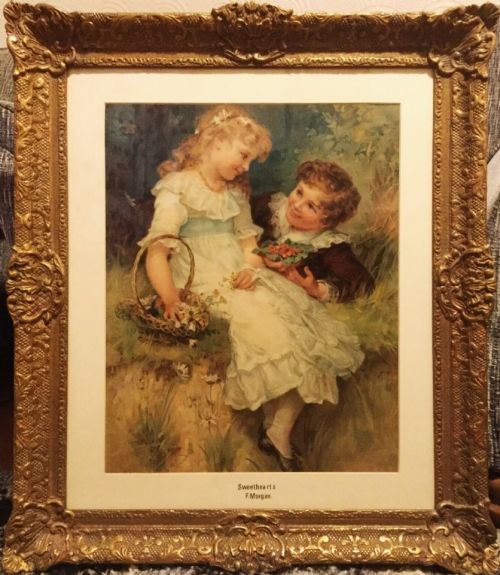
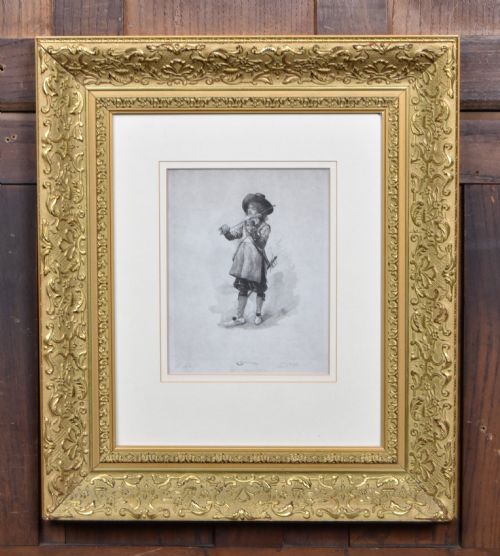
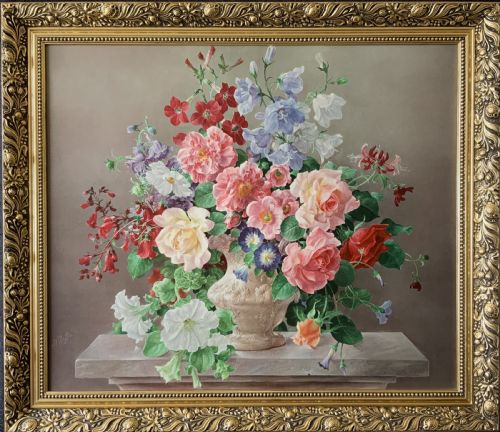
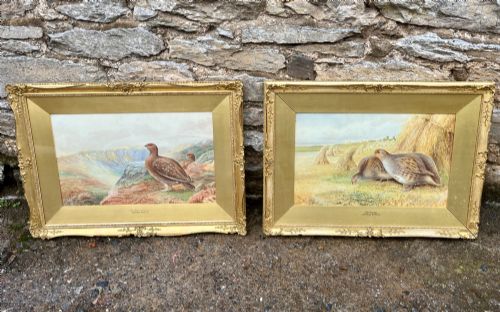


Ornate Gilt Framed Print
An ornate gilt framed print brings together decorative gilded moulding and classic imagery, offering instant traditional character for a wall.
Ornate Gilt Framed Print
When you search for an ornate gilt framed print, you encounter a variety of wall art and paintings housed within decorative gilded surrounds. These pieces range from Victorian portraits and oleographs to Edwardian watercolours and mid-century textured prints.
The selection on this page demonstrates how traditional imagery is paired with elaborate frames made from wood and gesso. You will find rectangular and oval formats, often protected behind glass, spanning the nineteenth century through to the mid-twentieth century.
Materials and construction
The frames rely on wood foundations built up with gesso to create deep relief moulding, which is then covered in gilt or gilded layers. This process allows for intricate scrolls and ornate detailing that catch the light.
The works themselves utilise diverse mediums including paper, canvas, and glass, supporting watercolours, oil paintings, oleographs, and prints. Protective glass frequently fronts these pieces, preserving delicate watercolours and textured prints over decades.
Materials recorded across the inventory include paper, glass, canvas, wood, gesso, and gilded wood.
Assessing quality
Quality in these pieces rests heavily on the depth and hand-finishing of the gesso work on the frame. A superior frame displays crisp, sharp moulding details rather than soft or blurred ornamentation.
The fidelity of the interior print or painting also dictates the value, with fine hand-applied embellishments or original watercolours holding greater artistic merit than standard mass-produced reproductions.
The Ornate Gilt Framed Print Glossary
- Gesso
- A plaster-like mixture applied to wood frames to create a smooth surface for carving or moulding relief decoration. It forms the base of the intricate scrollwork seen on many period frames.
- Oleograph
- A type of chromolithographic print textured to imitate the appearance of an oil painting. They gained popularity for bringing colourful art into homes during the nineteenth and twentieth centuries.
- Crystoleum
- A delicate Victorian technique where a photograph or print is made translucent on glass, hand-coloured from behind, and sealed with another layer of glass. This method creates a luminous, three-dimensional effect.
- Giltwood
- Wood that has been coated with thin sheets of gold leaf or metallic powder. It provides a warm, reflective finish distinct from modern metallic paint.
Ornate Gilt Framed Print: Frequently Asked Questions
Are these frames original to the prints?
Many period pieces retain their original surrounds, which match the aesthetic and age of the artwork inside. Stylistic clues and framing techniques help determine if the pairing is contemporary to the creation date.
Subsequent framing is also common when earlier works have been conserved or updated for domestic display over the decades.
What is a crystoleum painting?
A crystoleum involves placing a transparent print behind convex glass, hand-painting the reverse side with oils or watercolours, and backing it. This creates remarkable depth and a soft, glowing appearance for portraits and domestic scenes.
They require careful handling due to the double glass front and curved convex shape.
How do I date an ornate frame?
Dating relies on examining the construction of the wooden corners, the composition of the gesso, and the type of gilt finish applied. Victorian and nineteenth-century examples often feature heavy, deeply modelled plaster ornaments.
Later twentieth-century interpretations may show different backing materials and lighter, more uniform moulding techniques.