


Traditional Floral Still Life
Traditional floral still life paintings capture meticulously arranged blooms on canvas, offering enduring colour and classical composition for any room.
Traditional Floral Still Life
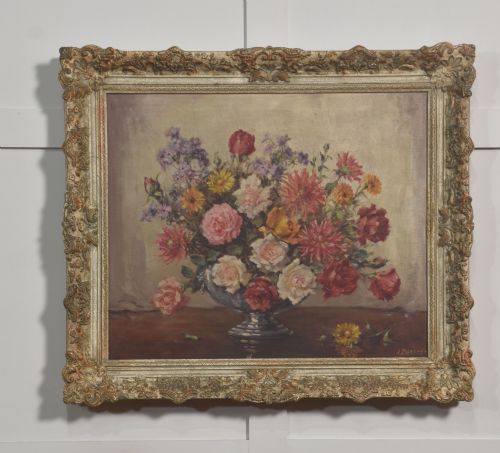
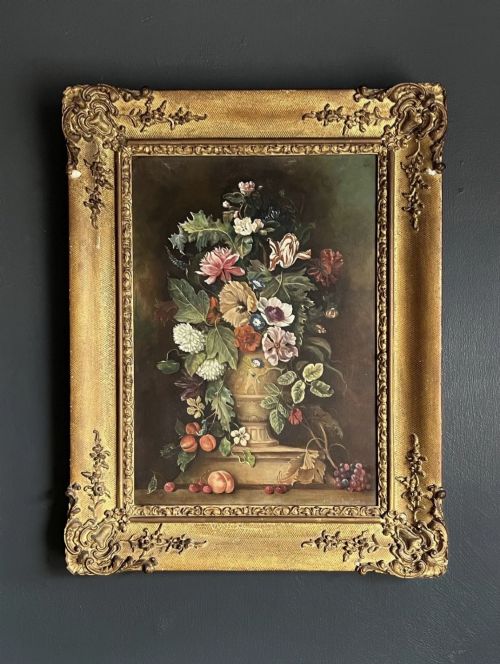
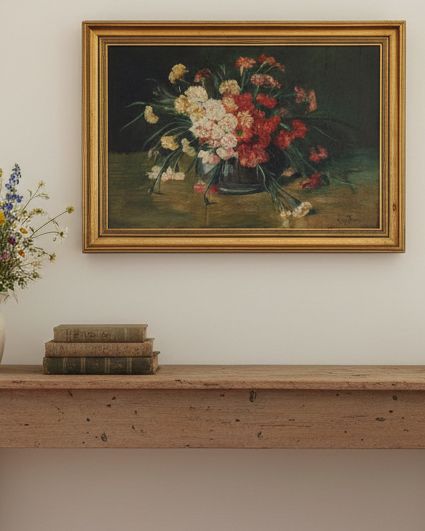
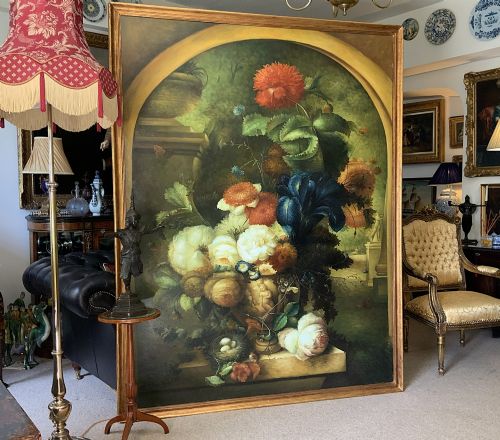
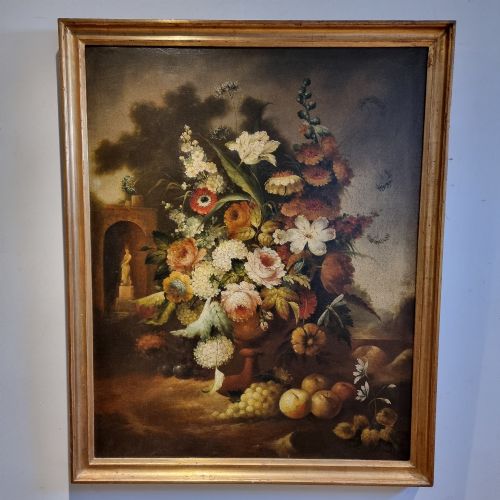
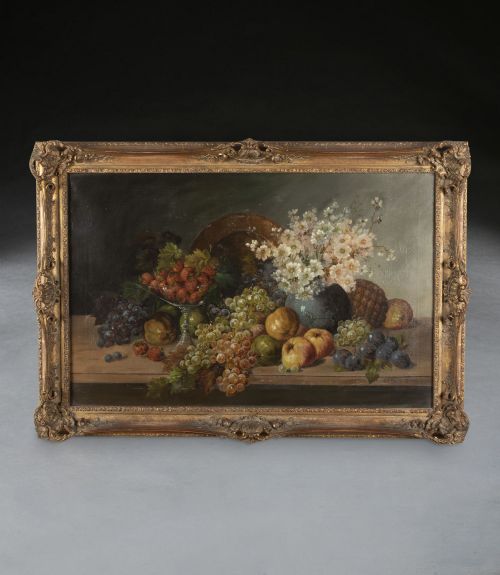
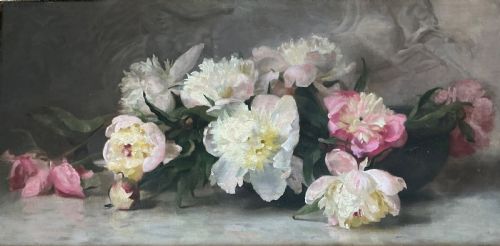
A traditional floral still life brings together centuries of artistic heritage, capturing blooms in oils or watercolours on canvas and paper. These pieces range from intimate cabinet watercolours to monumental canvases styled after Dutch masters.
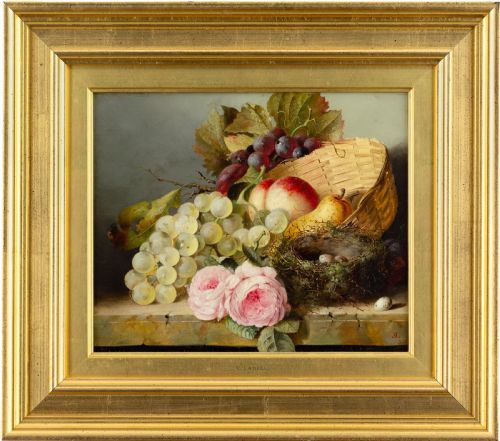
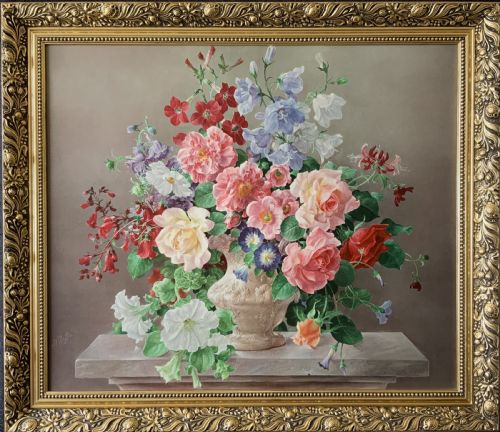
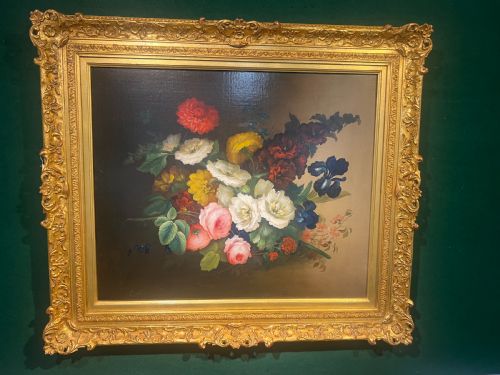
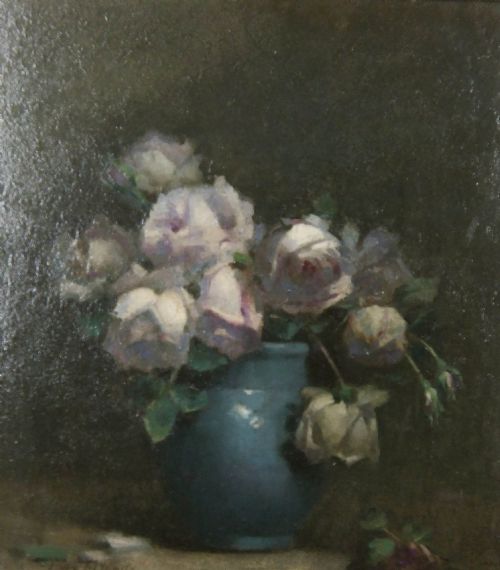
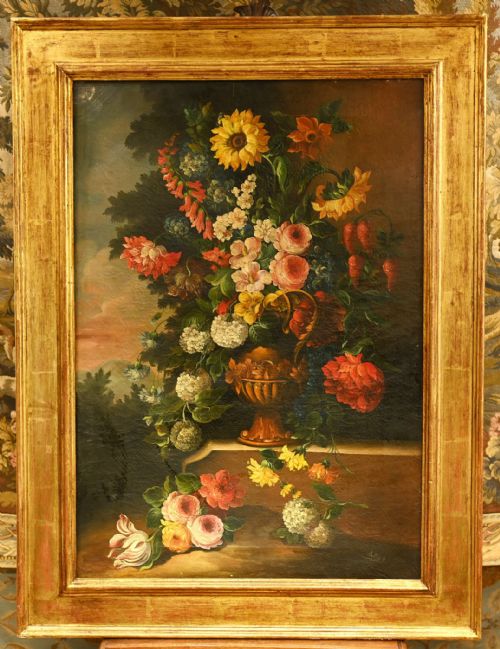
The selections available span the Victorian era through the mid-twentieth century, encompassing British Impressionism, Post-Impressionism, and revivals of eighteenth-century Dutch Baroque aesthetics. They frequently depict roses, carnations, and summer arrangements housed within ceramic jugs or elaborate vases.
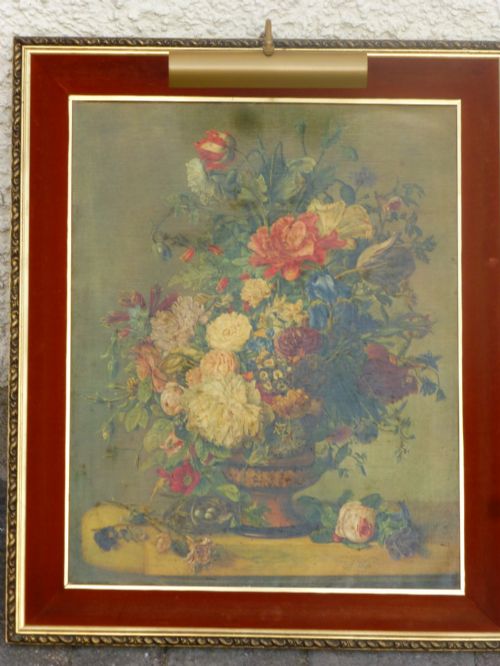
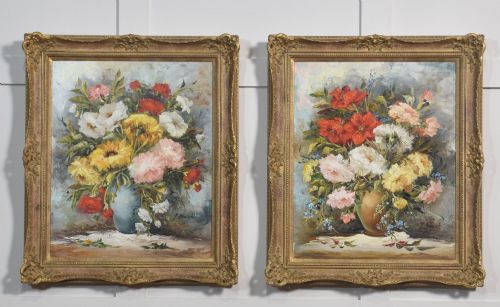
Buyers encounter works by named European and British artists alongside unsigned studies and decorative oleographs. Common formats include single framed canvases, balanced pairs, and occasionally multi-panel screens.
How They Were Made
The primary medium recorded is oil paint applied to stretched canvas, building rich textures and deep tones that mimic historical Dutch techniques. Watercolour on paper appears in more delicate botanical studies and lighter compositions.
Listings feature oil on canvas, watercolours, and gesso frames across periods from the eighteenth century to the mid-twentieth century.
What Varies in Quality
The distinction between average works and exceptional pieces lies in the handling of light, depth, and botanical accuracy by the artist's brush. Masterful tonal graduation creates a three-dimensional presence that lesser decorative studies lack.
The preservation of the underlying canvas, original pigments, and the accompanying gilded frame significantly elevates the stature of a piece. Intricate compositions featuring varied textures, such as draped fabric alongside petals, indicate superior execution.
I. Berezny·Edward Ladell·Harold Clayton·Edwin Steele·Manuela Bonati·William Thomas Wood·Gertrude Hayes·Owen Bowen·William Edward Fox·Calzolari·Robin MacKertich·Henry Schouten·L. Wilford·Emily Selinger·Margaret Evangeline Wilson·Harold Edward Conway·Katherine Bourne·Jules Felix Ragot
The Traditional Floral Still Life Glossary
- Canvas
- A heavy woven fabric stretched across a wooden frame to serve as a sturdy foundation for oil paintings. It provides the characteristic texture seen in historical and traditional artworks.
- Gesso
- A plaster-like mixture applied to wooden frames before gilding to create a smooth, sculptured surface for gold leaf. It gives traditional frames their ornate and reflective quality.
- Oleograph
- A mechanical print on canvas that simulates an oil painting through textured roller application. These emerged as popular decorative alternatives in the nineteenth and twentieth centuries.
- Dutch Golden Age Style
- An artistic approach characterised by dark backgrounds, dramatic lighting, and hyper-realistic arrangements of flowers and fruit. It emphasises symbolic richness and meticulous detail.
- British Impressionism
- A painting style focusing on loose brushwork, natural light, and everyday subjects rather than rigid academic polish. It brought a vibrant, atmospheric quality to traditional floral scenes.
Traditional Floral Still Life: Frequently Asked Questions
What periods do these paintings come from?
The available selection spans from the eighteenth century through to the mid-twentieth century, with strong representation from the Victorian era and early decades of the 1900s. Artists during these times frequently drew inspiration from older Dutch masters.
Later works incorporate movements like British Impressionism and Post-Impressionism while maintaining traditional subject matter. This timeline allows collectors to choose between authentic antique pieces and vintage mid-century interpretations.
How should I hang a large floral painting?
Large canvases, particularly monumental Dutch-style works or pairs, require a secure wall fixing due to the weight of the wood and gesso frames. They serve well as focal points above mantelpieces or in principal reception rooms.
Ensure the placement avoids direct, harsh sunlight to protect oil pigments and gilded frames over time. Adequate wall space lets the rich composition and dark backgrounds achieve their intended visual impact.
Are these paintings signed by the artists?
Many of the listed works feature artist signatures, attribution to specific schools, or documentation linking them to known painters of the nineteenth and twentieth centuries. Signed pieces offer a clearer provenance for collectors.
Unsigned studies and decorative oleographs also appear within the collection, representing the broader commercial art market of their respective eras. Each listing notes whether a signature or specific attribution is present.