
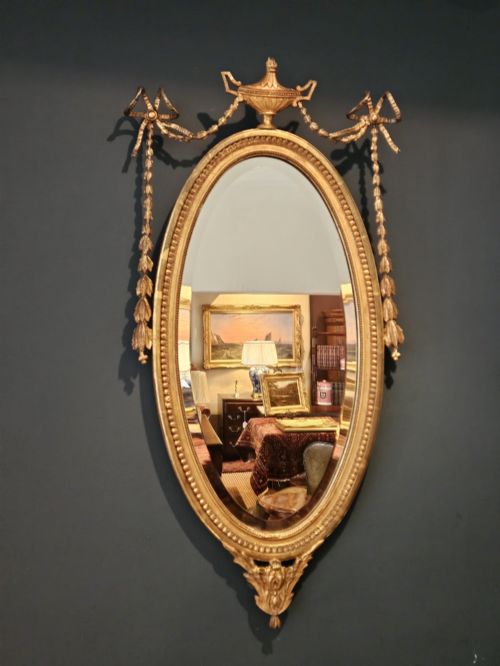
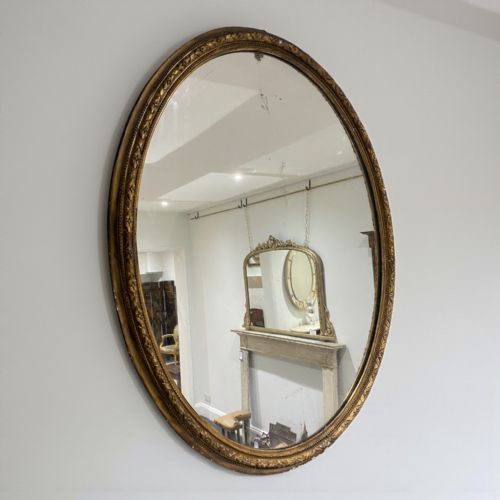
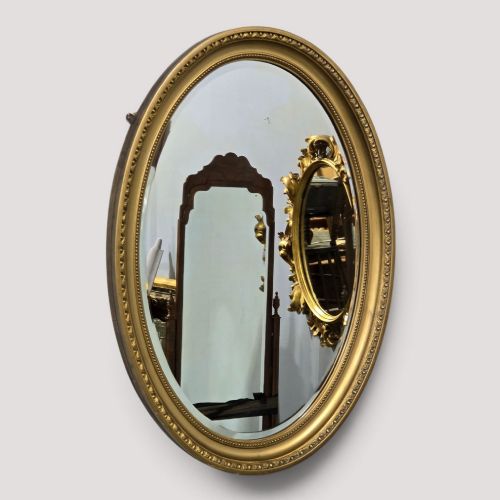
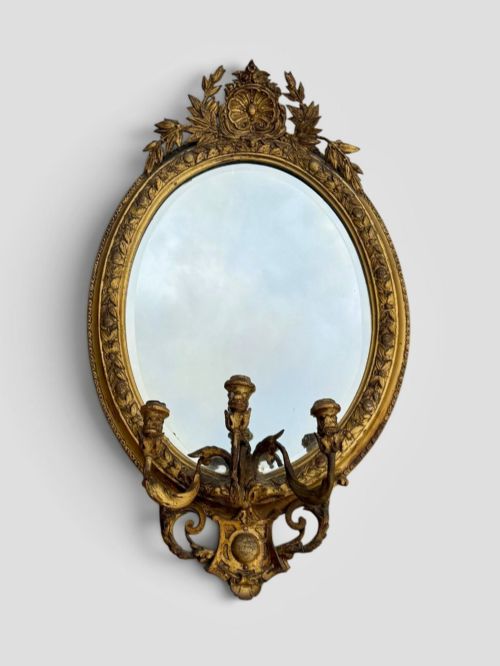

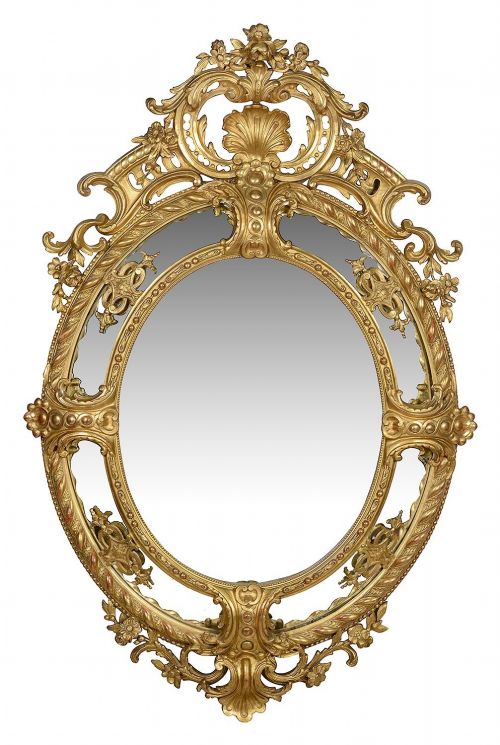


Victorian Giltwood Oval Mirror
A victorian giltwood oval mirror brings warmth and reflection to a room through curved frames shaped in the nineteenth century.
Victorian Giltwood Oval Mirror
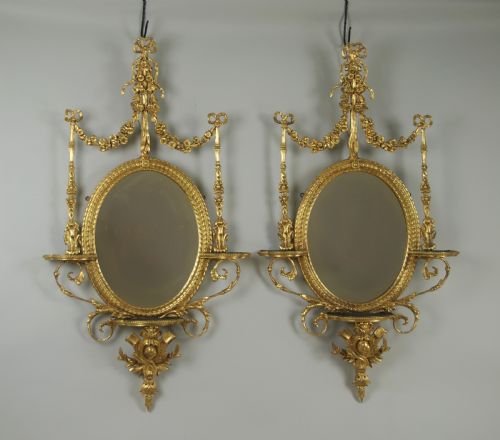
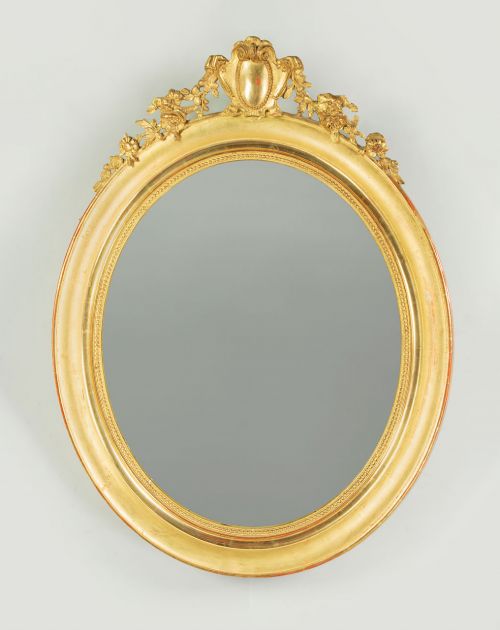
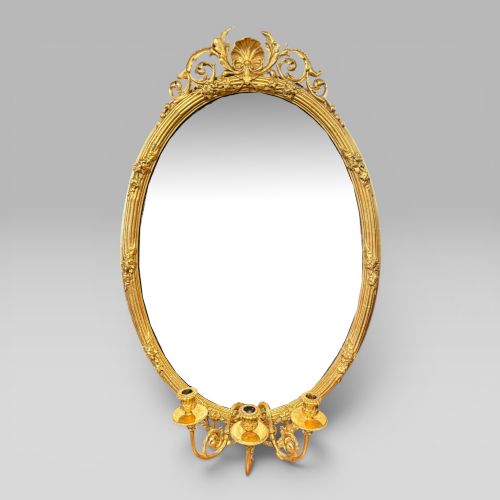
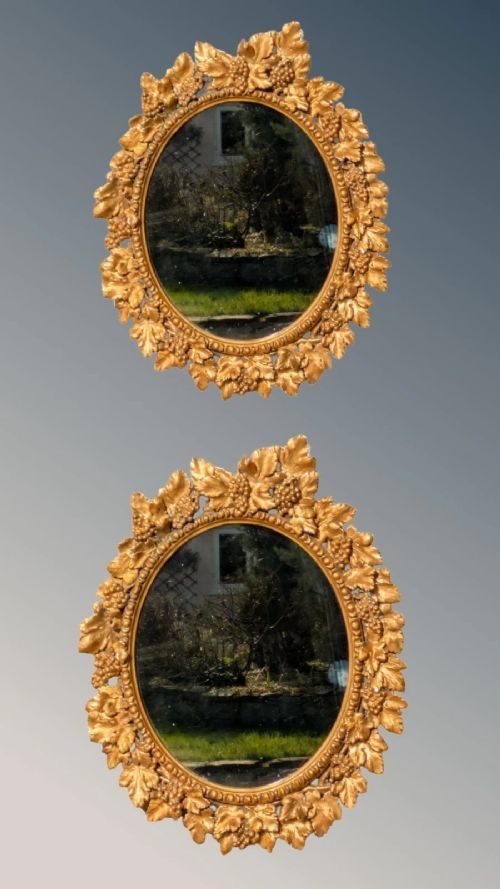
A victorian giltwood oval mirror is a reflective glass panel enclosed within a wooden frame shaped into an elliptical curve and coated in gold leaf or gilt paint. When searching this phrase, a buyer encounters wall mirrors, overmantels, pier mirrors, and girandoles designed for nineteenth-century interiors.
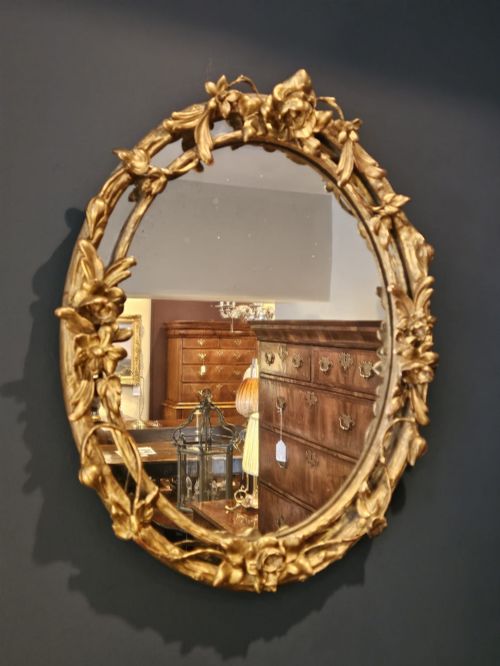
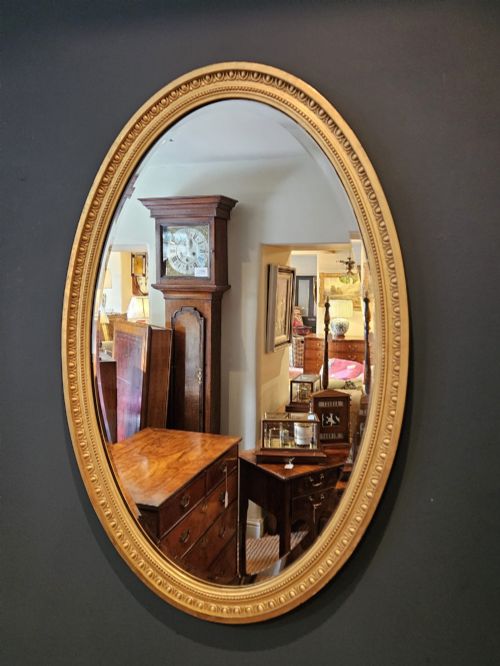
The pieces appearing most often span the Victorian period, with specific dates clustering around eighteen eighty and eighteen ninety alongside broader nineteenth-century examples. Forms range from simple timber profiles to deep carved frames decorated with vine leaves, rose vines, and display brackets.
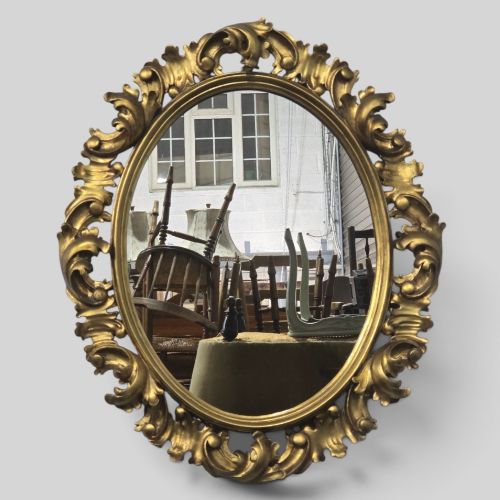
Origins include English workshops and continental makers working in French Chateau, Rococo Revival, Adam Revival, and Neoclassical styles. These mirrors served as decorative wall pieces in halls, dressing rooms, and above mantelpieces.
Materials and Techniques
Makers constructed the core structure from timber, wood, and plaster before applying layers of gesso to build up decorative surface details. Carvers then shaped ornament directly into the ground material or attached moulded composition elements.
Workers applied gold leaf or gilt paint over the prepared surface to create a metallic sheen, sometimes combining ebonised sections with parcel-gilt highlights. Mirror glass was fitted into the rebated frame behind the decorative border.
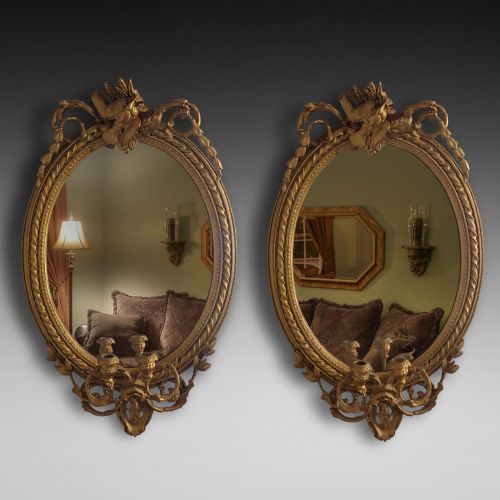
Several mirrors include built-in display brackets, ready for a small decorative object to share the wall space.
Quality and Detail
Quality rests in the depth and crispness of the carving, where deep hand-carved foliage and organic motifs show greater skill than moulded composition applied in repetitive sections. The handling of the gesso ground determines how sharply defined the decorative relief remains beneath the gilding.
Proportion and scale also separate standard items from grander examples, particularly in large overmantel mirrors and matched pairs designed for formal reception rooms. The integrity of the original gilt surface and the clarity of the mirror glass contribute to the overall presence of the piece.
The Victorian Giltwood Oval Mirror Glossary
- Giltwood
- Wood that has been coated with thin sheets of gold leaf. This finish gives the frame its characteristic metallic glow.
- Gesso
- A plaster mixture applied to wood frames to create a smooth base for carving or gilding. It allows for intricate moulded ornamentation.
- Girandole
- A wall mirror featuring attached candle sconces. The candle holders reflect light back into the room.
- Overmantel
- A large mirror designed to hang directly above a fireplace mantelpiece. These pieces often anchor the decorative scheme of a Victorian parlour.
- Composition
- A moulded mixture of whiting, resin, and glue pressed into decorative shapes. It was used as a faster alternative to hand carving.
Victorian Giltwood Oval Mirror: Frequently Asked Questions
Where did these mirrors hang originally?
These mirrors hung in principal rooms such as drawing rooms, parlours, and hallways, often positioned above mantelpieces or between windows. Their reflective surfaces helped brighten candlelit Victorian interiors.
Smaller versions served as dressing table toilet mirrors or intimate wall pieces in private chambers.
How do I identify a Victorian piece?
Victorian frames typically rely on timber and gesso construction finished in gold leaf, exhibiting stylistic influences like Rococo Revival and Adam Revival. Dating relies on construction methods, timber types, and characteristic nineteenth-century decorative motifs.
Archival records and backboards often provide further clues to the manufacturing decade between eighteen sixty and nineteen ten.
What is a girandole mirror?
A girandole is a mirror fitted with integrated candle brackets extending from the frame. The polished glass and gilt surface multiplied the flickering light from the candles.
These pieces functioned as both illumination sources and decorative wall focal points in reception rooms.
How do I care for giltwood?
Giltwood requires dry dusting with a soft, clean brush to prevent accumulation on delicate gesso relief. Moisture and harsh cleaning agents damage the thin gold leaf surface.
Keeping the mirror away from direct sunlight and damp environments preserves the stability of the wood and plaster frame.