

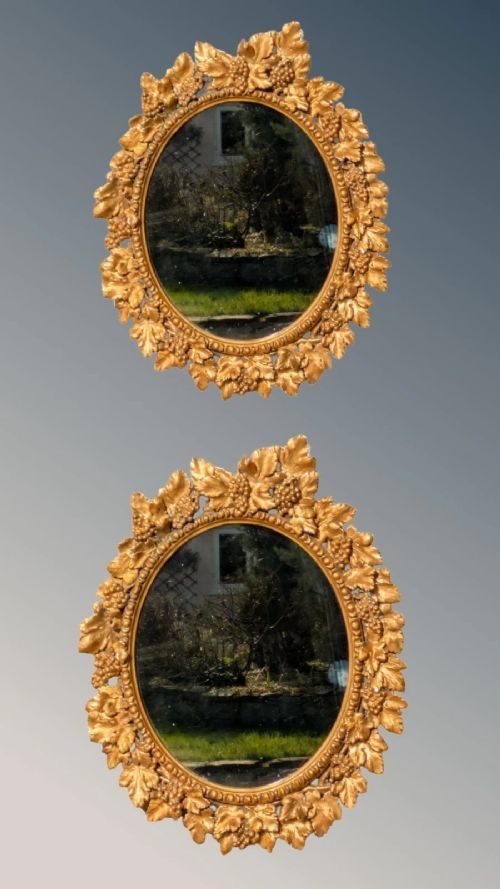
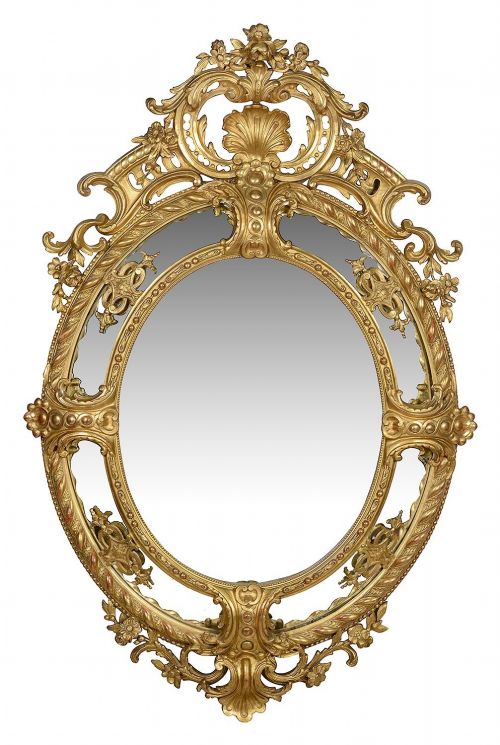


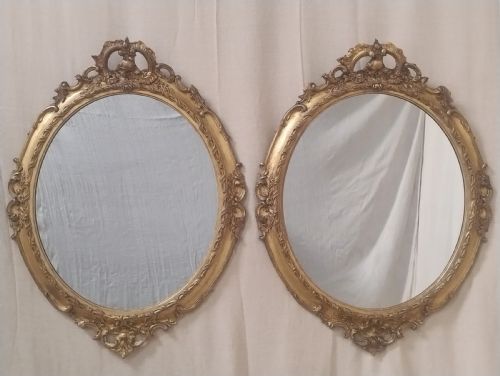


French Rococo Oval Mirror
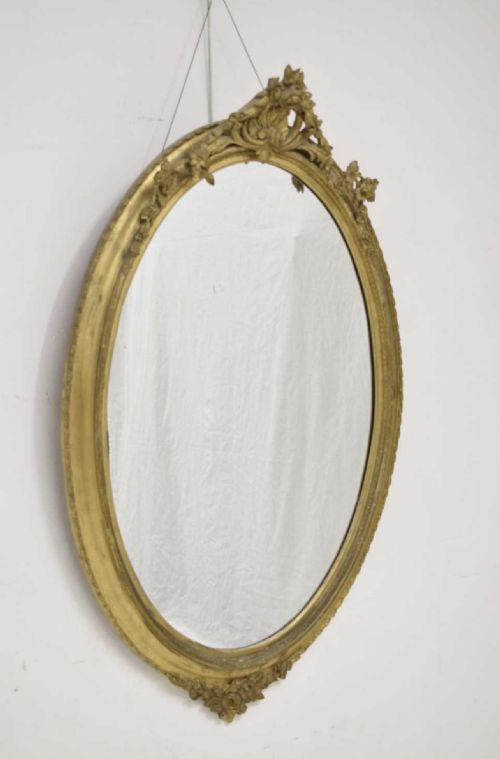
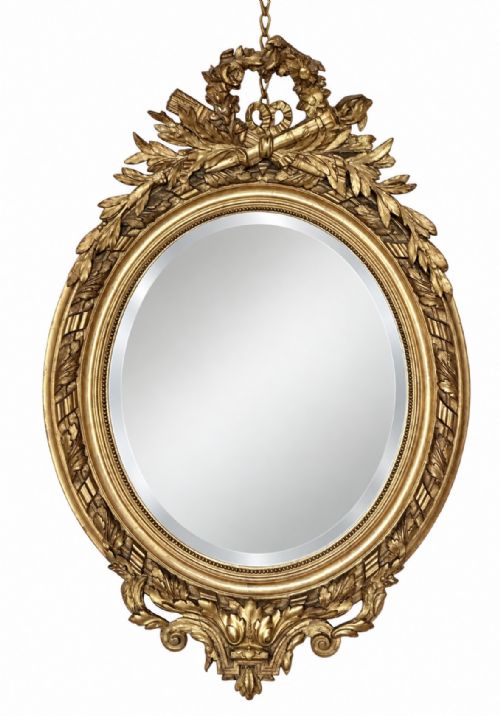
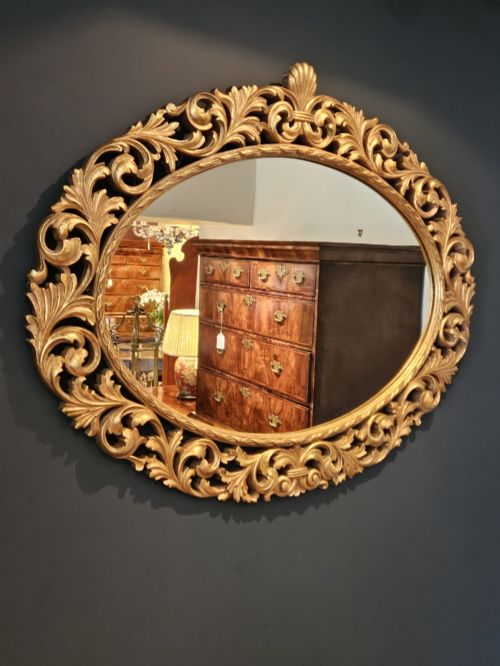
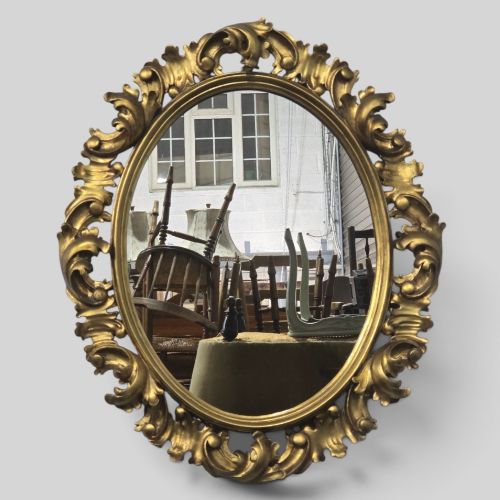
A french rococo oval mirror brings curved, asymmetrical gilt frames and deep, reflective glass into a room, capturing the lively spirit of eighteenth-century design.
How They Were Made
Makers shaped these frames from timber, gesso, and walnut, often applying gold leaf or composition to achieve a reflective metallic surface. Carved giltwood and gilt gesso form the primary structure for many wall and overmantel pieces, supplemented occasionally by gilt brass, bronze, and ebonised wood.
Mirrored glass sits within these elaborate surrounds, sometimes featuring bevelling. Artisans carved floral and vine leaf motifs directly into the wood or moulded them in relief onto the composite foundation before finishing the surface with gilding.
What Varies In Quality
Depth and crispness of carving separate standard mouldings from finely detailed work, particularly where acanthus scrolls and asymmetrical floral motifs define the frame. The application of gold leaf versus composition influences how light catches the surface over time.
The weight and stability of the underlying timber frame, alongside the clarity and preservation of the original mirror glass, indicate the level of craftsmanship involved in production.
The listings show a concentration of nineteenth-century pieces alongside items dated from eighteen-seventy, eighteen-eighty, and nineteen-hundred.
The French Rococo Oval Mirror Glossary
- Giltwood
- Wood that has been coated with gold leaf or a gold-coloured finish. This material creates the bright reflective surface seen on many period frames.
- Gesso
- A plaster-like mixture applied to wood frames to create a smooth surface for carving and gilding. It allows artisans to shape intricate relief details before applying gold leaf.
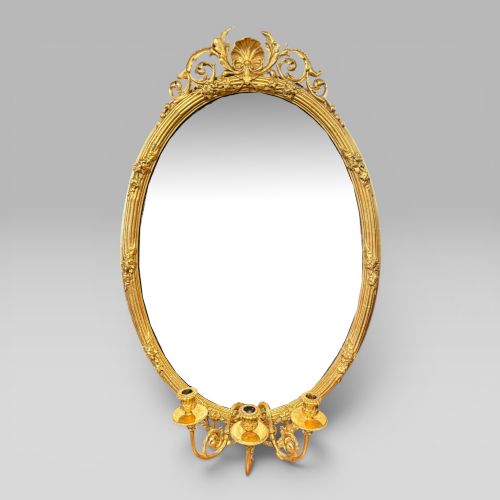
- Girandole
- A wall mirror featuring attached candle sconces or holders. The mirrored glass reflects the candlelight to brighten the surrounding room.
- Overmantel mirror
- A large mirror designed to hang above a fireplace mantel. These pieces often anchor the decorative scheme of a principal reception room.
- Louis XV Style
- A design movement characterised by asymmetrical curves, C-scrolls, and organic forms. This style heavily influences nineteenth-century French rococo revivals.
French Rococo Oval Mirror: Frequently Asked Questions
How do I hang a heavy giltwood mirror?
Heavy giltwood and gesso wall mirrors require secure fixings anchored directly into structural wall studs or masonry. Professional mirror hangers utilise heavy-duty D-rings and braided steel wire rated well above the weight of the piece.
Position the mirror at eye level to reflect natural light from windows across the room. Ensure the wall brackets distribute the load evenly to protect the antique wooden frame from undue stress.
Where should I place a dressing table mirror?
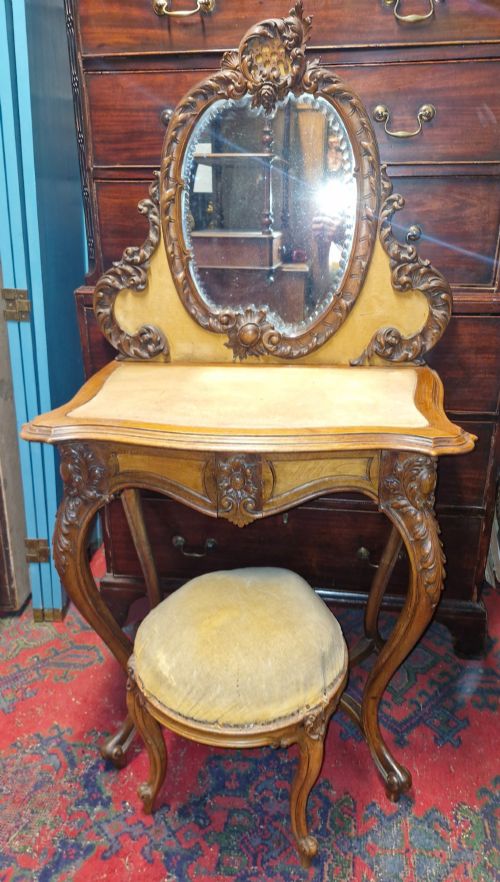
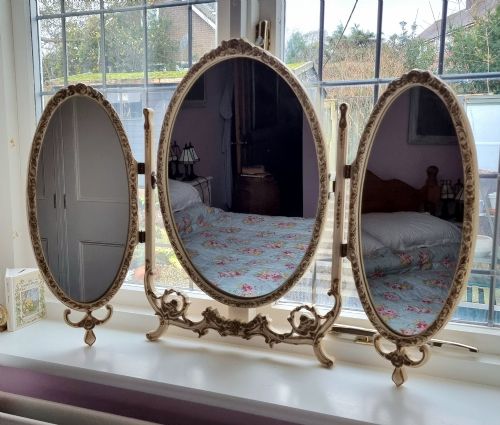
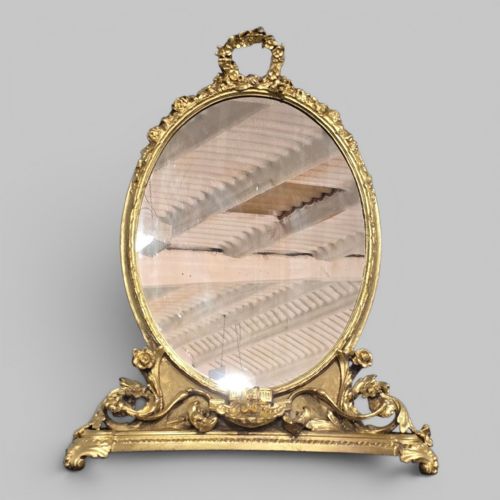
Dressing table mirrors sit atop dressing tables, chests, or companion tables, providing a functional surface for personal grooming. Place them where they catch natural daylight from a nearby window to illuminate the reflection effectively.
Many of these tabletop variants feature pivoting frames that tilt to adjust the viewing angle. Pair them with a matching dressing table and stool to maintain a cohesive nineteenth-century bedroom aesthetic.
How do I clean antique mirror glass?
Clean antique mirror glass gently using a soft, lint-free cloth and a mild, ammonia-free glass cleaner applied to the cloth rather than directly onto the glass. This prevents moisture from seeping behind the silvering or into the surrounding gesso frame.
Avoid harsh chemical solvents and abrasive scrubbing pads, which can damage original silvering or erode the surrounding gilt finish. Regular dusting with a dry microfibre cloth keeps the carved surfaces protected.
How can I tell an eighteenth-century mirror from a nineteenth-century revival?
Eighteenth-century originals exhibit hand-carved joinery, heavier patination on the gilding, and older mirror glass featuring minor imperfections or foxing. Revival pieces from the Victorian era or later often utilise machine-prepared gesso, cleaner glass, and standardised construction techniques.
Examine the backboards, fixings, and wood types for clues about age and manufacture. Nineteenth-century makers frequently adopted earlier Louis XV styles while retaining the production methods of their own era.