





Victorian Game Bird Art
Victorian game bird art brings the field and the larder inside through paintings, carved oak panels, and plushwork.
Victorian Game Bird Art
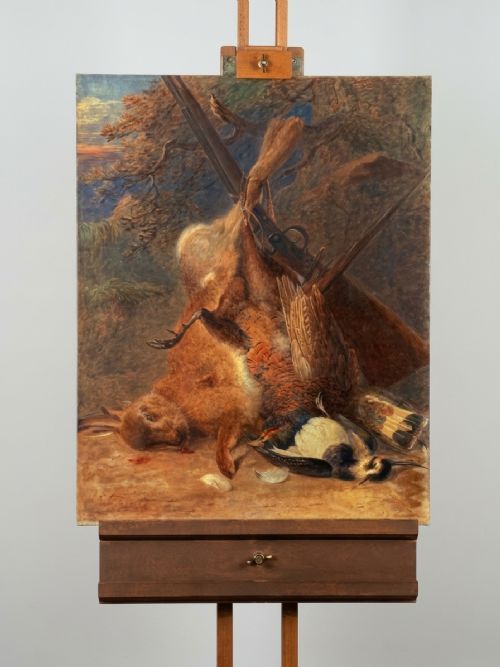
Victorian game bird art captures the pursuits of the countryside through oil paintings, watercolours, and carved wall panels. These pieces focus on sporting subjects, from pheasants and grouse to woodcocks and ducks.
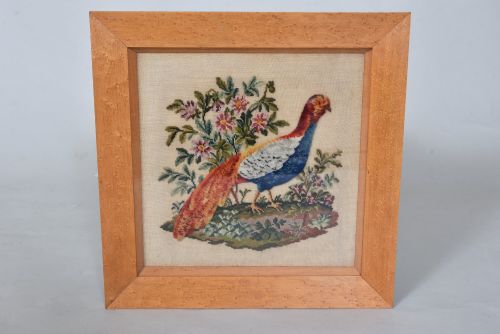
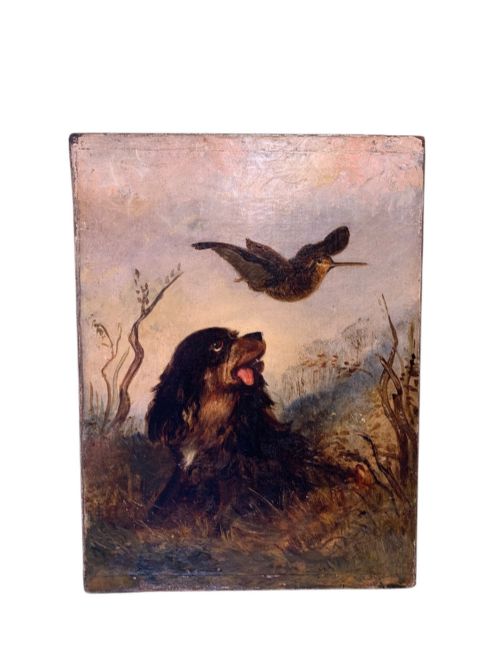
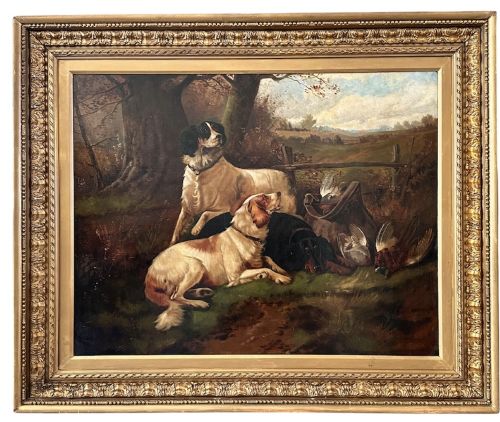
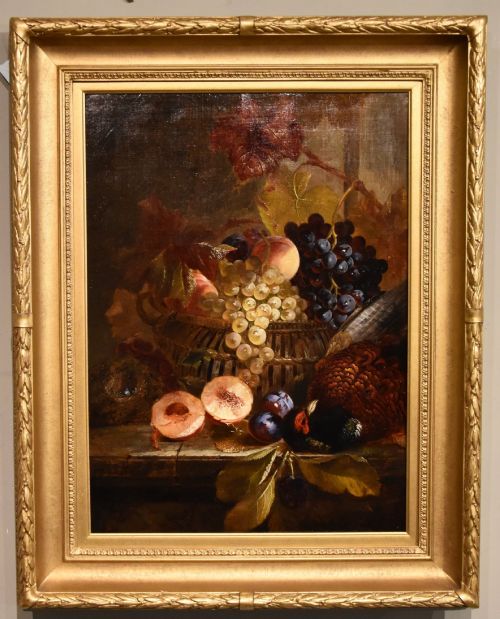
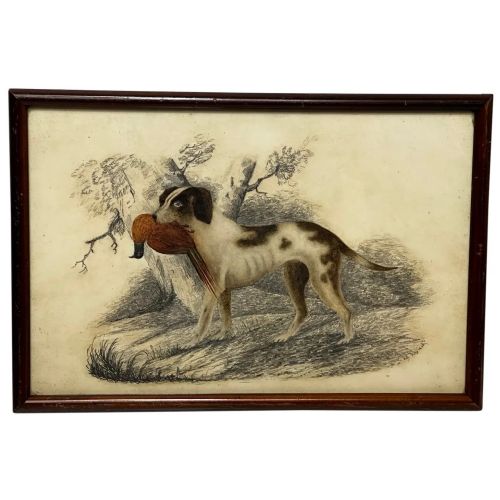
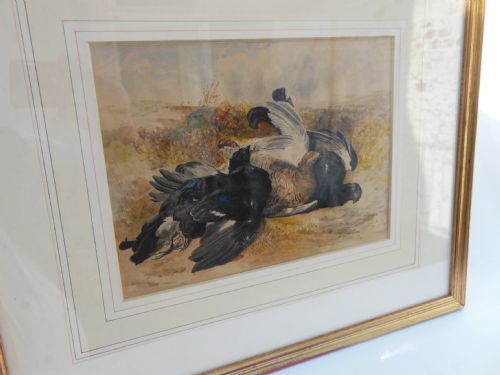
The items found here span the nineteenth century, including oils on canvas, plushwork, and framed prints. Subjects range from gun dogs with the day's bag to quiet larder views and game birds in flight.
Works come in various mediums, including watercolour and bodycolour on paper, oil paint on canvas, and carved tiger oak. Some pieces reflect British naturalism while others show Italian influence or Gothic Revival design.
How they were made
Painters utilised oil paint on canvas or watercolour and bodycolour on paper to depict birds and hunting scenes. Frames often incorporate wood and gold leaf to house these works.
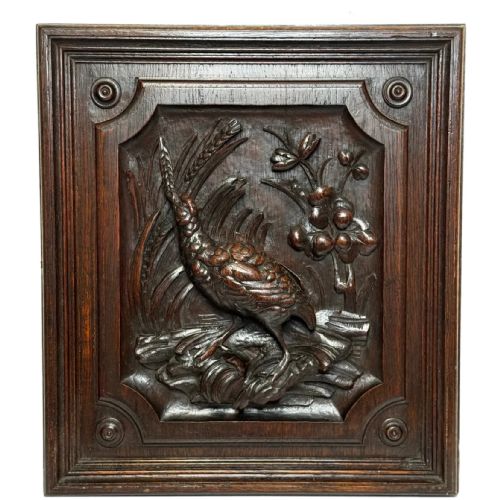
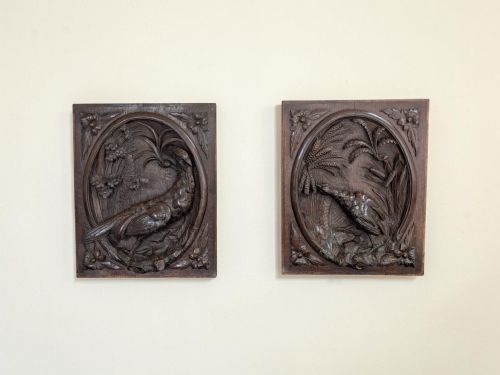
Carved wall panels rely on tiger oak, shaped into sculptural hunting scenes following Victorian Pugin designs. Plushwork and embossed prints introduce textured textile and paper elements to the category.
Materials represented in the current selection include canvas, paper, gold leaf, glass, and tiger oak.
What varies in quality
The skill of the artist defines the realism and movement in the depiction of feathers, dogs, and game. Finer brushwork or deeper relief carving separates standard decorative items from accomplished works.
Materials and framing contribute to the distinction between pieces, particularly the choice of oak for carved panels or the retention of original gold leaf on frames.
George Sydney Shepherd·Michelangelo Meucci·John Sargent Noble·William Henry Ward·Thomas Blinks
The Victorian Game Bird Art Glossary
- Plushwork
- A form of textile art involving raised pile work to create textured depictions of animals. It provides a tactile alternative to flat painting.
- Bodycolour
- Watercolour paint mixed with a white pigment to make it opaque. This technique adds dense highlights to works on paper.
- Larder view
- A still life subject showing game birds, fish, or meat arranged for the kitchen. These compositions highlight domestic provisions and sporting success.
- Pugin design
- A decorative style associated with Augustus Pugin, prominent in Gothic Revival interiors. It influences heavily carved wooden panels and architectural woodwork.
- Trompe l'oeil
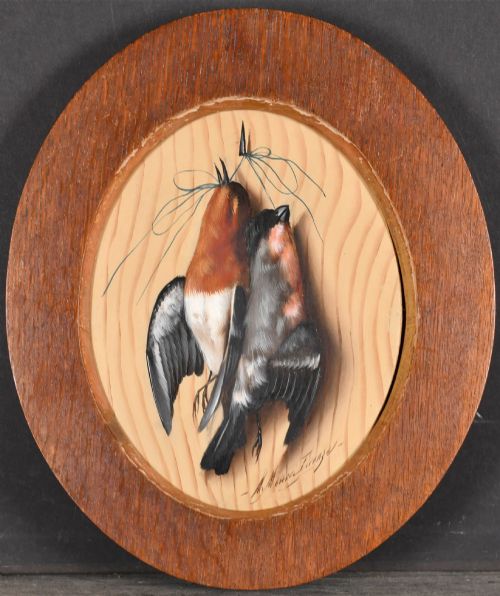
- An artistic illusionism technique intended to trick the eye into perceiving a painted object as three-dimensional. It appears in detailed still lifes of hanging subjects.
Victorian Game Bird Art: Frequently Asked Questions
What subjects appear in this art?
The works depict pheasants, grouse, woodcocks, ducks, and hares, often alongside gun dogs and larder arrangements.
Scenes range from quiet studies of birds to dynamic field moments with pointers and spaniels.
How do oils and watercolours differ?
Oils use pigment suspended in drying oils on canvas, offering rich textures and deep colour tones.
Watercolours utilise water-soluble pigments on paper, sometimes combined with bodycolour for opaque detail.
What is tiger oak?
Tiger oak refers to quarter-sawn oak displaying prominent medullary rays that resemble tiger stripes. It was favoured for decorative Victorian carved wall panels.
This cut provides both visual grain patterns and structural stability.
How should these pieces be displayed?
Framed paintings and prints suit traditional wall spaces, while carved oak panels function as architectural wall art. They pair well with wood-panelled rooms and country house interiors.
Direct sunlight should be avoided to protect watercolours and canvas pigments.
Are these works signed by artists?
Certain pieces are attributed to known nineteenth-century painters and illustrators, while others remain unsigned.
Attributions rely on stylistic evidence and period records associated with the specific works.