





Victorian Gallery Tray
A victorian gallery tray brings practical elegance to serving, combining raised metal or wooden borders with polished timber or gleaming silver plate.
Victorian Gallery Tray
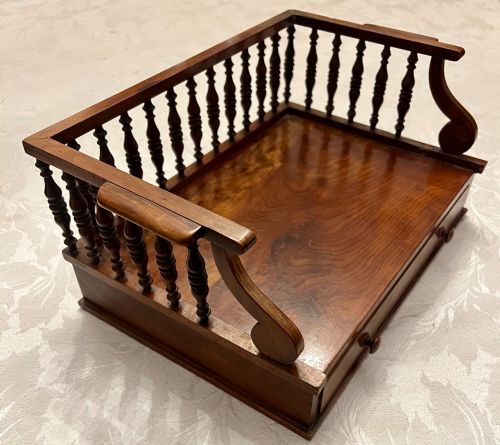
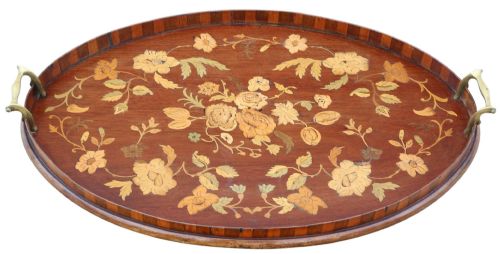
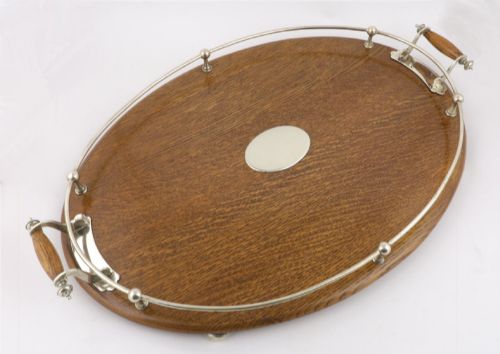
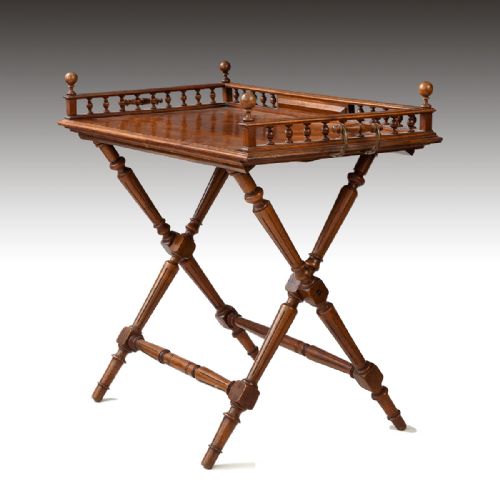
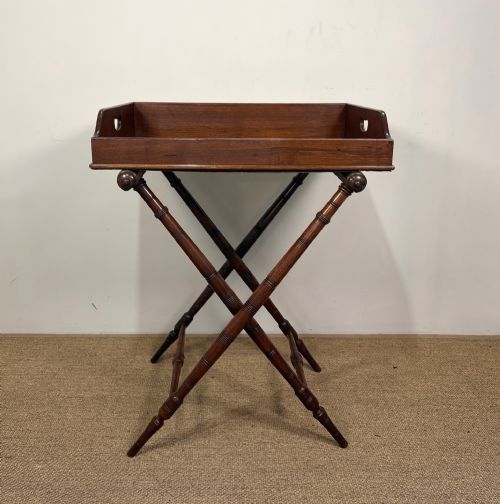
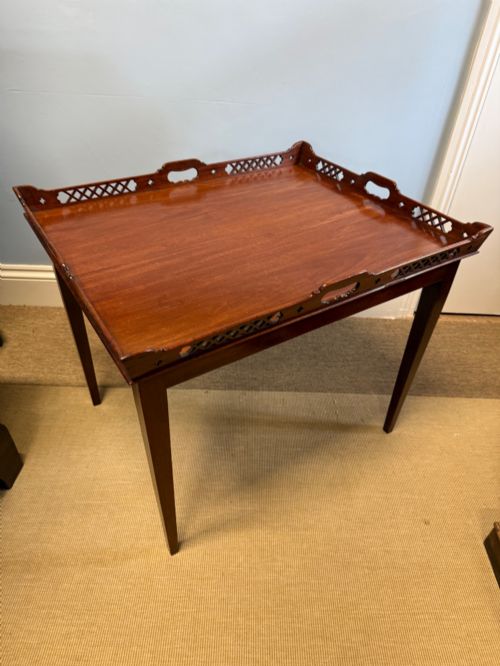
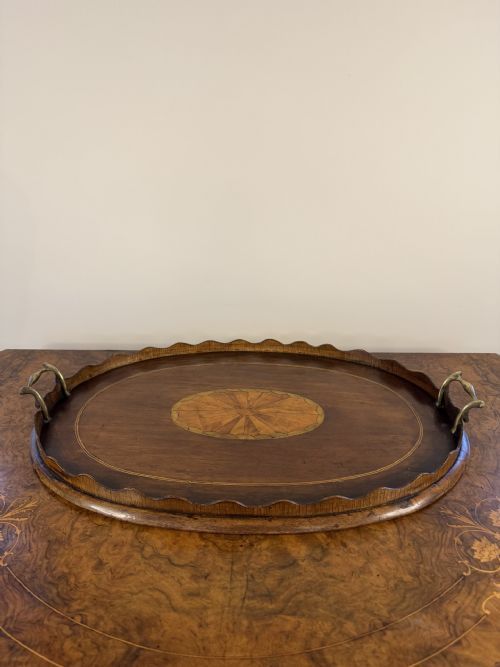
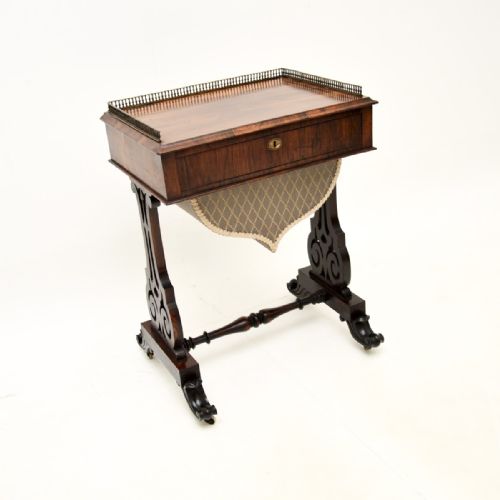
When you search for a victorian gallery tray, you encounter serving pieces and display surfaces defined by raised borders designed to keep contents secure during movement. The selection on this page centres primarily on mahogany, silver plate, oak, and satinwood forms dating across the nineteenth century. These objects range from oval and rectangular serving trays to folding butler trays on stands and tabletop display plateaux.
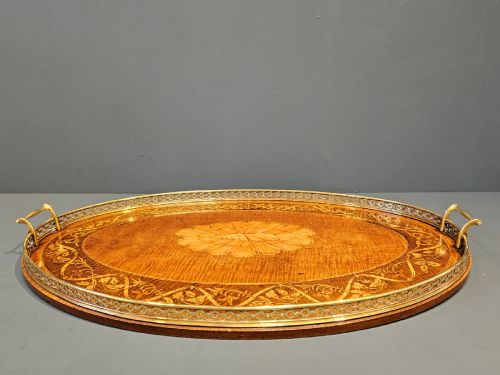
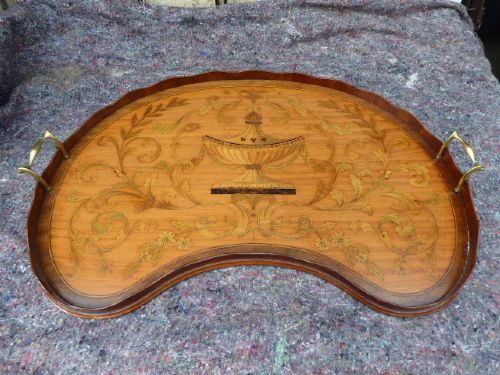
The variety spans simple wooden constructions with scalloped edges to grand silver plated pieces with pierced brass or metal galleries. Many examples incorporate inlaid wood, marquetry, or brass handles, reflecting the decorative priorities of Victorian households. Whether utilised for afternoon tea, cocktails, or general side table service, these trays combine functional utility with distinct period craftsmanship.
How they were made
Makers constructed these pieces using dense hardwoods like mahogany, walnut, and oak, frequently applying fine veneers and contrasting satinwood inlay. Metal elements such as brass galleries, silver plate, and ormolu mounts were secured to wooden bases or formed entirely through Sheffield plating and metalwork techniques.
Specialist skills defined the decorative surface work, from hand-painted Pontypool toleware finishes to intricate marquetry and reticulated piercing. Edges often featured scalloped or pierced galleries soldered or screwed to the main body, ensuring structural durability alongside decorative refinement.
Victorian Gallery Tray Retail Price Guide 2026
Typical asking prices for victorian gallery tray among the pieces listed under this phrase on Sellingantiques today, from the lower quarter to the upper quarter. They describe what is for sale here now, not the wider market.
One recorded oak tray originated from Bäckaskog Castle, bringing royal Swedish provenance straight to the afternoon tea service.
What varies in quality
The distinction between standard utility items and superior examples rests on the crispness of the pierced metalwork and the precision of the wood inlay. Finely cast brass galleries and detailed marquetry panels indicate workshop execution of a higher order than plain turned edges or stamped metal borders.
Subtleties in timber selection, such as figured mahogany and polished satinwood, elevate certain pieces above simpler oak or basic silver plate equivalents. The integration of maker attributions or patent mechanisms further distinguishes exceptional items from anonymous production.
Edwards and Roberts·Rupert Favell·Elkington·Lee and Wigfull·J.H. Potter
The Victorian Gallery Tray Glossary
- Gallery tray
- A serving tray fitted with a raised pierced or solid border around its perimeter. This raised edge prevents decanters and glasses from sliding off during transit.
- Sheffield plate
- An early method of fusing a thin sheet of silver to a thicker copper base. It produces a rich metallic lustre characteristic of nineteenth-century tableware.
- Marquetry
- The art of applying decorative pieces of veneer to a structure to form intricate pictorial designs. Craftsmen use various woods to achieve tonal contrast.
- Toleware
- Japanned or hand-painted metalware produced in centres such as Pontypool. This lacquered finish mimics Asian lacquer techniques.
- Reticulated
- Decorated with an openwork pattern of geometric or floral shapes. This technique lightens the visual weight of silver plated or metal trays.
Victorian Gallery Tray: Frequently Asked Questions
What was a gallery tray used for?
These pieces served practical roles in nineteenth-century domestic life, carrying tea services, decanter sets, and correspondence across rooms. The raised gallery kept glassware secure while being moved by servants or hosts.
Over time, many transitioned into permanent display pieces on side tables or stands, functioning as decorative furniture surfaces rather than portable serving items.
How do I care for a wooden tray?
Maintenance requires keeping timber surfaces away from direct heat sources and excessive moisture to prevent veneer lifting or wood splitting. Regular polishing with traditional wax helps preserve the finish of mahogany and satinwood.
Silver plated and brass elements benefit from occasional gentle cleaning with appropriate metal care products to maintain their lustre without stripping the plating.
How do I identify silver plate versus solid silver?
Nineteenth-century serving trays of this scale are overwhelmingly silver plated rather than solid sterling silver due to weight and cost considerations. Examination often reveals base metals like copper showing through high-wear areas, or specific maker marks denoting plating techniques such as Sheffield plate.
Maker stamps and registry marks help distinguish the manufacturing origin and approximate period of the metalwork.