
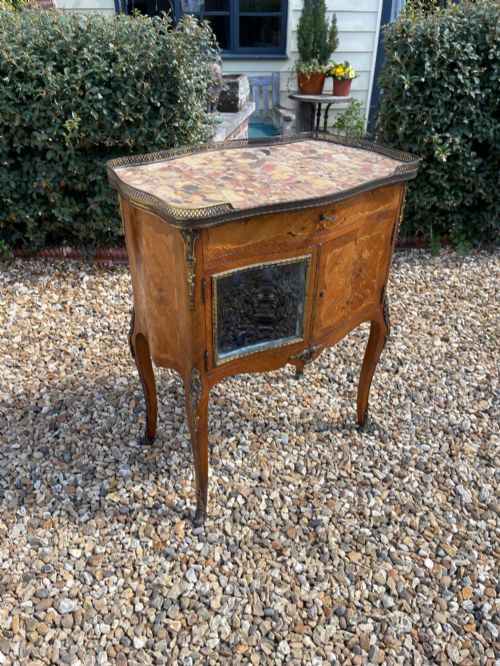


Victorian Gallery Top Cabinet
A victorian gallery top cabinet brings useful surface organisation and period timber to a room, offering a pierced or solid rail above.
Victorian Gallery Top Cabinet
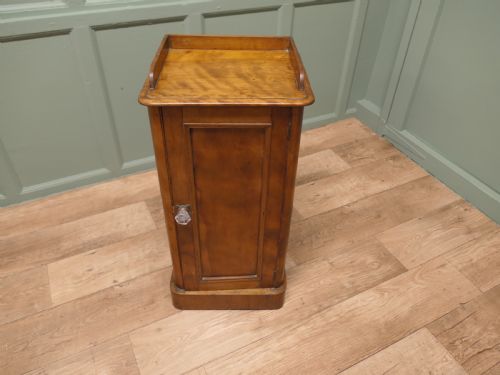
A victorian gallery top cabinet encompasses bedside cupboards, nightstands, and small storage pieces originating from the nineteenth century. These items typically feature a raised decorative or protective rail along the upper edge, designed to keep items secure on the surface.
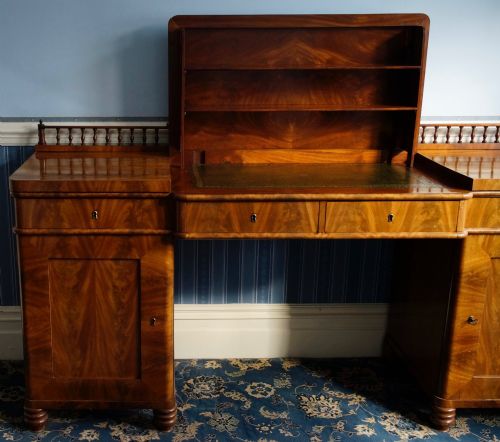
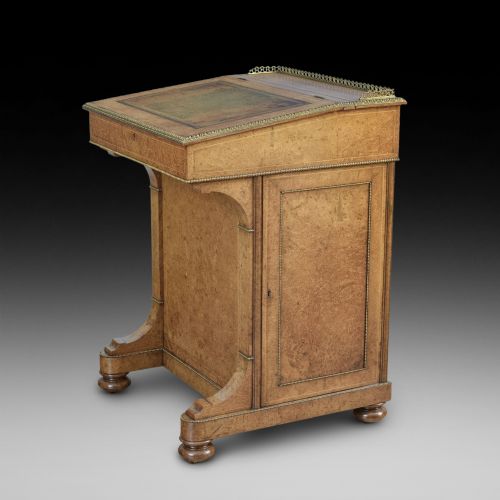
The versions most commonly met on this page span forms such as mahogany and walnut bedside cabinets, alongside davenport desks and side cabinets. They date from the broader Victorian era down to specific decades like the eighteen sixties and eighties.
Makers and makers' workshops of the period utilised various formats, incorporating mirrors, shelves, or drawers beneath the gallery. Buyers select these pieces for their compact footprint and functional compartment layout.
How they were made
Cabinet makers constructed these pieces primarily from solid and veneered timbers including mahogany, walnut, burr walnut, and amboyna. Individual examples incorporate brass mounts, marble surfaces, and leather writing inserts.
Listings feature items spanning the Georgian era through to the late Victorian period, dated across various decades including eighteen fifty and eighteen ninety.
What varies in quality
Quality rests upon the selection of timber figures, such as matching burr veneers or dense mahogany grains, and the crispness of any applied brasswork or carving. Finer examples display meticulous attention to interior drawer construction and secondary woods.
The integrity of the gallery rail and the alignment of doors and drawers indicate the original standard of craftsmanship. Better pieces maintain stability in their joints and retain original surface finishes without excessive intervention.
Holland and Sons
The Victorian Gallery Top Cabinet Glossary
- Gallery
- A raised rail, border, or mini-balustrade running along the top surface of a piece of furniture. It prevents items from sliding off and adds an ornamental silhouette.
- Davenport
- A compact desk featuring a sloped writing surface above a pedestal of drawers. They frequently incorporate side compartments and stationery wells.
- Crossbanding
- A decorative border technique where thin strips of veneer are laid across the grain of the primary wood. This frames panels and highlights the cabinet edges.
- Ebonised
- Timber treated with a dark finish to imitate expensive ebony wood. It was widely utilised during the Victorian period for contrast and formal appearance.
- Burr walnut
- Wood taken from the burl growth of a walnut tree, yielding swirling, complex patterns. Cabinet makers prized this material for prominent door and drawer fronts.
Victorian Gallery Top Cabinet: Frequently Asked Questions
How were bedside cabinets used?
Victorian bedside cabinets functioned primarily to house chamber pots, washbowls, or nighttime necessities out of sight. They offered enclosed storage behind a single door, often accompanied by an internal shelf.
As domestic habits changed, their enclosed spaces adapted to hold books, candles, or personal items beside a bed.
Which woods are most common?
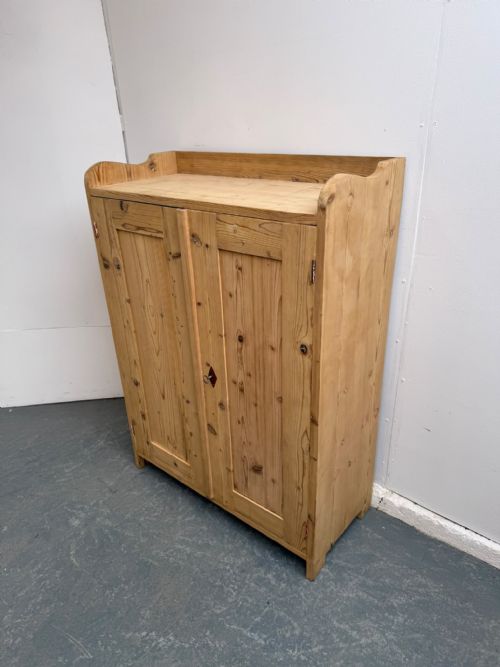
Mahogany appears most frequently across these listings, alongside walnut, burr walnut, and occasional examples in amboyna or pine. Cabinet makers selected these hardwoods for their durability and attractive grain patterns.
Many pieces also integrate secondary materials such as marble inserts on washstands or leather panels on writing desks.
How to date a piece?
Dating relies on observing construction methods, timber choices, and stylistic cues recorded across the Victorian period. Mid-century examples often display restrained classical lines, whereas later pieces incorporate richer veneers and ebonised highlights.
Comparing hardware like hinges, handles, and the presence of specific brass galleries helps narrow down the decade of manufacture.