





Victorian Gallery Back Desk
A victorian gallery back desk brings practical surface space and period character into a study, drawing on robust 19th-century cabinetmaking.
Victorian Gallery Back Desk
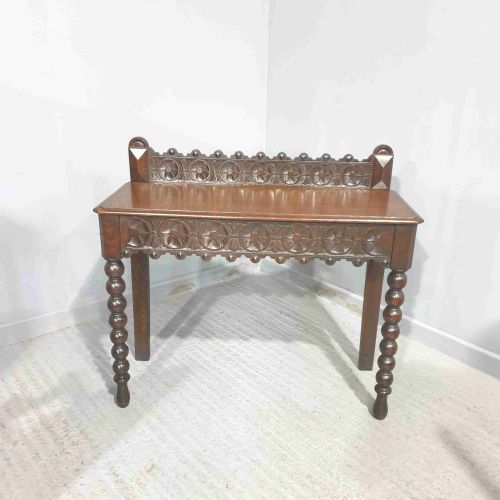
When you search for a victorian gallery back desk, you encounter versatile writing tables, side tables, and washstands that double as compact desks. These pieces originate primarily from the 19th century, carrying the hallmarks of Victorian, Regency, and Gothic Revival styles.
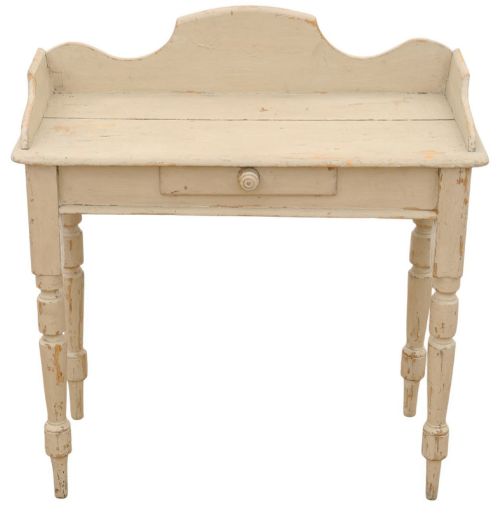
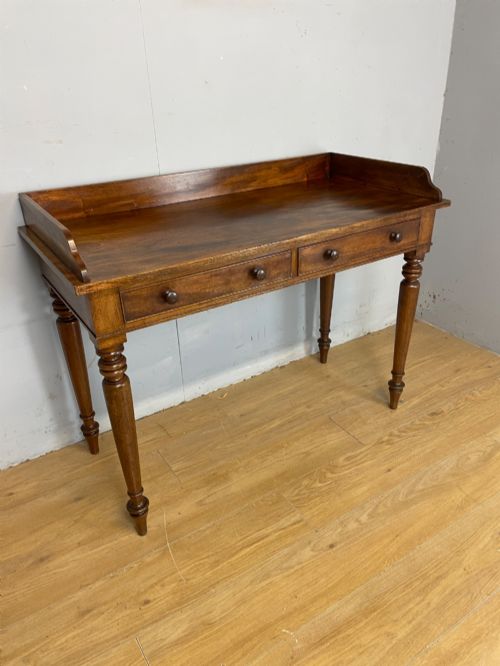
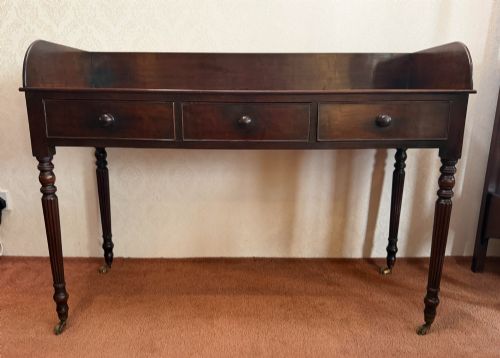
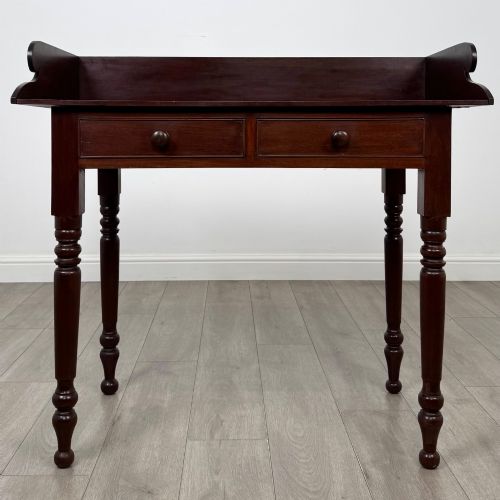
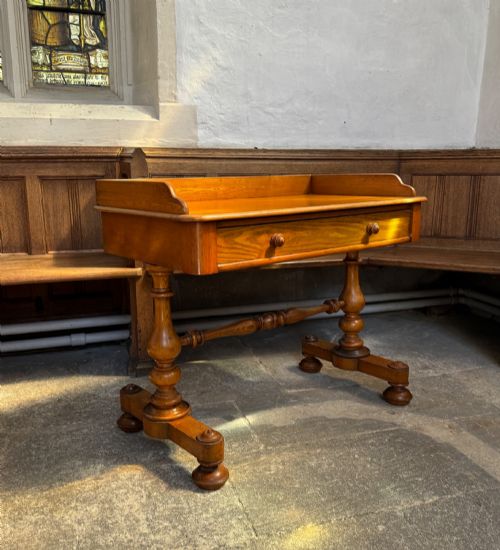
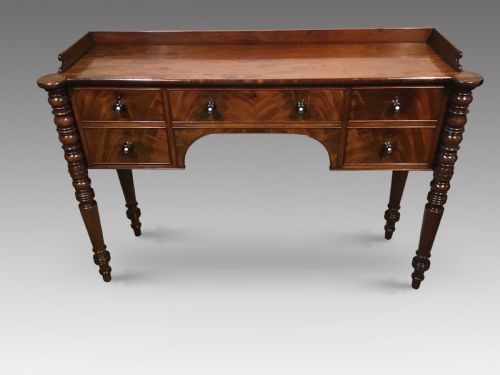
The version you are most likely to meet on this page is a mahogany or pine writing table featuring a raised back tier designed to stop papers or small items from sliding off. Side tables and console tables with similar raised backs also appear frequently, reflecting the utilitarian needs of period interiors.
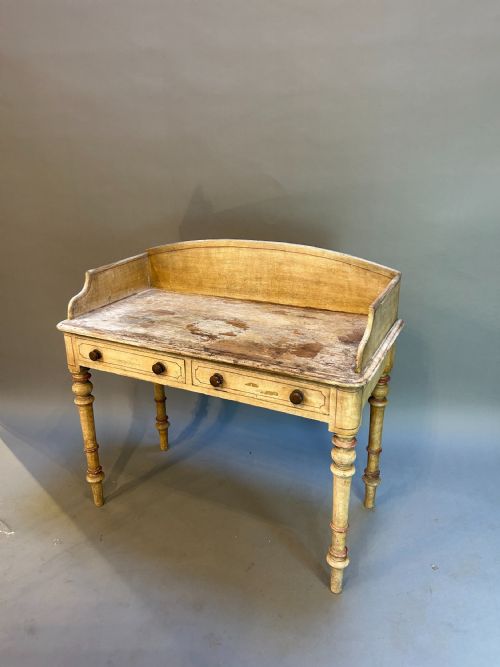
Makers adapted these forms across decades, leading to variations from rustic farmhouse pieces in pitch pine to formal flame mahogany designs. Some items incorporate marble tops or tile splashbacks, illustrating the crossover between domestic writing furniture and washstands.
Materials and construction
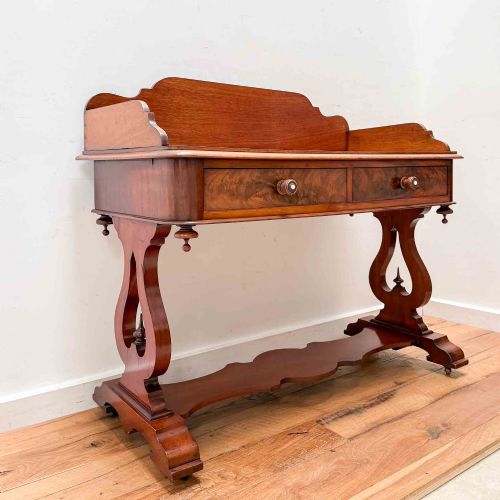
Cabinetmakers relied heavily on solid mahogany and pine as foundational timbers, often applying flame mahogany veneer to primary surfaces for visual depth. Secondary woods like oak appear in structural elements, whilst brass handles and fittings provide functional contrast.
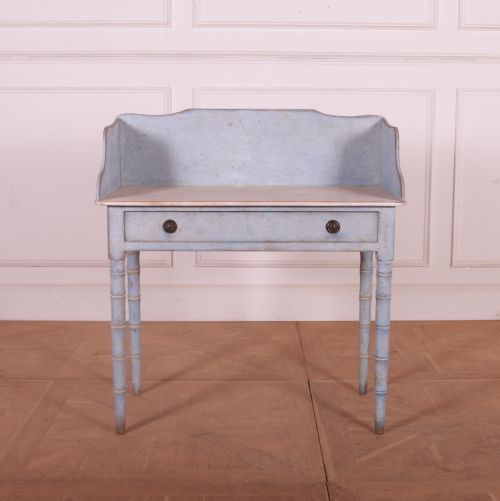
Painted finishes feature prominently across various pieces, showing how workshops transformed simpler timbers into decorative furniture. Gallery backs are constructed as integrated raised structures or applied wooden tiers, sometimes framing marble inserts or decorative tiles.
Materials represented across the selection include mahogany, flame mahogany veneer, oak, pitch pine, painted finishes, marble, and brass.
Judging the standard
The distinction between ordinary and superior examples lies in the selection of timber and the crispness of the joinery. Premium pieces employ highly figured flame mahogany and precise drawer construction with hand-cut joints.
Proportion and decorative restraint set better tables apart from utilitarian workshop output. Details such as well-turned legs, integrated gallery structures, and original brass hardware elevate the overall presence of the piece.
Maples·Charles Bevan
The Victorian Gallery Back Desk Glossary
- Gallery back
- A raised wooden, marble, or tiled border along the rear and sides of a tabletop. This feature prevents items from falling behind the furniture and adds architectural height.
- Flame mahogany veneer
- A thin slice of mahogany timber cut from the point where branches join the trunk, producing a distinctive flickering flame pattern. Cabinetmakers applied this to prominent surfaces for visual impact.
- Washstand
- A piece of furniture originally designed to hold a basin and jug for washing, frequently featuring a tiled or wooden gallery back. Many surviving examples function well as compact writing desks today.
- Console table
- A table designed to stand against a wall, supported by brackets or legs. These tables offer narrow footprints suitable for hallways and smaller rooms.
Victorian Gallery Back Desk: Frequently Asked Questions
What is a gallery back desk used for today?
These tables serve as functional writing desks, laptop stations, or hall tables in modern homes. The raised back provides a natural barrier that keeps stationery contained while adding period charm to a room.
Their compact proportions allow them to fit easily into smaller studies, bedrooms, or hallways where standard-sized desks would overwhelm the space.
How do I identify a 19th-century writing table?
Look for traditional construction methods such as hand-cut dovetails inside the drawers and the use of solid timber framing like mahogany or pine. Period pieces often display natural ageing on the wood and brass hardware.
Stylistic cues like turned legs, flame mahogany veneers, and integrated wooden gallery backs help confirm the nineteenth-century origins of the furniture.
Can I use a washstand as a desk?
Victorian washstands with flat wooden tops and gallery backs make practical writing surfaces or side tables. The original splashbacks function effectively to protect walls from ink or modern accessories.
Many period washstands share identical dimensions with small writing tables, making them easily adaptable for contemporary study use.
What is the difference between side tables and desks?
Traditional desks usually incorporate functional drawers beneath the writing surface, whereas side tables were often built with simpler aprons and no storage. However, many 19th-century side tables include drawers and were used interchangeably for writing.
The addition of a gallery back on either form helped secure papers, blurring the functional line between a pure side table and a writing desk.