
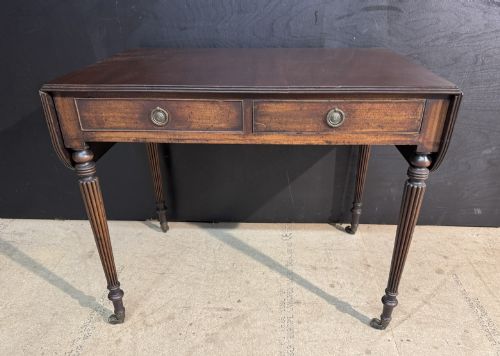
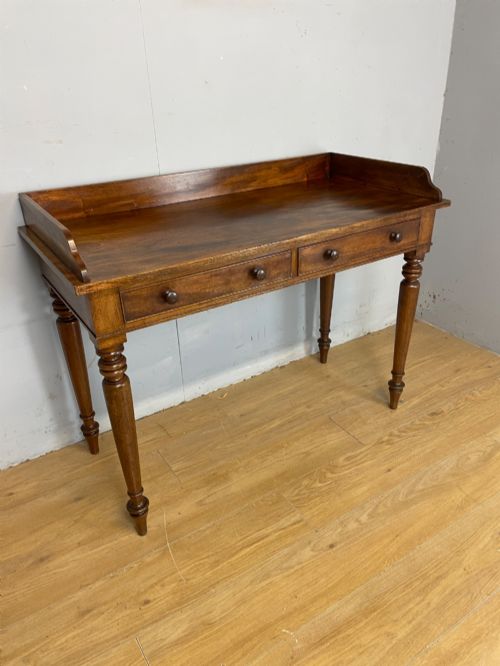
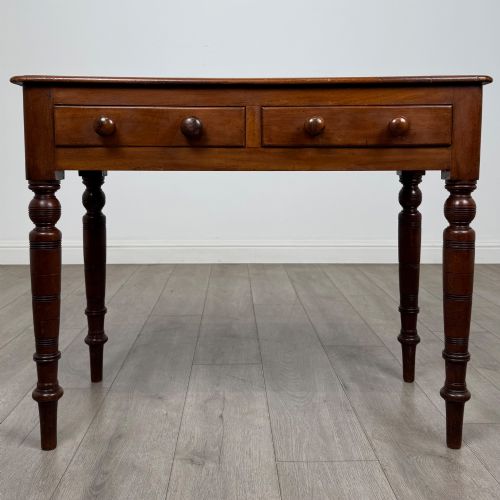
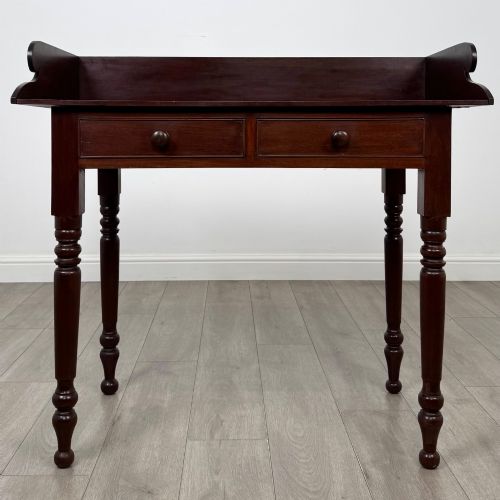
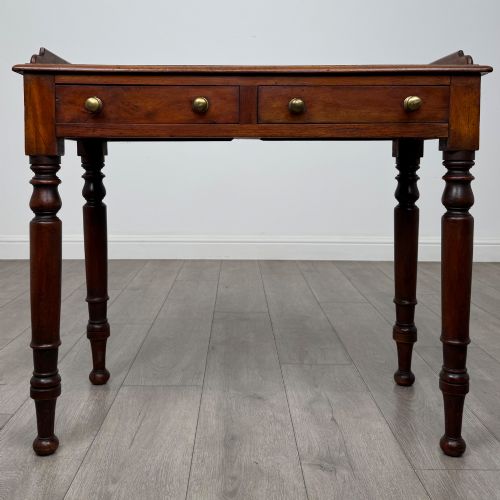
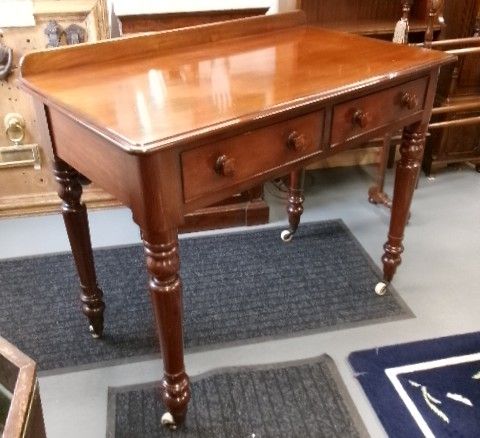
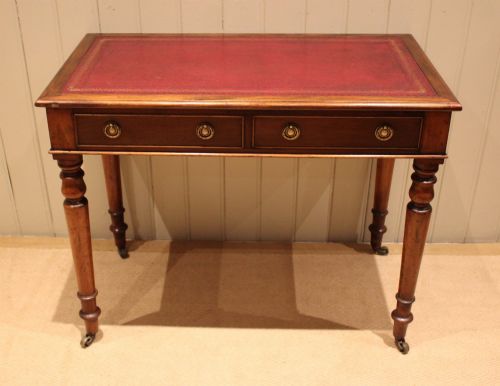
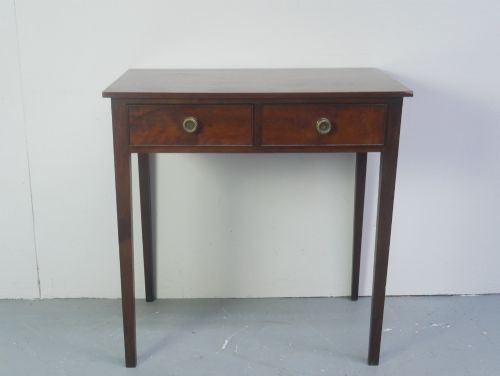

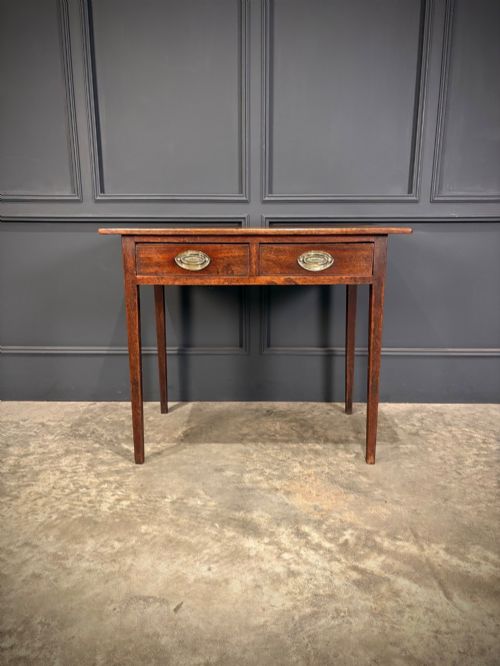
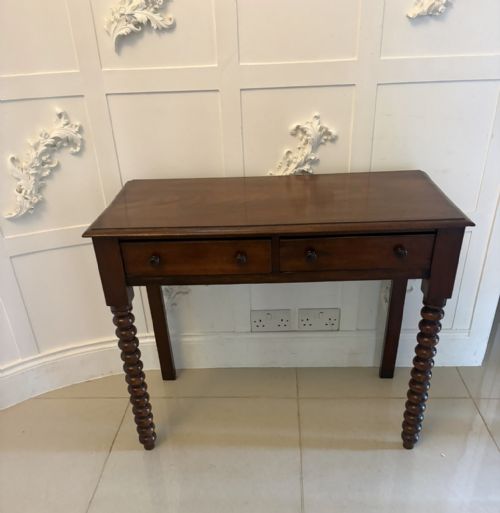
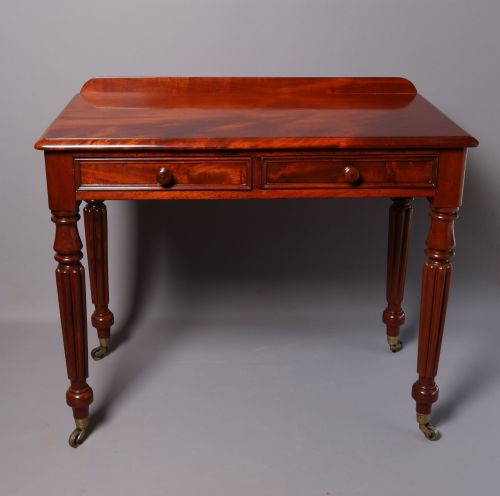
Mahogany Two Drawer Desk
A mahogany two drawer desk provides a sturdy workspace, combining practical storage with the rich grain of traditional timber.
Mahogany Two Drawer Desk
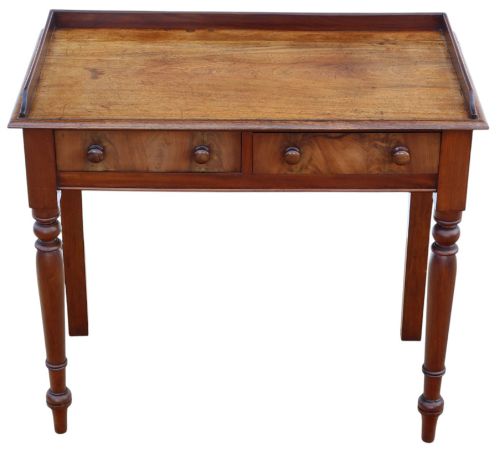
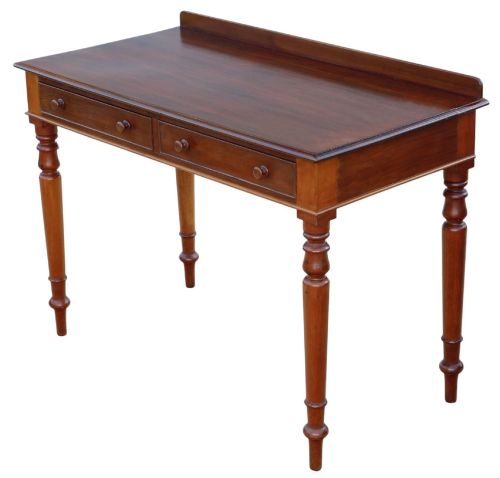
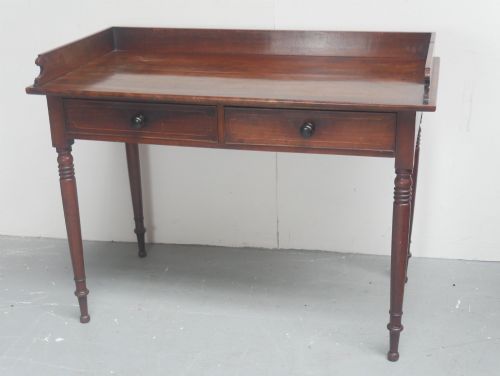
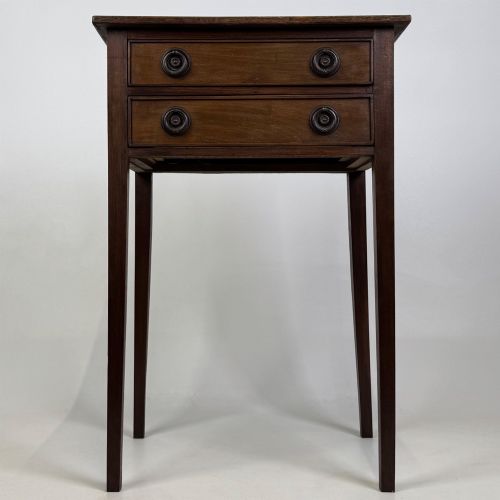
A mahogany two drawer desk appears across several periods, most commonly from the Victorian era, the Regency period, and the Georgian years. These pieces function primarily as writing tables, side tables, or compact library tables outfitted with a pair of frieze drawers for stationery and small items.
Buyers seeking this specific form will encounter various interpretations, ranging from simple provincial side tables to refined library tables and campaign pieces. The selection includes variations such as bow-front designs, sofa tables, and tray-top writing tables.
Origins span English workshops, Scottish cabinet makers, and notable firms, reflecting both formal domestic use and functional travel furniture. Solid timber construction and veneered surfaces both appear frequently across the available inventory.
Materials and construction
Makers utilised solid mahogany and flame mahogany veneer laid over secondary timbers, often accentuating the primary wood with boxwood inlay, satinwood, and brass hardware. Leather inserts appear frequently on the writing surfaces, sometimes tooled in gold.
Structural elements rely on traditional joinery, with drawer linings typically formed from secondary softwoods or oak. Turned legs, reeded legs, and barley twist supports define the lower framework depending on the stylistic period of the piece.
Scottish makers occasionally added hidden compartments for secret drams.
Judging quality
The standard of a mahogany two drawer desk rests on the selection of timber figure, the crispness of any inlay or turned woodwork, and the retention of original brass fittings and leather inserts. Finely figured flame mahogany veneer and subtle boxwood stringing indicate higher workshop ambition.
Proportion and structural integrity distinguish superior examples from utilitarian pieces. Clean drawer construction with hand-cut dovetails and smooth operation within the aperture separate accomplished cabinet making from simpler regional output.
Heal and Son·Gillows·J A Mein Edinburgh·Andrew Thomson and Sons·W Williamson and Sons
The Mahogany Two Drawer Desk Glossary
- Flame mahogany
- A veneer cut from the fork of the mahogany tree, producing a distinctive fire-like mottled pattern. It was widely utilised on prominent surfaces during the Georgian and Victorian periods.
- Frieze drawer
- A drawer situated directly beneath the tabletop within the structural frame. These desks typically incorporate two such drawers side by side.
- Reeded legs
- Cylindrical table legs carved with parallel convex mouldings running vertically. This decorative treatment appears frequently on Regency and Victorian writing tables.
- Sofa table
- A rectangular side table designed to sit in front of a sofa, typically featuring drop leaves at either end and two drawers in the frieze. Examples frequently emerge in Regency and Georgian styles.
- Campaign furniture
- Portable pieces made for military officers, often featuring recessed brass handles and sectional construction. These desks and secretaire chests were built for transport.
Mahogany Two Drawer Desk: Frequently Asked Questions
How do I identify a Georgian desk?
Georgian desks display restrained proportions, simpler lines, and often employ solid mahogany rather than heavy veneers. Look for hand-cut dovetails in the drawer construction and characteristic hardware of the eighteenth century.
Secondary woods inside the drawers, such as oak or pine, also help confirm the period when compared to later Victorian manufacturing methods.
What is a campaign desk?
A campaign desk is designed for travel, featuring durable construction and recessed brass handles that do not catch on luggage. These pieces often separate into sections for easier transport.
Military officers utilised these practical writing tables during campaigns across the British Empire.
Are leather top inserts original?
Many desks retain their original tooled leather writing surfaces, though replacement leathers are common due to nineteenth-century wear and tear. A replacement done in traditional calfskin with hand-tooling maintains historical consistency.
Examine the edges of the leather and the surrounding timber rebate to determine if the insert has been renewed.
Where should I place a side table desk?
These compact desks suit studies, living rooms, or bedrooms as writing surfaces or console tables. Their finished backs often allow them to stand away from a wall in the middle of a room.
Keep them away from direct heat sources to protect the mahogany timber and any leather writing inserts from drying out.