
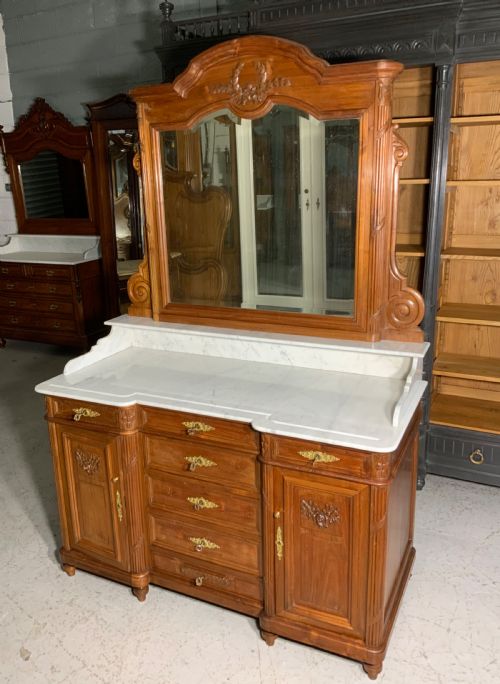

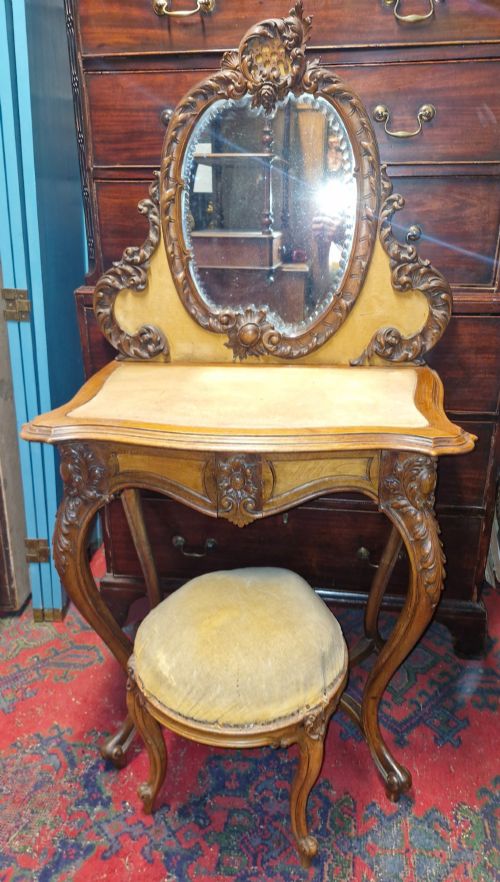
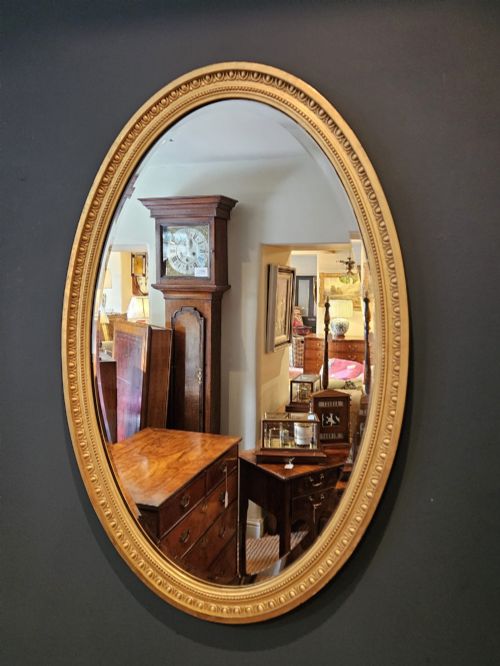
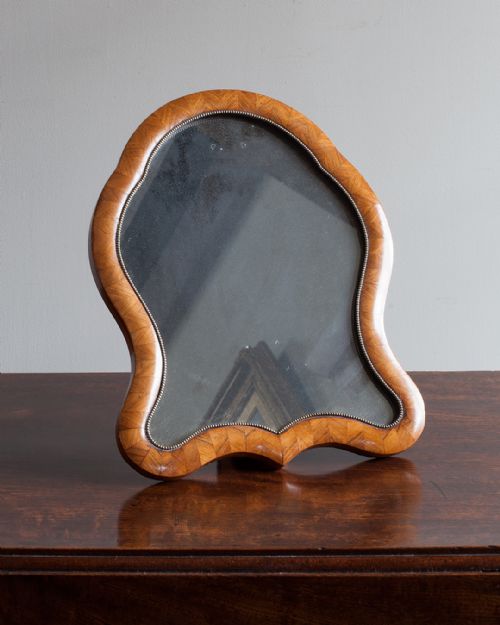
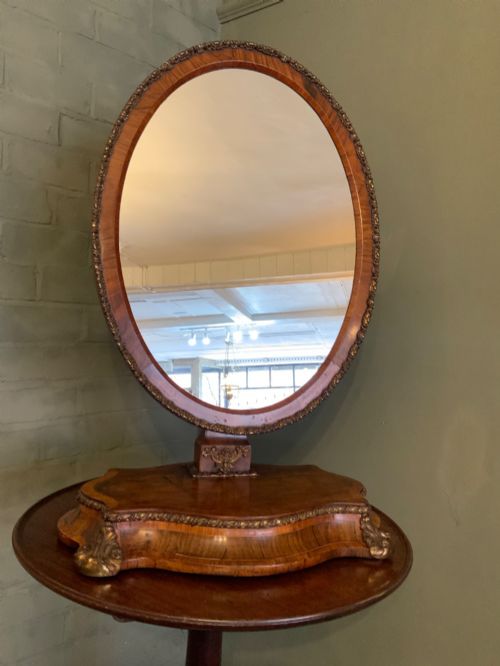
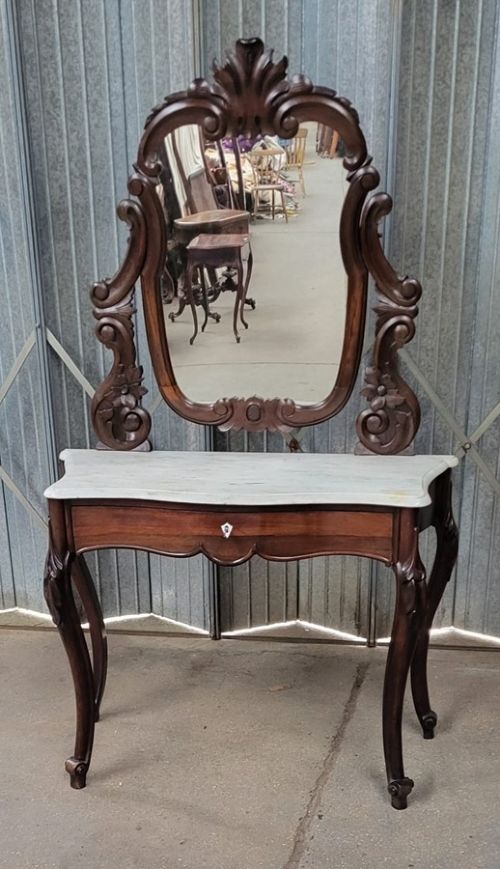
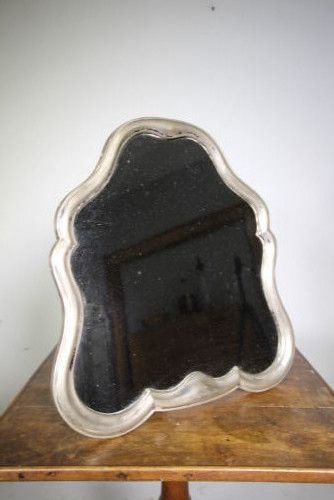
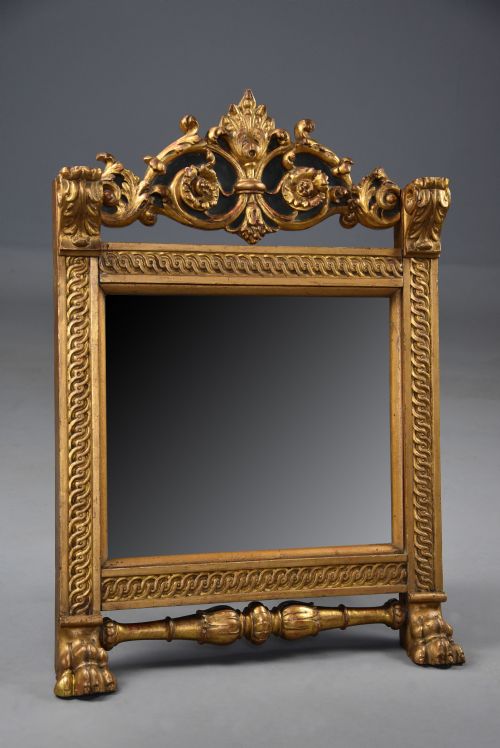



Victorian French Vanity Mirror
A victorian french vanity mirror brings continental elegance to a dressing room, offering both practical reflection and ornate decorative presence.
Victorian French Vanity Mirror
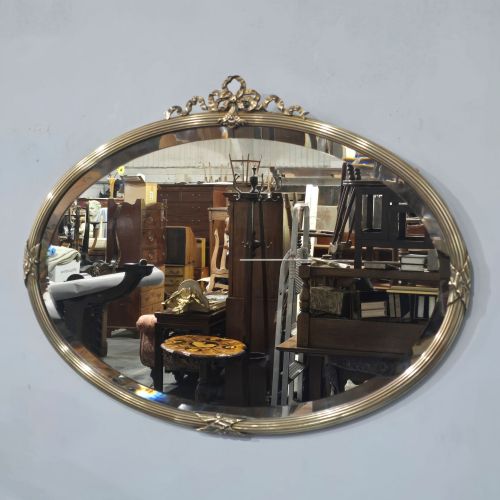
When buyers search for a victorian french vanity mirror, they encounter a range of tabletop and dressing table pieces dating from the nineteenth century. These objects combine British Victorian production eras with continental French stylistic influences, particularly rococo revival forms.
Materials and construction methods
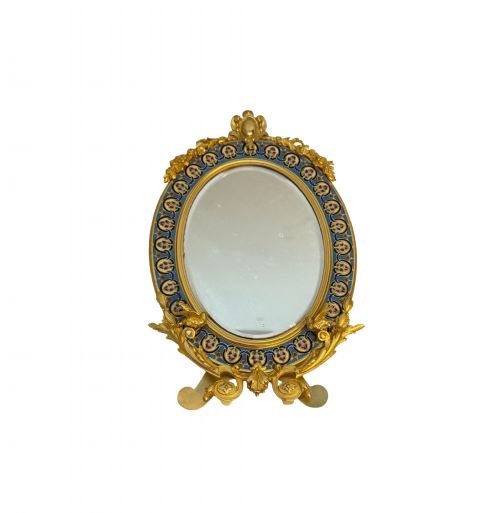
The construction of these mirrors relies heavily on carved woods such as walnut, oak, and kingwood, alongside cast metals like brass and gilt bronze. Artisans incorporated decorative techniques including champlevé enamel, hand painting, and gilt gesso to enrich the frames.
Reflecting surfaces typically consist of bevelled glass set into secure rabbets within wood or metal structures. Ormolu mounts and porcelain plaques, such as Sevres porcelain or works by Jean Gille, frequently accent the primary frames.
Periods represented span from the 1860s through the Edwardian era, alongside Victorian and French Napoleon III styles.
Assessing quality and craftsmanship
Quality in these mirrors rests upon the crispness of the carving in wood and gesso, and the weight and detail of cast metal components. Finer pieces demonstrate meticulous hand-chasing on bronze mounts and seamless joinery in the underlying timber frames.
The integration of decorative elements like champlevé enamel or inset porcelain separates standard production from exceptional work. Superior examples maintain original mercury or bevelled glass that retains clear reflection without excessive clouding.
Jean Gille
The Victorian French Vanity Mirror Glossary
- Champlevé
- An enamelling technique where artists hollow out troughs in a metal surface to receive vitreous enamel before firing. This colourful decoration appears frequently on nineteenth-century bronze frames.
- Ormolu
- Gilded bronze ornamentation applied to furniture and mirror frames during the period. The technique creates a rich, gold-coloured finish through the use of ground gold amalgam.
- Gesso
- A plaster-like mixture applied to wood frames to create a smooth base for gilding. Artisans carved intricate decorative motifs directly into this dried compound.
- Bevelled glass
- Mirror glass with edges cut and polished at an angle to create a framed effect. This detail signals finer manufacture in nineteenth-century looking glasses.
Victorian French Vanity Mirror: Frequently Asked Questions
Where should a vanity mirror go?
These table mirrors sit comfortably upon dressing tables, chests of drawers, or washstands to provide a focused reflection for grooming. Their compact proportions allow them to anchor a bedroom scheme without dominating the surface.
Positioning them near a natural light source enhances both their reflective utility and the decorative impact of their gilt or bronze frames.
How do I secure a pivoting mirror?
Most pivoting table mirrors use side screws or tension nuts set into the supporting arms to hold the glass at the desired angle. Adjusting these fittings requires gentle tightening to prevent strain on the delicate wood or metal frame.
Regular checks ensure the pivot mechanism remains stable during daily use.
What defines French rococo style?
French rococo revival design relies on asymmetrical scrolling, naturalistic floral motifs, and C-scrolls that give frames a fluid appearance. This aesthetic contrasts with strict geometric classical symmetry.
In nineteenth-century mirrors, this style manifests in exuberant plaster gesso mouldings and cast bronze work.
Are these mirrors meant for travel?
Nineteenth-century vanity mirrors served stationary domestic roles rather than portable travel use, despite their manageable tabletop proportions. Their substantial weight from glass, bronze, and wood made them permanent bedroom fixtures.
Treating them as fixed decorative objects preserves their structural integrity.