


Victorian French Porcelain Lamps
Victorian French porcelain lamps bring warmth and decorative presence to a room, combining painted ceramic bodies with ornate metal mounts.
Victorian French Porcelain Lamps
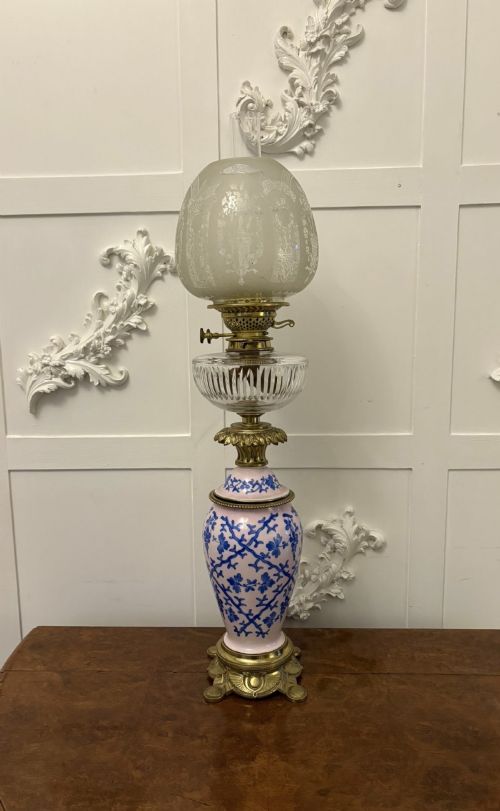
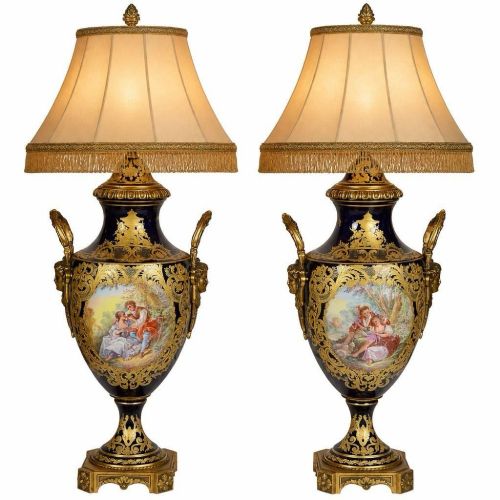
When you search for victorian french porcelain lamps, you find lighting pieces that date across the nineteenth century, with strong representation from the eighteen-eighties and eighteen-nineties. These items take the form of table lamps and oil lamps, often styled in the French Rococo Revival or Napoleon III manner. Many survive as matched pairs, though single examples appear frequently.
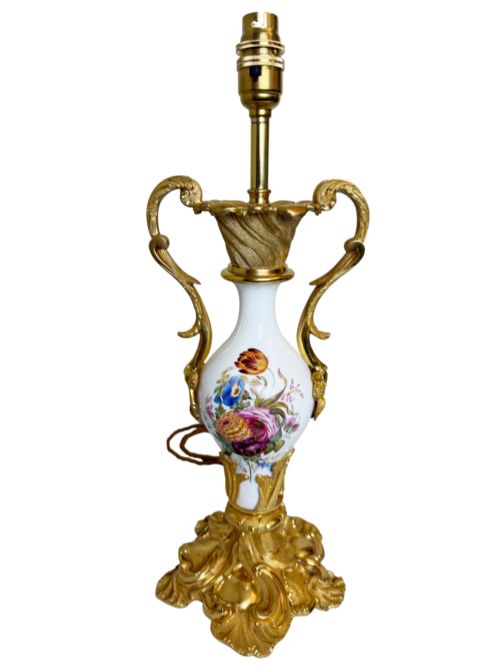
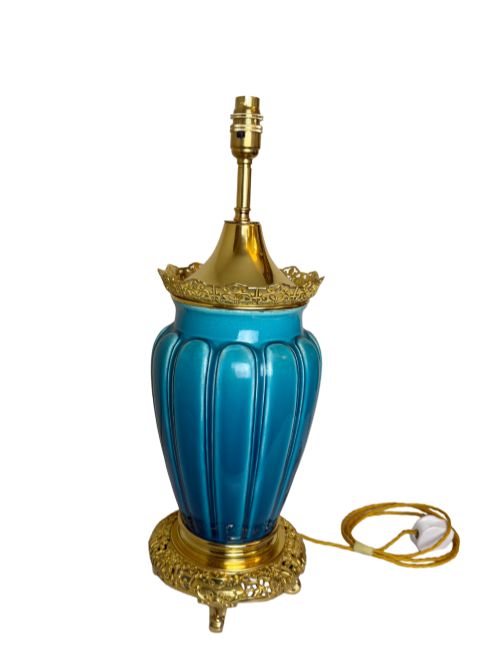
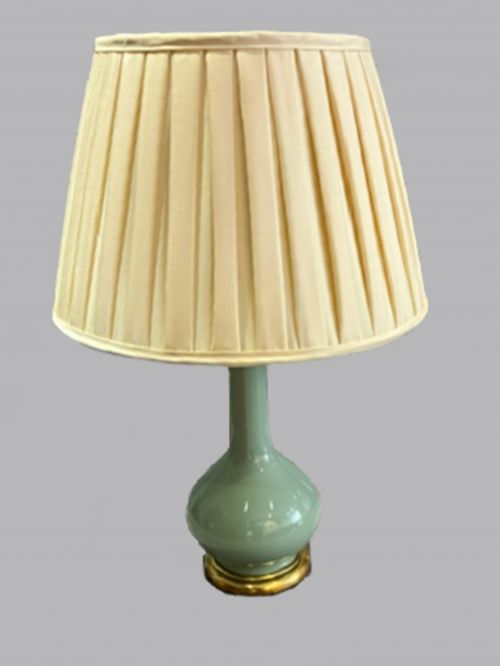
The bodies utilise coloured ceramic, faience, and porcelain, frequently enhanced with hand-painted floral designs or distinctive glazes. Common colourways include turquoise blue, celadon, bleu celeste, and bleu royale, alongside specialised decorative techniques like pate sur pate. Metal mounts in ormolu, gilt bronze, and brass frame the ceramic components.
Origins trace directly to nineteenth-century French workshops, including pieces created in the manner of Sevres. Forms range from petite items to large, impressive decorative oil lamps and converted vases. They sit comfortably in period drawing rooms or traditional interiors as focal illumination.
How they were made
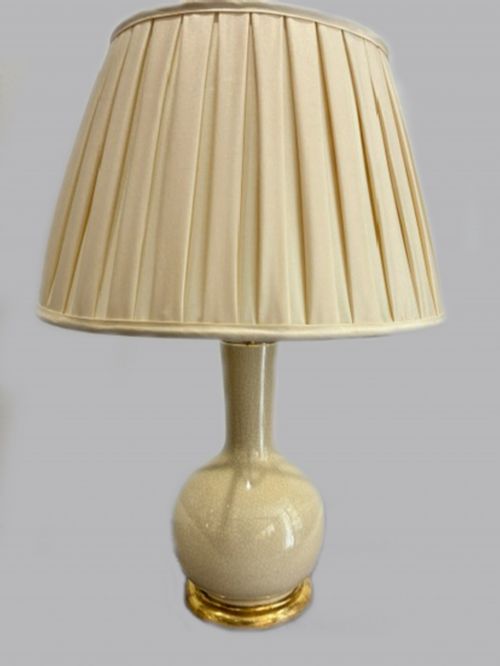
Potters shaped the ceramic and porcelain bodies, applying specialised glazes such as crackle ware or vibrant monochrome colours like celadon and turquoise. Artisans then added detailed hand-painted floral motifs or delicate pate sur pate relief work before firing the pieces. Many bodies were adapted from earlier vase forms or specifically produced for lighting purposes.
Foundry workers cast the metal mounts in brass, ormolu, and gilt bronze, utilising ornate French Rococo Revival scrollwork and architectural trims. These metal components were securely fitted to the porcelain bases to support burner assemblies or lamp fittings. Silk and fabric shades often complete the upper structure of these nineteenth-century pieces.
Some nineteenth-century makers evidently decided that a porcelain vase simply wasn't finished until it wore a heavy bronze crown and a silk hat.
What varies in quality
The precision and artistic merit of the hand-painted decoration set the finer examples apart from standard production. Delicate pate sur pate work and hand-applied floral designs display superior brushwork and depth. Rich colour glazes like bleu celeste and bleu royale indicate careful kiln control and higher-grade materials.
The weight, crispness of chase work, and richness of gilding in the ormolu and gilt bronze mounts determine the overall tier of the piece. Heavy, finely detailed brass and bronze framing complements high-grade porcelain bodies more successfully than simpler cast metal. Matched pairs also command greater interest than standalone lamps.
Sevres
The Victorian French Porcelain Lamps Glossary
- Ormolu
- Gilded bronze mounted onto decorative objects and furniture. This technique creates a rich golden finish that enhances the decorative appeal of nineteenth-century French metalwork.
- Pate sur pate
- An intricate ceramic technique where liquid clay is painted in successive layers onto a body. This builds up a low-relief cameo effect before firing.
- Bleu celeste
- A bright sky-blue ceramic glaze popular in nineteenth-century French porcelain production. It provides a striking backdrop for gilt bronze mounts.
- Rococo Revival
- A nineteenth-century design style drawing on eighteenth-century French motifs. It is characterised by asymmetrical scrollwork, naturalistic curves, and ornate floral detailing.
- Faience
- Tin-glazed earthenware produced across France and Europe. It offers an opaque, colourful surface suitable for hand-painted ornamentation.
Victorian French Porcelain Lamps: Frequently Asked Questions
Are these lamps converted oil lamps?
Many examples began life as burning oil lamps during the nineteenth century, utilising font assemblies above porcelain reservoirs. Over time, these functional pieces were adapted for modern electrical use while retaining their original brass and bronze fittings.
This conversion process preserves the decorative ceramic body and metal mounts. Collectors appreciate the retention of the original nineteenth-century oil lamp architecture within modern interiors.
How do I identify Sevres style pieces?
Pieces executed in the Sevres style typically feature rich coloured glazes such as bleu celeste or bleu royale combined with elaborate ormolu mounts. Hand-painted floral motifs and fine gilding are standard characteristics of this aesthetic.
These items draw inspiration from the famous French porcelain factory's nineteenth-century output. They focus on decorative elegance rather than everyday utilitarian lighting.
What interior settings suit these lamps?
These lamps fit naturally into traditional drawing rooms, studies, or formal dining spaces where nineteenth-century decor is present. Their ornate gilt bronze mounts and colourful porcelain bodies complement antique wooden furniture and classic textiles.
Single lamps work well on sideboards or smaller tables, while matched pairs provide symmetry on larger mantelpieces or chests of drawers.
How do I care for antique porcelain lamps?
Maintain the porcelain and ceramic bodies by dusting gently with a dry, soft cloth. Avoid harsh chemical cleaners that might damage hand-painted floral designs or delicate glazes.
For the ormolu and gilt bronze mounts, use a dry brush to clear crevices. Protecting the original metal patination preserves the historic character of the piece.