
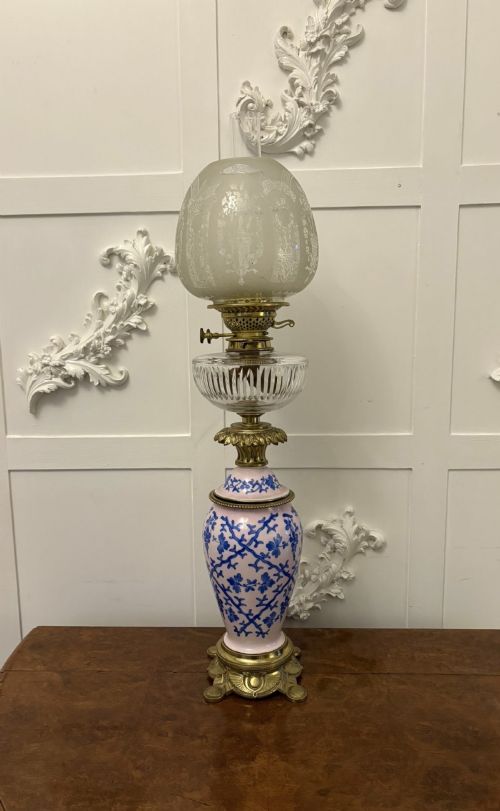


Antique French Oil Lamp
An antique french oil lamp brings together heavy metalwork and painted ceramics, offering a warm decorative focus for any room.
Antique French Oil Lamp
When you search for an antique french oil lamp, you encounter lighting vessels that bridge the gap between functional domestic utility and elaborate interior decoration. The pieces available span the nineteenth century, capturing periods from Regency through Napoleon III, Victorian, and Art Nouveau. You are most likely to meet examples combining ceramics and metalwork, designed to sit on a table as a central decorative object.
The physical forms range from single table lamps and converted burners to pairs of candlesticks and vases adapted for modern illumination. Many pieces integrate hand-painted porcelain, faience, or majolica bodies with structural mounts of brass, bronze, or ormolu. These items reflect the shifting stylistic tastes of nineteenth-century France, moving from classical revivalism towards more decorative and organic forms.
Assessing quality in antique french lighting
The quality of these pieces rests on the crispness of the metal casting and the artistry of the ceramic body. Finer examples display deeply chased brass and ormolu mounts with sharp definition in decorative motifs like cherubs, foliage, or classical columns. Softer, shallower casting in the metalwork typically indicates standard commercial production.
Hand-painted ceramic reservoirs and bases also differentiate levels of craftsmanship. Superior items feature finely detailed enamelling, rich hand-applied glazes, and well-integrated mounts that fit the ceramic body precisely without gaps. Simpler pieces rely on plain glass or mass-produced transfer-printed patterns.
The Antique French Oil Lamp Glossary
- Ormolu
- Gilded bronze used for decorative mounts and fittings. This technique involves applying a gold amalgam to a bronze base and heating it to bond the finish.
- Faience
- Tin-glazed earthenware produced in France and across Europe. It provides an opaque white surface suitable for painted decoration.
- Repoussé
- A metalworking technique where the artisan hammers the design from the reverse side to create a raised relief on the front.
- Majolica
- A type of earthenware decorated with colourful opaque glazes fired onto a tin-enamelled base. It yields vibrant hues and lustrous finishes.
- Opaline glass
- A translucent, milky glass often tinted in pastel shades such as blue or green. It was frequently used for nineteenth-century lamp reservoirs.
Antique French Oil Lamp: Frequently Asked Questions
How do I wire an antique french oil lamp?
Most of these lamps have already been converted for electricity during their history, utilising the existing central collar or burner space for wiring. If you acquire an unconverted piece, a professional electrician can run a cord through the internal brass stem without altering the exterior metalwork.
When planning the conversion, ensure the shade fitter matches the gallery size of the burner to maintain the correct proportions of the piece.
Are these lamps safe to use today?
Original oil reservoirs are typically sealed or bypassed during conversion to modern electrical standards. This ensures the vessel serves purely as a decorative lamp base rather than holding combustible fuel.
Have any newly acquired antique lighting checked by a qualified professional to ensure the internal wiring meets current safety regulations.
How do I clean brass and bronze mounts?
Dust the metal surfaces regularly with a soft, dry brush to prevent dirt accumulation in the crevices of the casting. Avoid harsh chemical polishes that can strip away the original aged patina and damage any remaining gilding.
For porcelain and glass sections, use a damp cloth with mild soap, taking care to keep moisture away from any electrical components or exposed metal seams.
What periods do these lamps come from?
The pieces originate predominantly from the nineteenth century, spanning reigns and movements such as Regency, Napoleon III, Victorian, and Art Nouveau. Stylistic indicators like cast cherubs, classical columns, or foliate Art Nouveau patterns help narrow down the decade of production.
Matching the construction style with the ceramic type offers further clues to the workshop's origin and manufacturing date.