

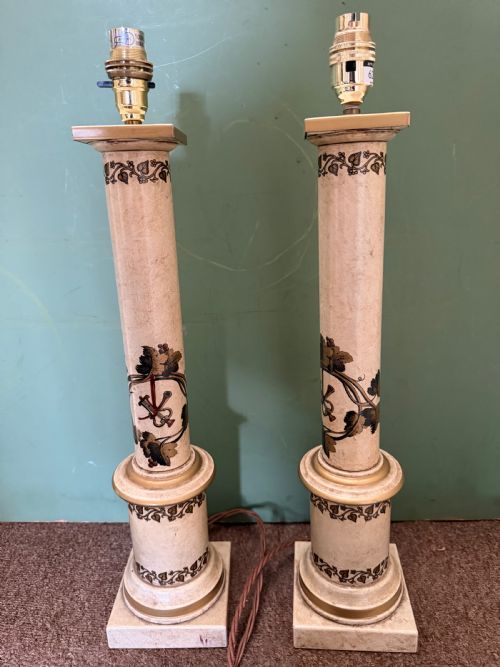


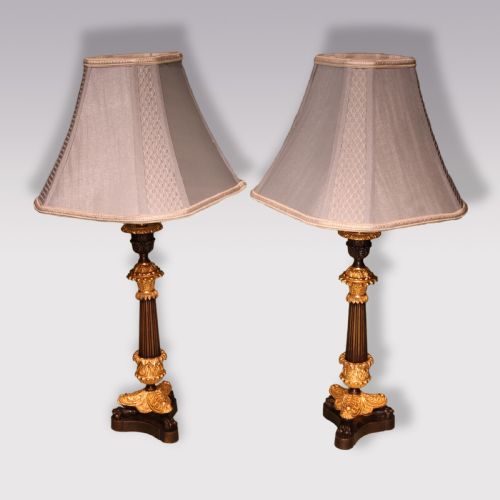


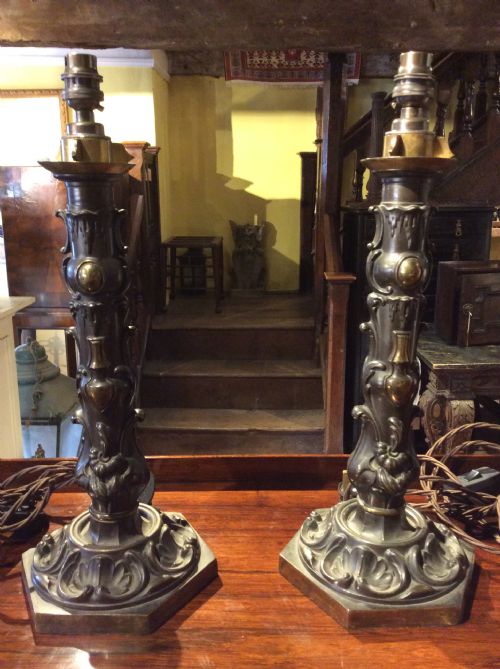
Pair Vintage Buffet Lamps
These pair vintage buffet lamps bring proportion and symmetry to a sideboard or console, offering slender illumination scaled for narrow furniture.
Pair Vintage Buffet Lamps
When you search for pair vintage buffet lamps, you are looking at symmetrical pairs of lighting fixtures designed originally for sideboards and serving tables. These pieces stand taller and narrower than standard reading lamps, keeping light above platters and dishes while casting a warm glow over a room.
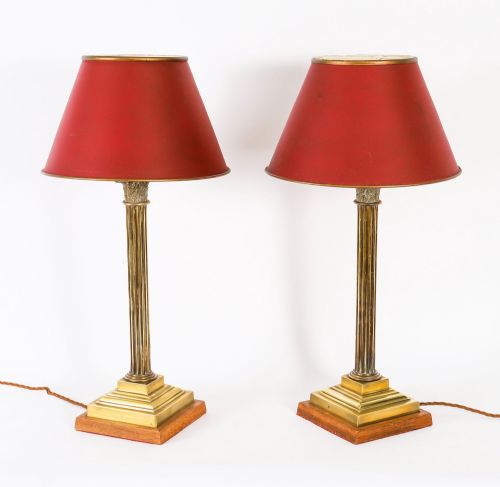
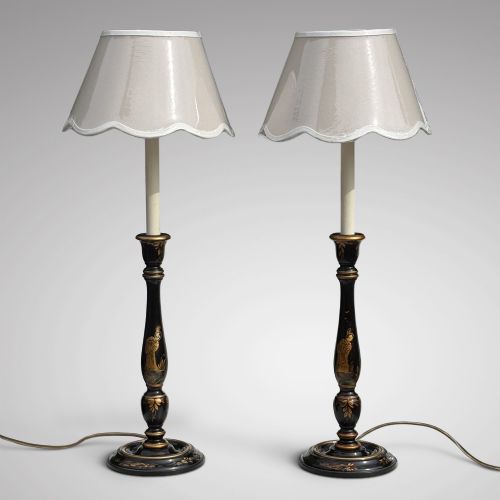
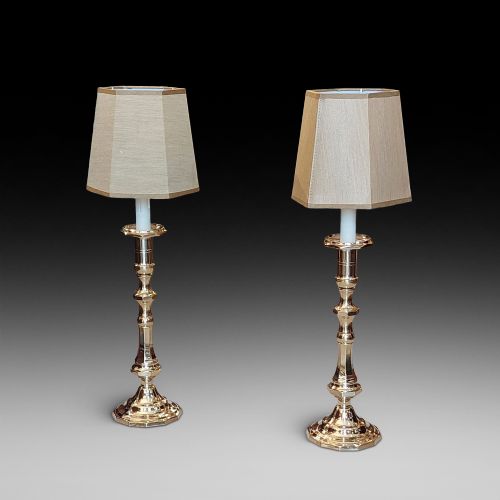
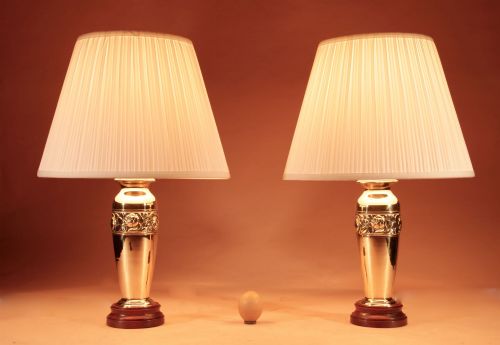
The versions you meet most frequently on this page span the late nineteenth century through the art deco era, drawing on Victorian, neoclassical and chinoiserie design idioms. They take the form of converted candlesticks, column lamps and slender vases wired for electricity.
How they were made
Makers utilised cast and spun metals, principally brass, ormolu and bronze, often combined with hand-painted glass, enamel or fabric shades. Corinthian columns and candlestick forms required precision lathe work and foundry casting before being chased or polished by hand.
Lacquer work and tole-peinte required meticulous layer application upon wood or metal substrates, while cloisonné techniques fused enamel wires to metal bases. These varied processes resulted in robust structures intended to last through generations of domestic use.
Styles represented across these items include French Empire, Art Deco, Chinoiserie and Neoclassical design influences.
What varies in quality
Quality in pair vintage buffet lamps rests on the crispness of the casting detail and the integrity of the materials. Heavier brass and bronze foundations with deep, hand-finished chasing stand apart from lighter stamped metal alternatives.
The sophistication of the surface decoration, such as intricate chinoiserie lacquering or hand-painted tole work, dictates the standard of the piece. Matching symmetry within the pair and harmonious proportions remain vital indicators of superior workshop execution.
The Pair Vintage Buffet Lamps Glossary
- Ormolu
- Gilded bronze, where a mercury and gold amalgam is applied to a bronze base and heated to leave a rich golden layer. This technique was widely employed in French decorative arts.
- Tole-peinte
- Painted sheet metal, typically iron or steel, decorated with lacquered designs and hand-painted motifs. It provides durable colour and pattern on lighting bodies.
- Cloisonné
- An enamelwork technique where metal wires are soldered to a base to form compartments, which are then filled with vitreous paste and fired. This creates vibrant patterned surfaces on ceramic or metallic bodies.
- Corinthian column
- An architectural order featuring an ornate capital decorated with acanthus leaves. Lamps styled in this manner adapt classical column proportions for domestic interiors.
- Repoussé
- A metalworking technique where the metal is hammered from the reverse side to form a raised design in relief. It adds tactile texture to brass and silver components.
Pair Vintage Buffet Lamps: Frequently Asked Questions
Where should I place buffet lamps?
These lamps find their traditional home on sideboards, console tables or narrow sideboards where floor space is limited. Their slender height ensures they illuminate dining rooms or hallways without obstructing eye lines across the furniture.
They also sit comfortably on deep mantelpieces or grand desks, providing balanced vertical points of light that anchor a room's decorative scheme.
How do I clean antique brass lamps?
Dust the metal gently with a dry, soft cloth to prevent grime accumulation in chased recesses. Avoid harsh chemical polishes that strip away the aged patina accumulated over decades.
If cleaning is necessary, use a mild soapy solution on a damp cloth, drying the metal immediately afterwards to preserve the surface finish.
Are these lamps safe to use today?
Many older lamps have been converted or rewired at various stages in their history, meaning wiring standards vary. It is prudent to have a qualified electrician inspect the internal cord and plug before regular use.
Checking the lampholder and fitting ensures the piece meets modern safety requirements while retaining its historic exterior components.
Can I change the lampshades?
Shades can be updated to suit your interior scheme, provided the fitter matches the original gallery or harp attachment size. Selecting fabrics like silk or linen helps replicate the soft diffusion characteristic of period lighting.
Proportion is key when choosing replacements; the shade width should generally remain narrower than the base to maintain the slender silhouette.