




Pair Sevres Style Vases
These pair sevres style vases bring nineteenth-century French display grandeur into a room through rich porcelain and gilt metal mounts.
Pair Sevres Style Vases
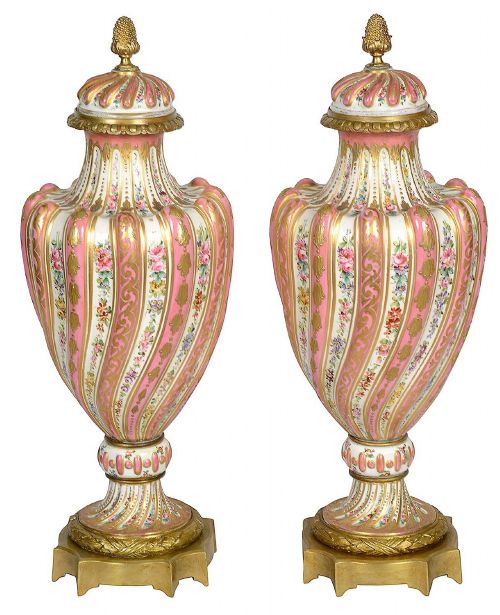
When you search for pair sevres style vases, you find nineteenth-century decorative urns and lidded vessels created in the manner of the famous French royal factory. The most common form on this page is the lidded or wide-rimmed porcelain vase mounted with gilt bronze, ormolu, or gilt metal.
These pairs span the nineteenth century, from eighteen-sixty through to nineteen-twenty, reflecting various French revival aesthetics including Rococo, Louis Sixteenth, and Neoclassical styles. Makers such as Samson Paris also produced high-grade interpretations in the Sèvres taste during this period.
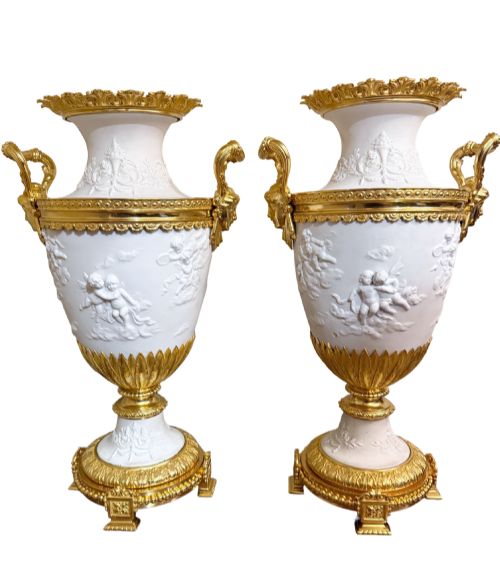
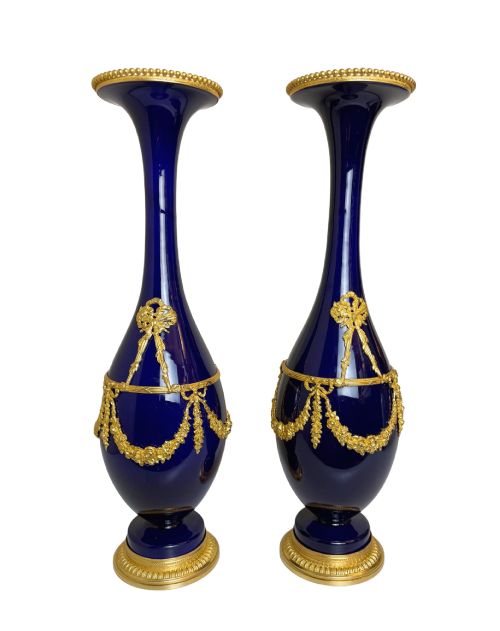
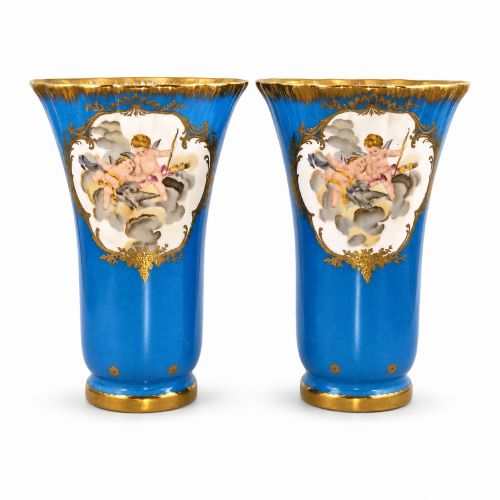
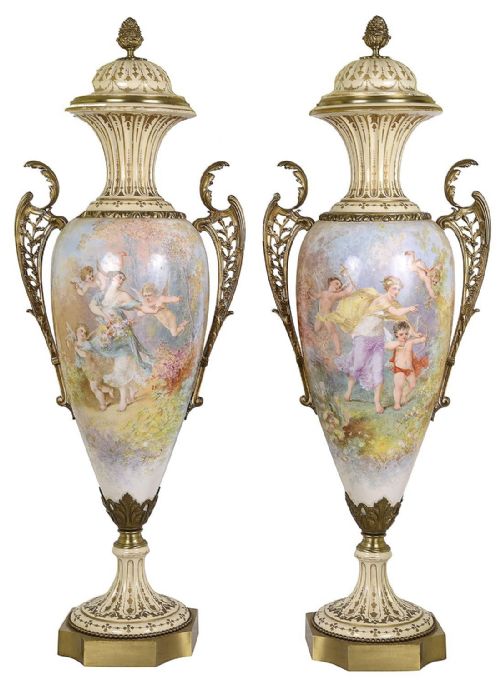
Many examples feature distinct colour grounds such as bleu céleste, pink, cobalt blue, and white porcelain. They often incorporate hand-painted panels, battle scenes, putti, and floral motifs alongside architectural handles and pedestal bases.
How they were made
The foundation of each piece is fired porcelain, shaped into urns, ewers, and lidded vases, then finished with coloured grounds and hand-painted details. Enamel and gold leaf frequently highlight the painted scenes and borders.
Metal mounts in ormolu, gilt bronze, and gilt metal provide structural framing and decorative handles, cast and chased to complement the curved porcelain bodies. Silk elements occasionally appear in related display contexts.
Several tall lidded pairs stand over a metre high, bringing an immense sculptural presence to any room.
What varies in quality
Quality rests primarily on the crispness of the casting in the ormolu mounts and the skill evident in the hand-painted porcelain panels. Finer examples display meticulous brushwork in figures like putti and battle scenes, paired with heavily chased gilt bronze fittings.
The weight and presence of the porcelain body also set pieces apart, ranging from standard decorative items to monumental exhibition quality pairs that stand over a metre tall.
Samson Paris
The Pair Sevres Style Vases Glossary
- Ormolu
- Gilded bronze mounts applied to furniture and porcelain vessels. This technique was widely used in French decorative arts to add opulent metallic trim.
- Bleu Céleste
- A bright sky-blue porcelain ground colour associated with eighteenth and nineteenth-century French ceramics. It provides a vivid backdrop for hand-painted panels.
- Putti
- Depictions of chubby male infants, often winged, appearing in classical art and painted porcelain scenes. They are frequently seen frolicking among floral motifs on nineteenth-century vases.
- Ewer
- A large jug with a wide spout and a shaped handle, often produced as a decorative vase pair. These vessels derive their form from traditional water-pouring jugs.
- Samson Paris
- A nineteenth-century French ceramic workshop known for producing high-quality copies and interpretations of porcelain from famous factories like Sèvres.
Pair Sevres Style Vases: Frequently Asked Questions
Where were pair sevres style vases displayed?
These vases were designed for prominent placement in nineteenth-century drawing rooms, often sitting on mantelpieces, pedestals, or pier tables.
Their large scale and reflective ormolu mounts allowed them to catch and throw candle or gas light during evening receptions.
How do I identify a nineteenth-century pair?
Look for the weight and colour of the porcelain, alongside the distinct texture of nineteenth-century gilt bronze mounts. Characteristics like bleu céleste grounds and hand-painted putti panels typically point to this period.
Examining the construction of the base and the joinery of the metal fittings also helps confirm the manufacturing era.
Can these vases be used as lamps?
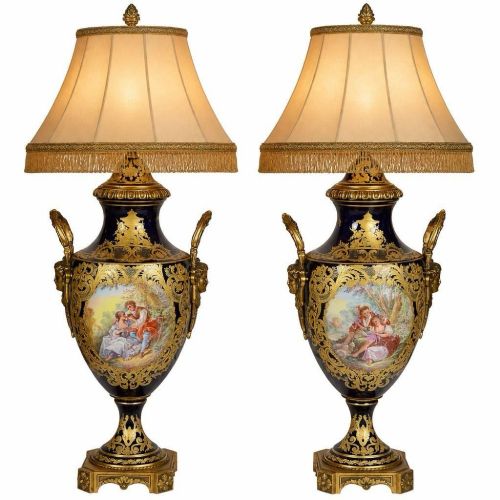
Some period and antique examples were adapted to hold electrical wiring while retaining their original porcelain and ormolu bodies. These converted pieces combine historical display presence with functional household lighting.
Wiring methods vary, so inspection of the internal fitting is recommended before daily use.
What styles influenced these decorative urns?
French Rococo revival, Neoclassical, and Louis Sixteenth aesthetics heavily shape the design of these vessels. Makers drew inspiration from royal French archives to reproduce classical motifs.
This historical revivalism created a diverse range of ornamental shapes, from twisted bodies to classical lidded urns.