





Victorian French Desk Accessory
A victorian french desk accessory brings tactile refinement to a writing space through cast bronze, marble, and hand-cut crystal.
Victorian French Desk Accessory
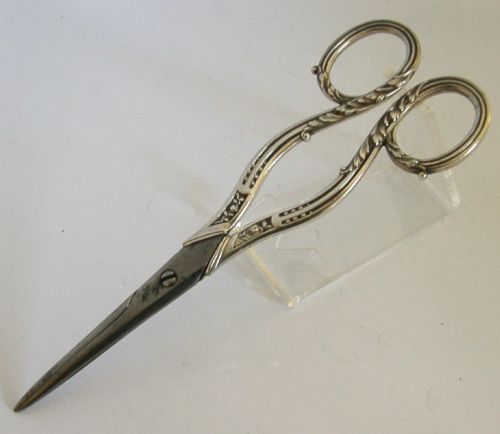
When searching for a victorian french desk accessory, you encounter functional writing implements and desktop containers spanning from the mid-nineteenth century into the early twentieth century. These pieces encompass inkstands, inkwells, letter racks, writing slopes, and decorative caskets shaped by continental aesthetics.
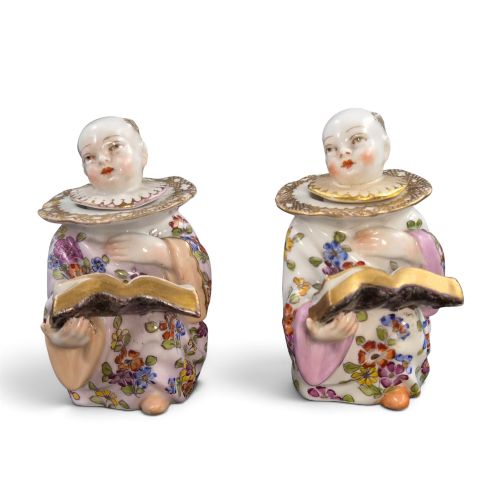
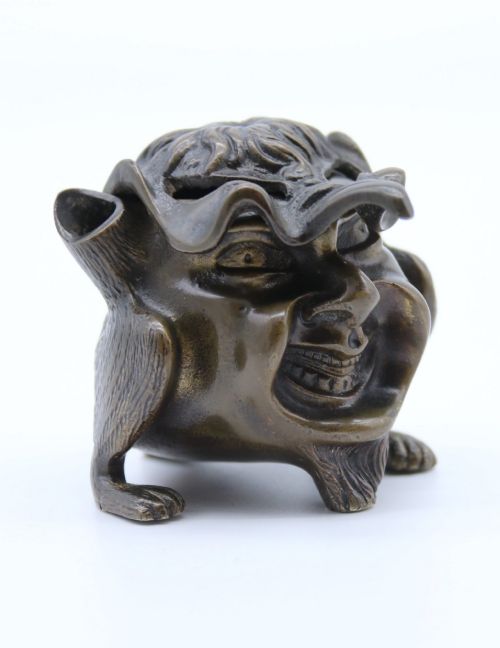
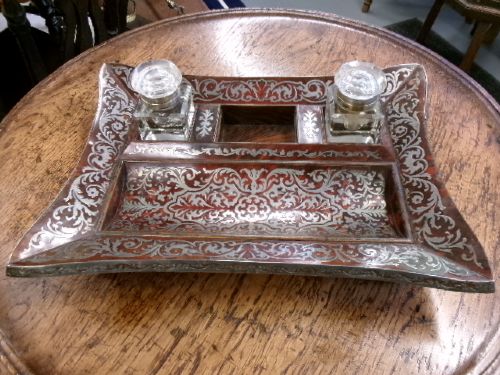
The objects most frequently met on this page include gilt bronze inkstands, marble bases mounted with ormolu, and inlaid boulle work desk sets. Their forms range from architectural neoclassical designs to playful figural groups depicting animals and theatrical characters.
Originating predominantly from French workshops during the nineteenth century, these pieces reflect the elaborate desk culture of the period. They combine utility with ornamental display, designed specifically to furnish elite writing tables.
Materials and construction
Makers shaped these items using heavy cast metals, predominantly bronze, brass, and ormolu, often paired with contrasting natural materials such as vert marble, onyx, and tortoiseshell. Gilt bronze and fire-gilded ormolu provide a radiant surface finish that complements the dense weight of the stone bases.
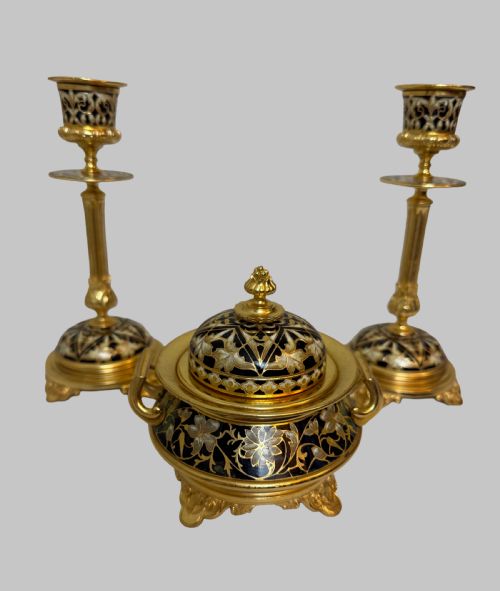
Intricate surface decoration relies on specialised techniques including champlevé enamel work, inlaid brass boulle detailing, and hand-painted porcelain panels. Crystal glass components feature precision facet cutting, while smaller elements incorporate fine sterling silver mountings.
Distinctions in quality
The choice and integration of secondary materials dictate the upper tier of execution, seen in unblemished marble bases, tightly fitted tortoiseshell veneers, and undamaged hand-painted porcelain inserts. Structural integrity of hinged lids and glass inkwell inserts further separates everyday utilitarian pieces from exhibition-grade examples.
Edmé Samson·A. Marionnet
The Victorian French Desk Accessory Glossary
- Ormolu
- Gilded bronze produced by applying a mercury amalgam to a bronze base and heating it. This technique creates a durable, golden metallic finish characteristic of high-status French decorative objects.
- Boulle work
- Marquetry technique utilising tortoiseshell and brass inlaid into a dark wooden ground. It adds rich surface pattern and texture to nineteenth-century desk stands and caskets.
- Champlevé
- Enamelling method where troughs are gouged into a metal surface and filled with vitreous paste before firing. This process produces vibrant coloured patterns flush with the surrounding metal.
- Toleware
- Lacquered or painted metalware used for decorative stands and boxes. It provides a smooth surface suited to floral decoration.
- Writing slope
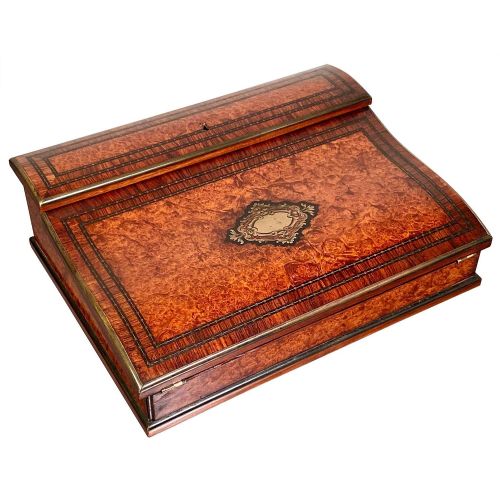
- Portable desk featuring a hinged, slanted writing surface and internal compartments for stationery. These pieces combine practical storage with fine exterior woodwork and brass inlay.
Victorian French Desk Accessory: Frequently Asked Questions
What is a boulle work desk stand?
A boulle work desk stand is a writing accessory decorated with inlaid brass and tortoiseshell arranged in intricate patterns. These pieces reflect mid-nineteenth-century French taste for elaborate surface ornamentation.
They usually incorporate fitted compartments for inkwells and pens, serving as both a functional writing tool and a display object for the library table.
How do I identify ormolu on these pieces?
Ormolu refers to a finely chased bronze object treated with a gold-mercury amalgam finish. It possesses a warm, deep lustre that differs significantly from modern electroplated brass.
Look for hand-chased detailing within the metalwork, where craftsmen have refined the cast surface using small chisels and matting tools.
Where were these desk accessories made?
These desk accessories were produced primarily in French workshops and Parisian foundries during the nineteenth and early twentieth centuries. They catered to an international market seeking elite furnishings for private libraries and administrative offices.
Stylistic influences range from the formal symmetry of the French Empire to the organic, flowing lines of Art Nouveau and Belle Epoque design.
How should I care for marble and bronze?
Maintain bronze and ormolu by dusting gently with a soft, dry brush without applying abrasive metal polishes that can strip the historic finish. Marble components require simple wiping with a damp cloth and immediate drying to protect the polished stone surface.
Keep these items away from direct sunlight and excessive humidity to preserve the integrity of glues, tortoiseshell, and delicate gilding.