





Double Glass Inkwell Set
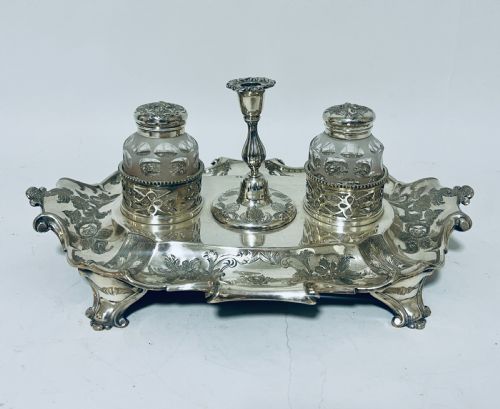
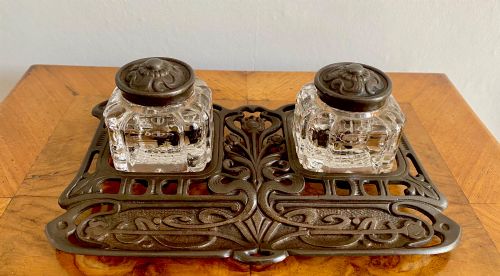
A double glass inkwell set organises the writer's desk with matched glass vessels mounted in brass, silver, or wood frames.
Double Glass Inkwell Set
A double glass inkwell set brings together twin glass ink vessels mounted within a desk stand, inkstand, or desk tidy. These pieces frequently appear in Victorian, Edwardian, and 19th Century iterations alongside earlier Georgian examples and later Elizabeth II pieces.
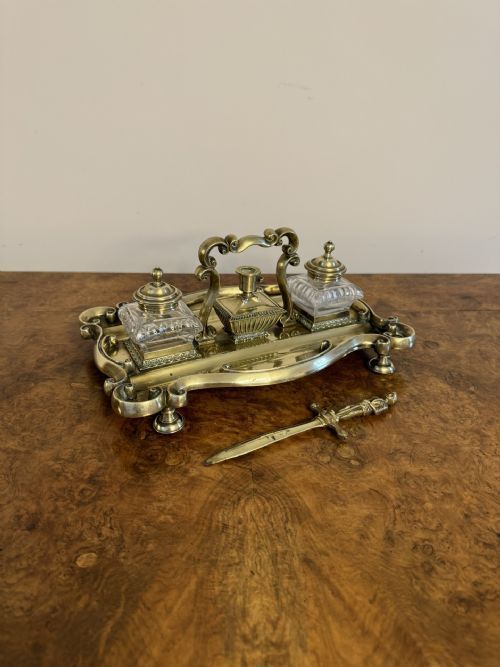
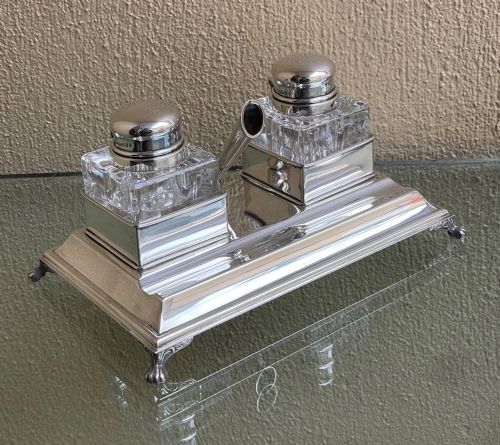
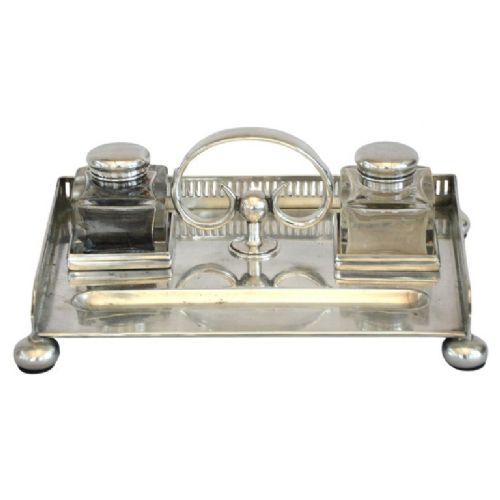
The primary form involves a fitted tray or stand made from brass, silver plate, sterling silver, or woods such as walnut, mahogany, and ebony. Cut glass inkwells rest securely within these mounts, often accompanied by pen troughs, drawers, or chambersticks.
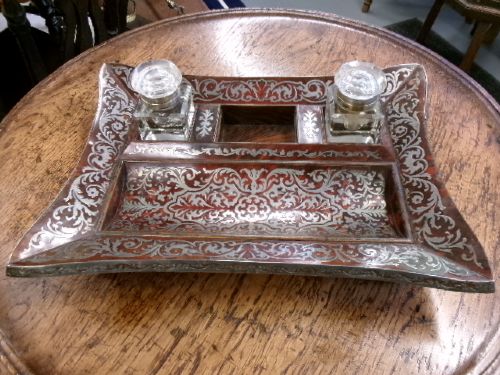
Buyers encountering this selection will discover French Boulle work, Black Forest carved wooden stands, and Art Nouveau designs alongside traditional English silver-plated desk accessories.
Materials and construction
Makers combined heavy cast brass, silver plate, or solid silver with moulded and cut glass to construct durable desk stands. Wood varieties like burr walnut, oak, and ebony provided stable bases, frequently embellished with brass mounts, inlay, or intricate hand carving.
Glass vessels were shaped to hold liquid ink securely, often featuring fitted metal collars and hinged lids. Metal components were cast, plated, or hand-chased to create decorative frames that supported the weight of the ink pots.
Styles represented span Victorian, Edwardian, French Napoleon III, Art Nouveau, Black Forest, Georgian, and French Second Empire.
Assessing quality and craftsmanship
Quality reveals itself in the weight and clarity of the glass inkwells and the precision of the metal or wooden mounts. Finer examples display crisp casting in brass or ormolu, meticulous wood carving in Black Forest styles, and fully intact fitted components.
James Cartland and Sons·Walker And Hall·Daniel Holy of Sheffield·Moser
The Double Glass Inkwell Set Glossary
- Inkstand
- A portable stand or tray holding inkwells, sanders, and pen holders for a writing desk. It serves as the primary base unit for these desk sets.
- Standish
- An alternative traditional term for a desk stand or inkstand used to hold writing implements and ink containers. These often date to the Georgian and Victorian periods.
- Boulle work
- An elaborate form of marquetry using brass and tortoiseshell inlaid into wood surfaces. This technique appears on French Napoleon III desk sets.
- Sheffield plate
- A fused composite material made by rolling a sheet of silver onto a copper base. It is commonly found on 19th Century desk stands.
- Chamberstick
- A short portable candlestick fitted with a handle and a drip pan. Some large Victorian double inkstands incorporate these directly into the desk accessory.
Double Glass Inkwell Set: Frequently Asked Questions
What is a double glass inkwell set?
A double glass inkwell set is a desk accessory featuring two glass ink pots fitted into a shared stand made from metal, wood, or silver. These sets provided dual ink supplies for different colours or types of writing fluid.
They sit on a desktop as a functional centrepiece and include provisions for resting pens and storing small stationery items.
How were these inkstands used?
Writers dipped quill or steel nibs into the glass inkwells housed within the stand during correspondence and administrative tasks. The twin pots allowed users to keep black and red ink ready for use.
Desk stands often stayed in one place on a library table or Davenport desk rather than travelling.
How do I date a desk stand?
Dating relies on hallmarks on silver components, distinct stylistic markers like Art Nouveau curves or Georgian proportions, and the construction methods of the wood or brass base. Materials such as cut glass and Sheffield plate also point to specific manufacturing eras.
Comparing the overall design to documented Victorian, Edwardian, and 19th Century examples narrows the production period.
How do I live with an antique inkstand?
An antique inkstand serves as an organised desk tidy for modern pens, small office supplies, or as a decorative display piece on a study shelf. Placing it away from direct heat protects wooden bases and fitted materials.
Original glass inkwells require gentle cleaning with warm water to preserve any remaining ink residue or interior patination.