

Victorian French Armchairs
These Victorian French armchairs combine ornate continental carving with nineteenth-century comfort, bringing character and presence to any room.
Victorian French Armchairs
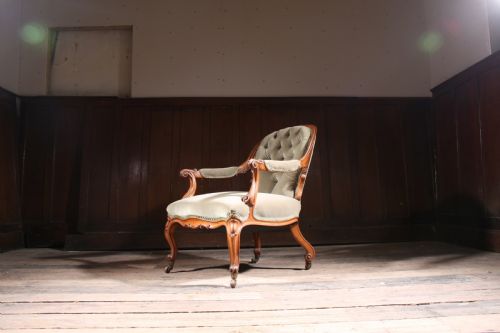
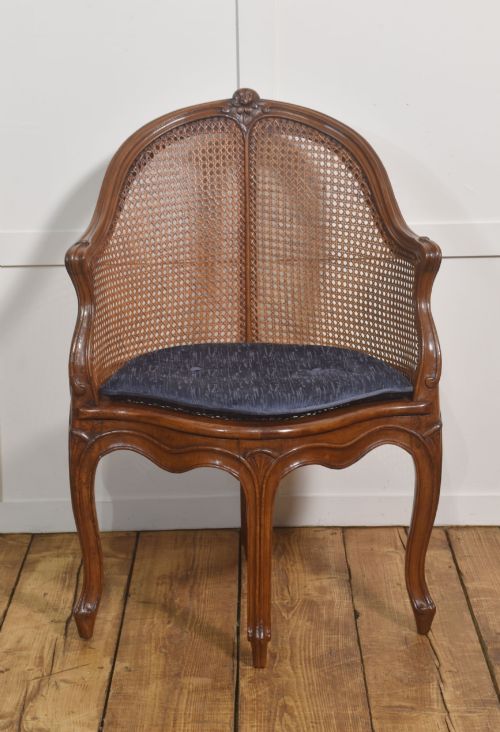
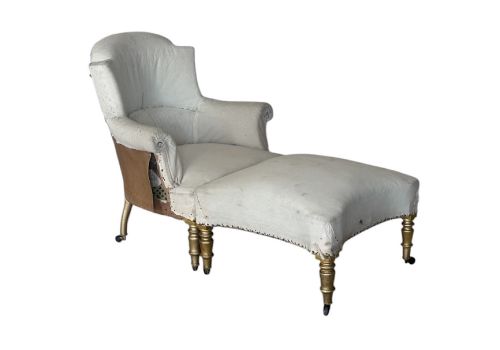
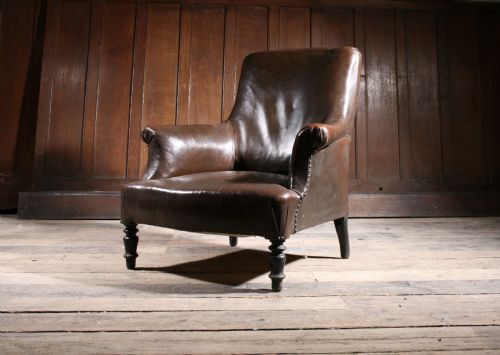
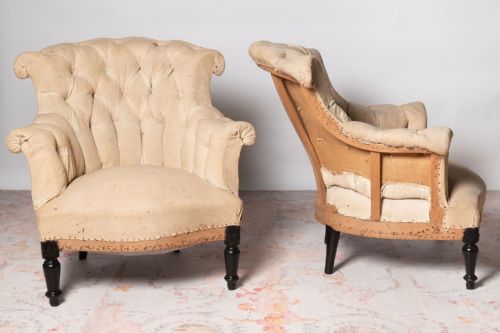
Victorian French armchairs span the nineteenth century, including Napoleon III, Rococo Revival, and Louis XV Revival styles. These seating pieces typically feature exposed timber frames combined with deep upholstery or cane panels.
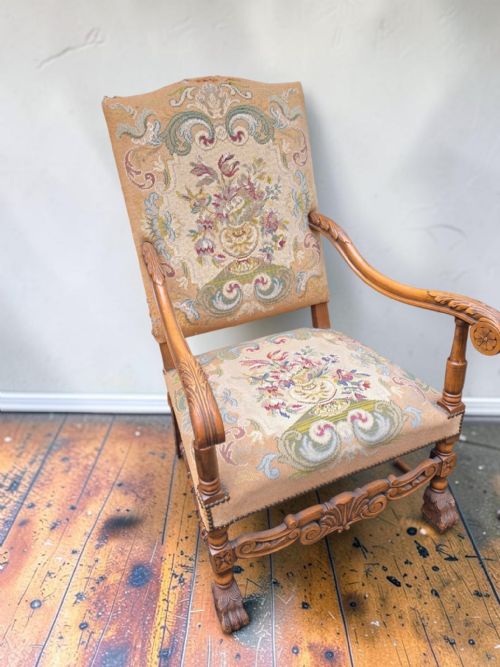
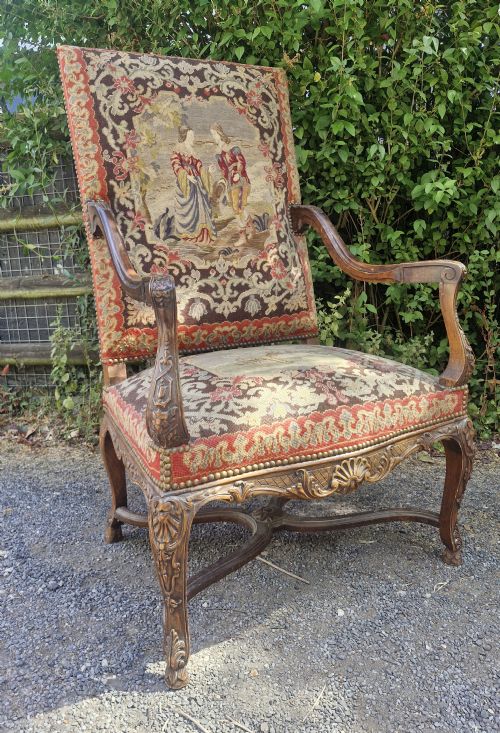
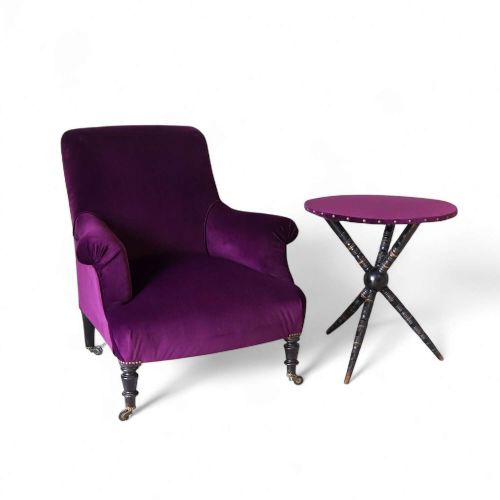
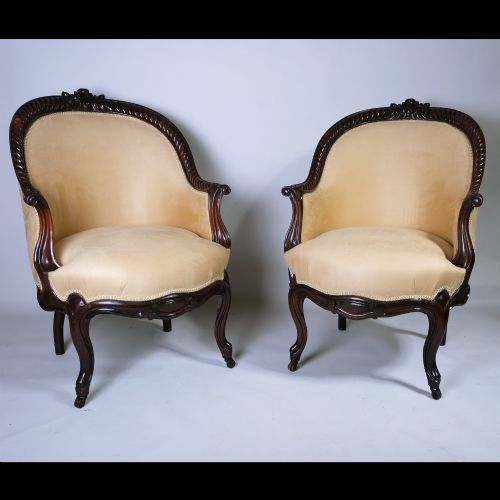
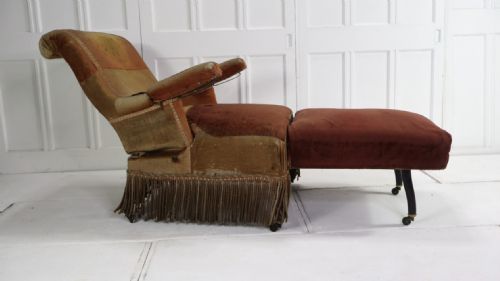
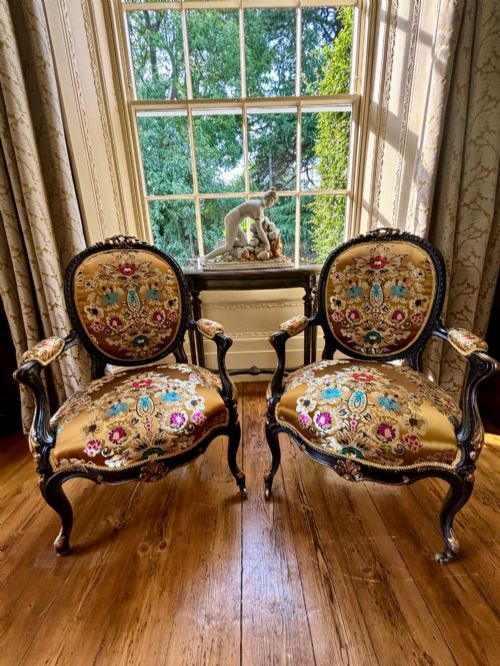
The materials recorded in the evidence include walnut, giltwood, and mahogany frames paired with velvet, silk, calico, and leather upholstery. Forms range from low salon chairs and fireside seats to larger buttoned armchairs and pairs.
Buyers encounter open armchairs, tub chairs, and framed seats alongside matching salon suites and occasional stools. The prevalent origin points blend nineteenth-century English cabinet-making with French design influences.
Materials and construction methods
Makers shaped structural frames primarily from solid walnut, mahogany, and giltwood, often applying intricate hand-carved ornamentation to the wood. Supporting elements incorporate brass fittings and cane work for lighter tub and bergere models.
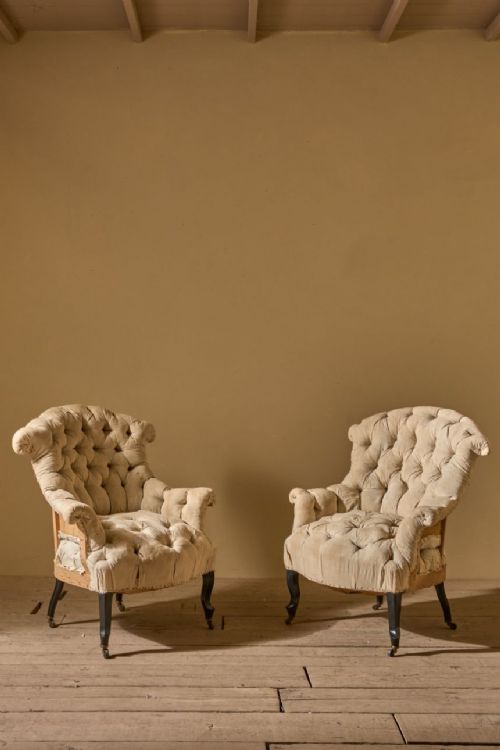
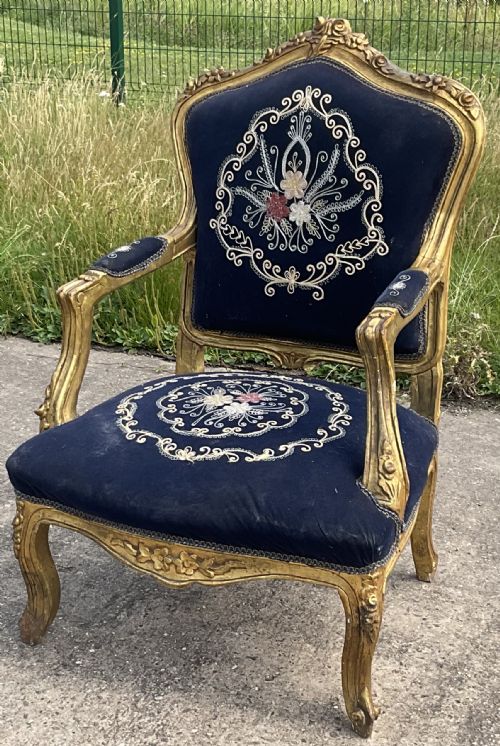
Upholstery techniques relied on deep buttoning, hand-tackied velvet, tapestry, needlework, and leather secured over hessian and traditional stuffing foundations. Gilded finishes and ebonised treatments were frequently applied to the timber frames for decorative contrast.
Listings feature frames in walnut, mahogany, and giltwood paired with velvet, silk, and leather upholstery across the nineteenth century.
Distinctions in quality
The refinement of the hand-carving on the walnut or giltwood frame distinguishes superior examples from standard production pieces. Crisp relief work and balanced proportions indicate skilled cabinet-making.
The choice of covering material and the execution of traditional upholstery, such as deep buttoning and needlework, mark the standard of the piece. Intact original frames paired with quality textiles hold greater integrity.
Holland and Sons
The Victorian French Armchairs Glossary
- Fauteuil
- An open-armed upholstered armchair with exposed wooden sides, originating in France. These chairs typically feature padded armrests and carved wooden frames.
- Bergere
- An enclosed upholstered armchair with a wooden frame where the sides are frequently filled with cane or wicker. They often include a loose seat cushion.
- Giltwood
- Timber that has been coated with a thin layer of gold leaf or gilt paint. This finish was widely utilised on nineteenth-century salon furniture for decorative effect.
- Buttoned back
- Upholstery style where depressions are formed in the padding by pulling thread or twine tightly through to the frame in a geometric pattern. It provides both structure and a tailored appearance.
- Salon suite
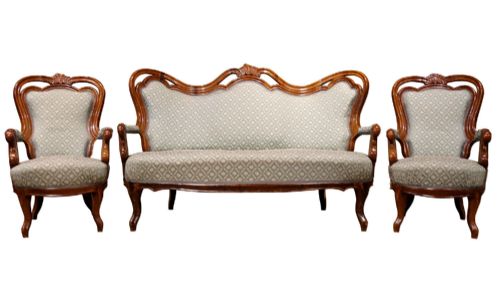
- A matching set of seating furniture, typically comprising a larger settee and matching armchairs designed for formal entertaining rooms.
Victorian French Armchairs: Frequently Asked Questions
How do I identify a Napoleon III armchair?
Napoleon III armchairs date from the mid to late nineteenth century and often display eclectic revivals of earlier French styles combined with deep buttoned upholstery.
They frequently utilise walnut or ebonised wood frames, sometimes accented with gilt details or rich velvet coverings.
What is the difference between a fauteuil and an open armchair?
A fauteuil is a specific French style of open armchair characterised by upholstered armrests and exposed carved wooden framework. Other nineteenth-century open armchairs may follow English proportions while retaining French decorative motifs.
Both types place emphasis on visible timber craftsmanship alongside padded seating comfort.
Where should I place a salon suite chair?
Salon suite chairs are designed for formal reception rooms, drawing rooms, or spacious bedrooms where their decorative frames can be viewed from multiple angles. Their scale suits placement alongside occasional tables or fireside settings.
Pairs look balanced when positioned facing one another or flanking a central piece of furniture.
How do I care for antique velvet upholstery?
Protect antique velvet coverings from direct sunlight to prevent fading of rich tones like purple or crimson. Regular gentle brushing maintains the nap of the fabric without damaging the underlying fibres.
Avoid moisture and consult a specialist restorer for deep cleaning of nineteenth-century textiles.