
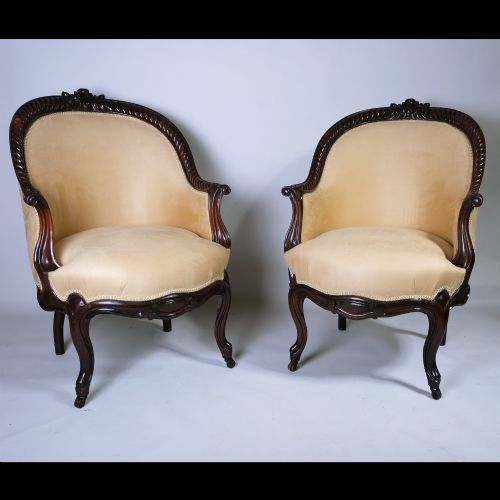


Dark Wood Fauteuil
A dark wood fauteuil offers deep comfort and classical French design, bringing substance and rich grain to a room.
Dark Wood Fauteuil
A dark wood fauteuil is an open-armed seating form rooted in French design tradition, built with exposed wooden frames and upholstered elements. When searching for a dark wood fauteuil, a buyer encounters pieces originating primarily from the nineteenth century alongside Edwardian and earlier eighteenth-century examples.
The selections on this page demonstrate distinct stylistic lineages, spanning Renaissance Revival, French Chateau, Louis XVI, Louis XV Revival, and French Rococo aesthetics. Alongside distinct French Hepplewhite forms, these armchairs appear frequently in pairs or as singular statement seats.
How they were made
Makers shaped these frames from dense timbers including mahogany, walnut, rosewood, goncalo alves, oak, and timber, selected for their rich dark tones and ability to hold crisp carved detail. Skilled joiners constructed the open armchairs with exposed wooden structures that frame the upholstered components.
Upholstery techniques combined traditional stuffing with textiles such as fabric, linen, and velvet, occasionally accented with needlepoint tapestry panels and brass detailing.
What varies in quality
Quality rests in the crispness of the timber carving and the architectural balance of the open wooden frame. Finer examples display deeply sculpted floral or classical motifs executed with precision across dense hardwoods like goncalo alves, walnut, and rosewood.
The integrity of the structural joinery and the harmony between the exposed timber and the chosen textile elevate the piece. Superior construction ensures the open arms and carved legs remain completely solid and balanced.
The Dark Wood Fauteuil Glossary
- Fauteuil
- An open-armed French armchair with upholstered seat, back, and arm pads set within an exposed wooden frame. This form originated in France and remains defined by its elegant proportions and carved woodwork.
- Goncalo alves
- A dense exotic hardwood prized for its striking contrasting grain patterns and rich dark colouration. Cabinet makers utilised this timber for high-status nineteenth-century seating.
- Needlepoint
- Hand-stitched tapestry work created using wool yarn on a stiff canvas mesh ground. These panels frequently appear on the backrests and seats of traditional French armchairs.
- Hepplewhite
- A graceful eighteenth-century furniture style characterised by slender tapered legs and delicate shield or oval backs. Pieces in this tradition display refined neoclassical restraint.
Dark Wood Fauteuil: Frequently Asked Questions
What is a dark wood fauteuil?
A dark wood fauteuil is a traditional open-armed armchair featuring an exposed timber frame and upholstered seat and back. These seats originated in France and combine comfortable padding with decorative woodwork.
The listings here feature nineteenth-century pieces alongside Edwardian and eighteenth-century examples, spanning styles from Louis XV Revival to French Hepplewhite.
How were these armchairs used?
These open armchairs served as principal seating in formal drawing rooms, parlours, and sitting rooms. Their open arm design accommodated wide eighteenth and nineteenth-century garments while offering a comfortable seat for conversation.
Today, they function as occasional chairs in living spaces, studies, or bedrooms, providing both seating and strong decorative presence.
How do I identify the period?
Dating relies on observing the combination of timber species, carving style, and structural proportions. Nineteenth-century pieces often display revival styles such as Renaissance Revival, French Rococo, or Louis XV, utilising dense timbers like walnut, rosewood, and goncalo alves.
Earlier eighteenth-century examples exhibit the lighter, more restrained lines associated with French Hepplewhite design.
What woods were used?
Cabinet makers built these frames using robust hardwoods selected for their dark tones and grain character. Mahogany, walnut, and rosewood appear frequently across nineteenth-century examples.
Other pieces utilise goncalo alves, oak, and general timber, often combined with brass accents and upholstered in velvet, linen, fabric, or needlepoint tapestry.