

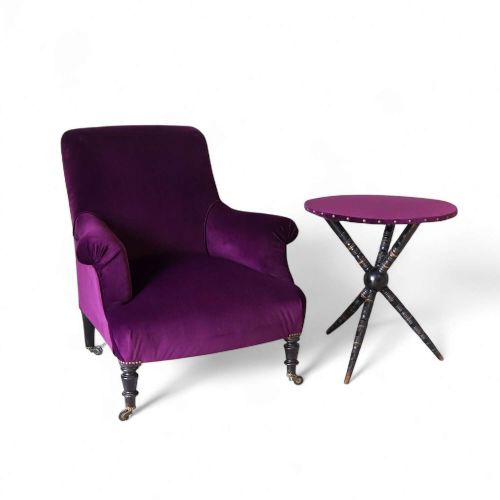
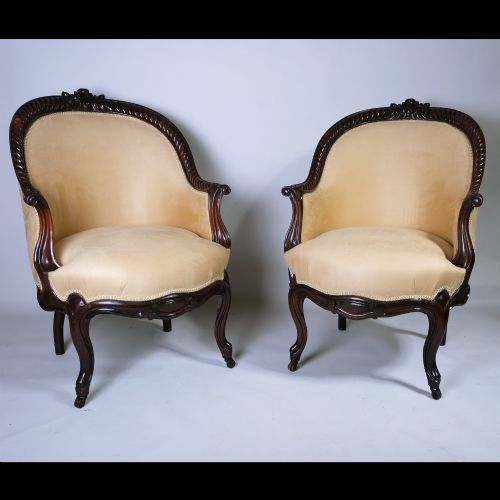
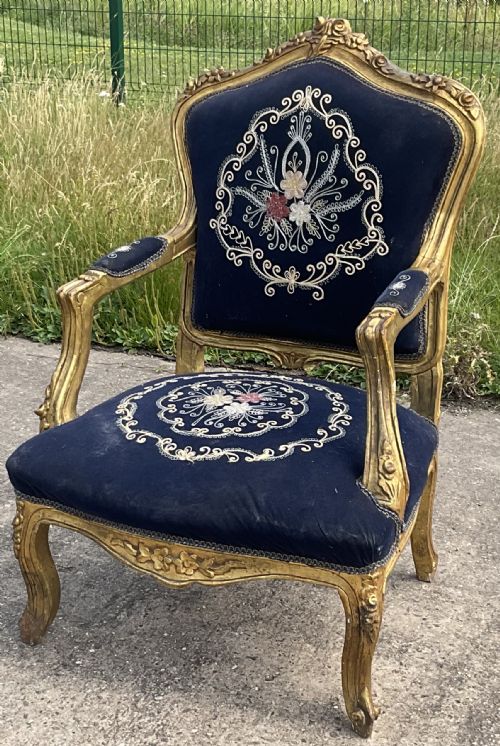
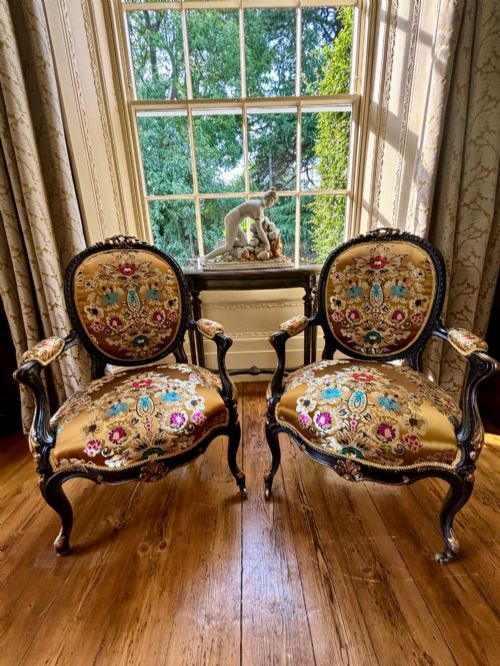
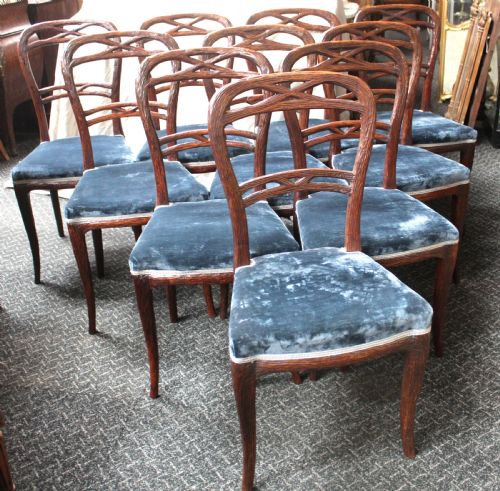
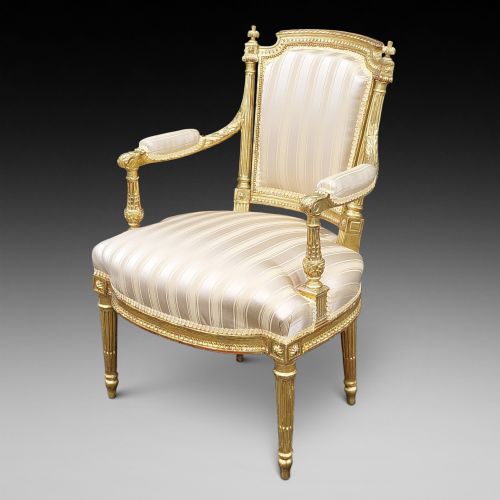
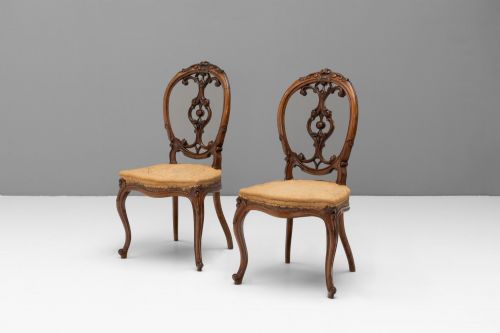
Victorian French Accent Chairs
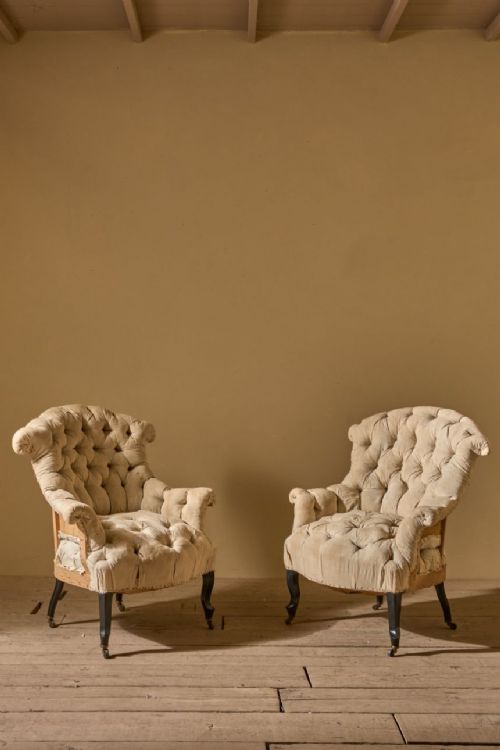
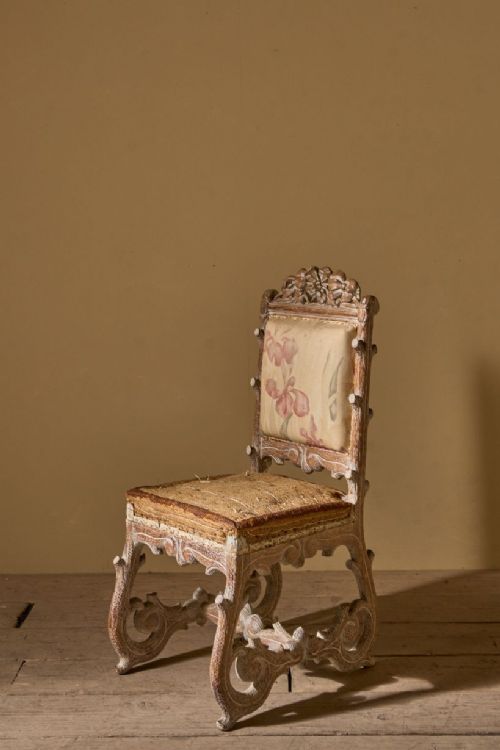
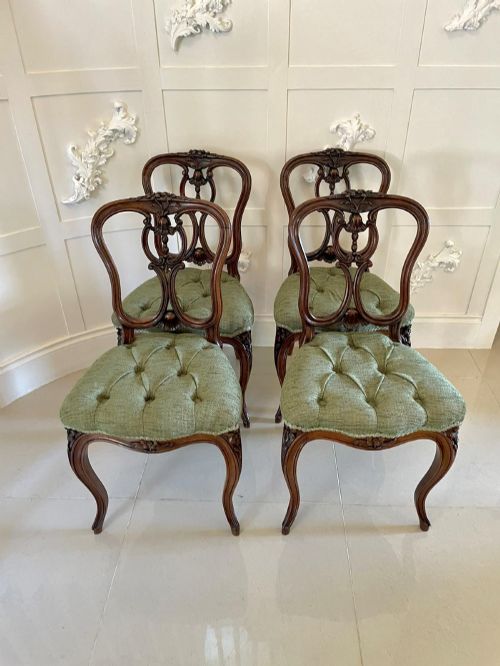
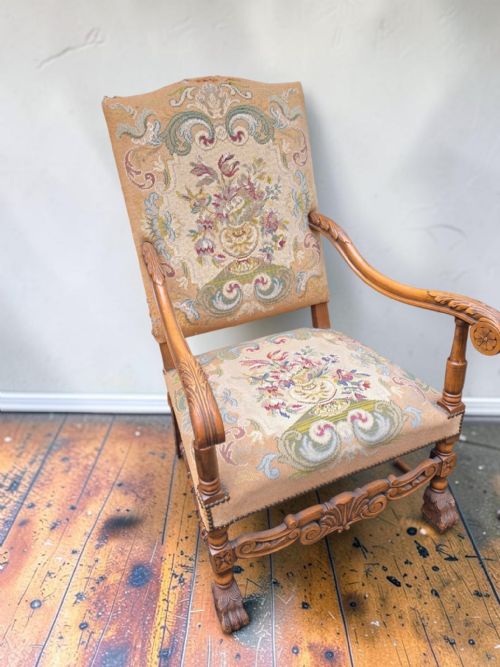
These victorian french accent chairs bring ornamental curves and carved timber frames to a corner.
Victorian French Accent Chairs
When you search for victorian french accent chairs, you encounter seating that blends British nineteenth century forms with continental revival styles like Napoleon III and Louis XV. These pieces appear as armchairs, side chairs, slipper chairs, and nursing chairs designed for parlours, bedrooms, and salons.
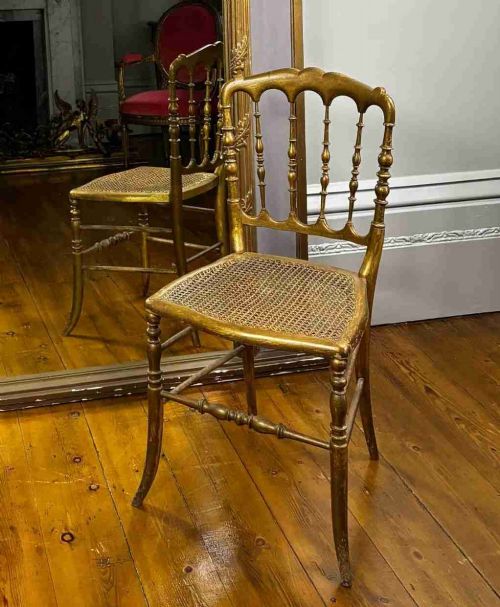
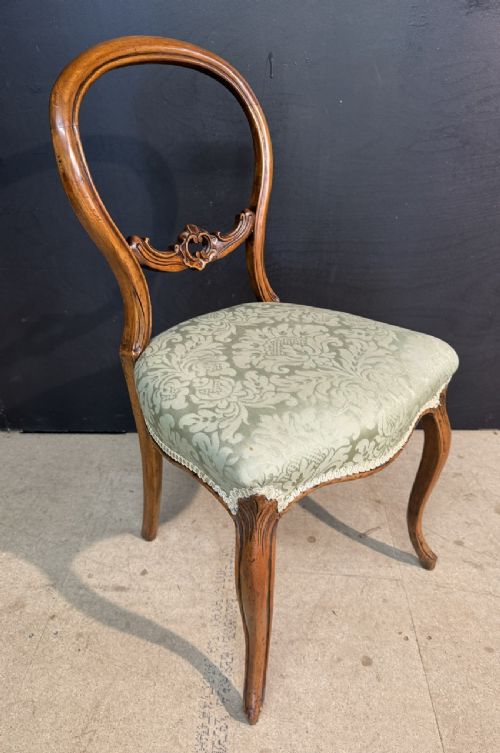
The selection on this page relies heavily on nineteenth century walnut and giltwood frameworks, often featuring cabriole legs and scroll backs. You find open armchairs alongside compact low-slung seats meant for dressing rooms and firesides.
Makers and upholsterers of the period adopted diverse influences, ranging from faux bois and bamboo effects to elaborate carved rosewood and mahogany. The resulting seating combines sturdy nineteenth century construction with lighter French decorative schemes.
How they were made
Carpenters shaped structural frames from hardwoods such as walnut, mahogany, and goncalo alves, alongside decorative applications of giltwood and painted finishes. These timber skeletons relied on traditional joinery to support padded upholstery and carved ornamentation.
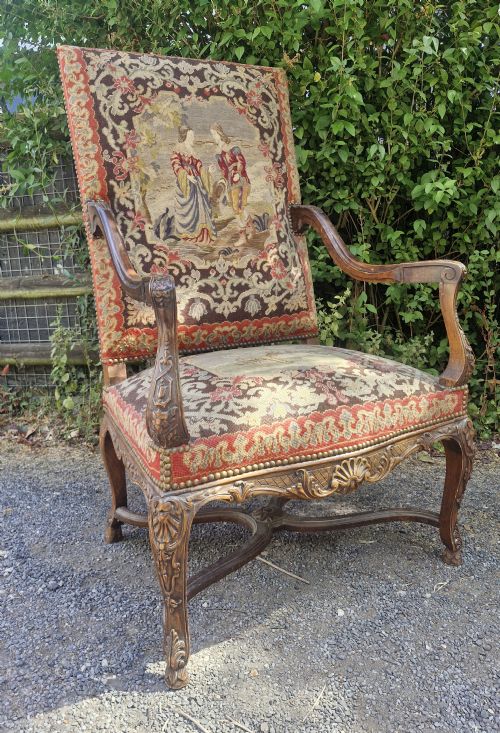
Upholstery techniques involved stuffing hair and fibre into foundations secured by hessian and calico, finished with textiles including silk, velvet, tapestry, and needlework. Details like buttoning, fringe, and brass tacks completed the outer presentation of the seat.
Listings feature walnut, giltwood, and mahogany frameworks paired with velvet, silk, and needlework upholstery across the nineteenth century.
What varies in quality
The standard of carving and timber selection dictates the distinction between ordinary production and finer salon seating. Crisp depth in floral and scroll motifs carved directly into walnut or giltwood indicates superior craftsmanship.
Integrity of the frame construction and the preservation of original or sympathetic upholstery materials determine the overall execution. Pieces retaining subtle details like shaped cabriole legs and balanced proportions stand apart from simpler utilitarian chairs.
The Victorian French Accent Chairs Glossary
- Cabriole leg
- A furniture leg that curves outward and then tapers inward, mimicking an animal's limb. This silhouette defines much of the revival seating from the period.
- Fauteuil
- An open-armed upholstered armchair with a wooden frame left exposed. These chairs originated in France and appeared frequently in nineteenth century British drawing rooms.
- Giltwood
- Timber treated with gold leaf or gold paint to create a lustrous metallic surface. It provides the bright finish seen on many salon and fireside chairs.
- Slipper chair
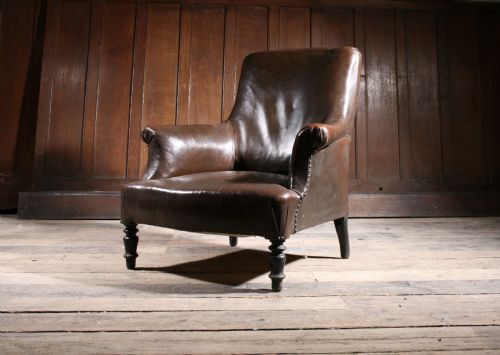
- A low-seated upholstered chair designed originally for bedrooms to assist with putting on footwear. They typically feature short legs and a supportive back.
- Napoleon III style
- A heavily ornate nineteenth century French design movement that revived earlier monarchical aesthetics. It embraces lavish upholstery, buttoning, and gilded detailing.
Victorian French Accent Chairs: Frequently Asked Questions
Where were these chairs placed?
These chairs served primarily in formal drawing rooms, intimate boudoirs, and private bedrooms during the nineteenth century. Their varied scale allowed them to fit into corners, beside dressing tables, or near fireplaces.
Smaller side and slipper chairs provided moveable seating for guests, while open armchairs offered a permanent spot for reading or needlework.
How do I identify a Napoleon III chair?
Napoleon III pieces often display opulent upholstery, buttoned backs, and exposed wooden frames finished in gilt or dark walnut. Look for decorative elements like scrolled timber work and rich fabric coverings.
These chairs bridge mid nineteenth century French taste with comfort, frequently utilising cabriole legs and curved silhouettes.
What is faux bois?
Faux bois is an artistic technique where wood or other materials are painted and carved to imitate natural tree branches or timber grain. In nineteenth century seating, this created rustic yet refined frames.
Pieces utilising this method bring an organic, woodland texture into interior spaces while maintaining structural integrity.
Can I use these chairs daily?
Most nineteenth century seating accommodates regular use provided the internal frame and webbing remain sturdy. Many surviving examples have undergone structural restoration to ensure daily stability.
Checking the firmness of the seat and the strength of the joints helps determine suitability for everyday lounging or dining.