


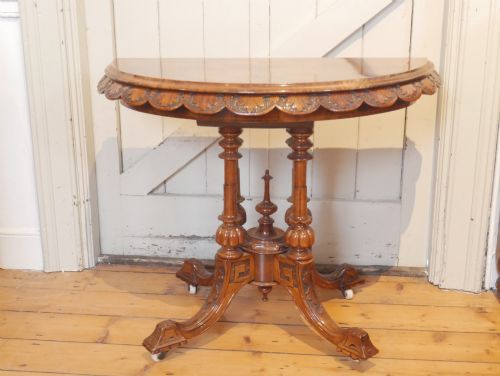

Victorian Folding Card Table
These Victorian folding card tables combine ingenious mechanics with fine cabinet-making to serve as versatile tables for games and tea.
Victorian Folding Card Table
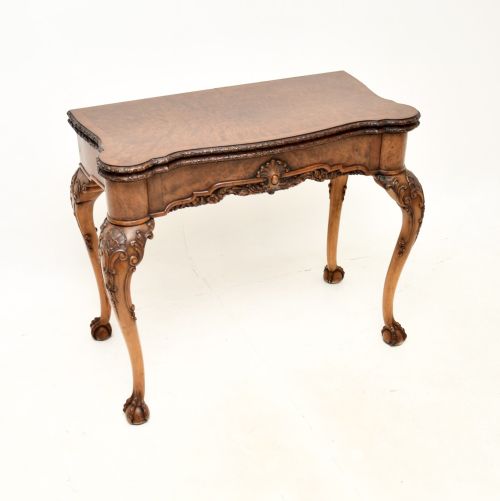
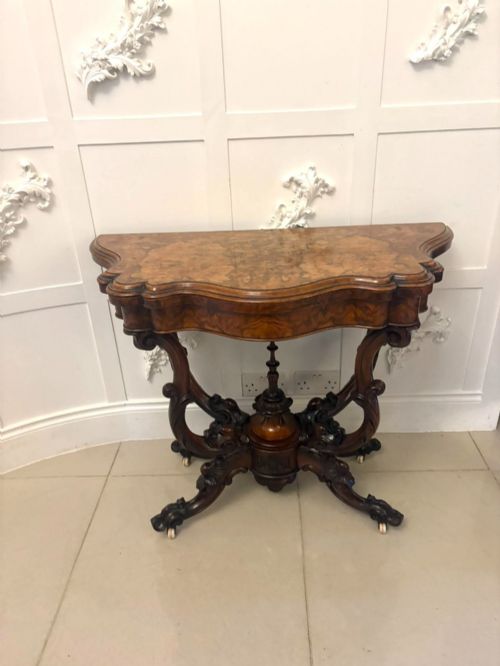
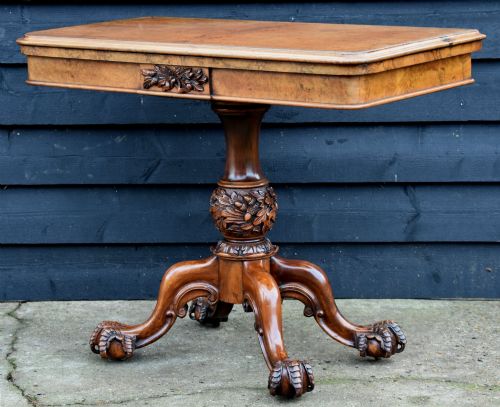
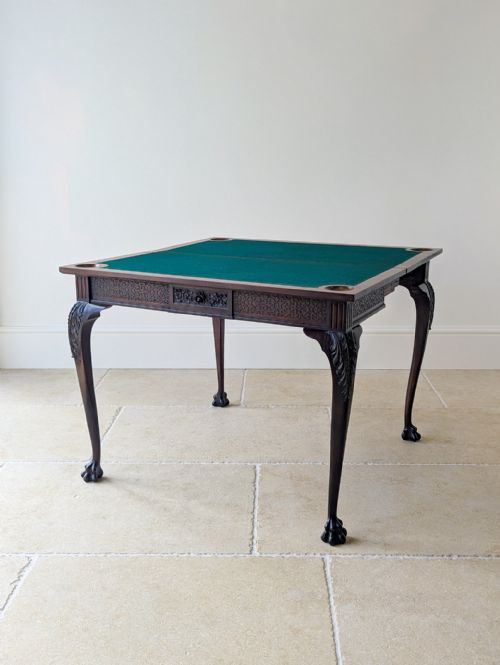
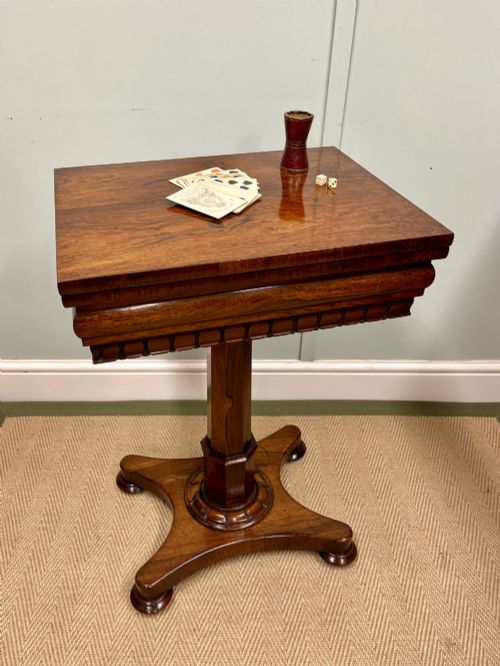
A victorian folding card table is a multi-functional piece designed to expand from a compact console or side table into a full playing surface. These items appear across various periods of the nineteenth century, utilising walnut, mahogany, and rosewood.
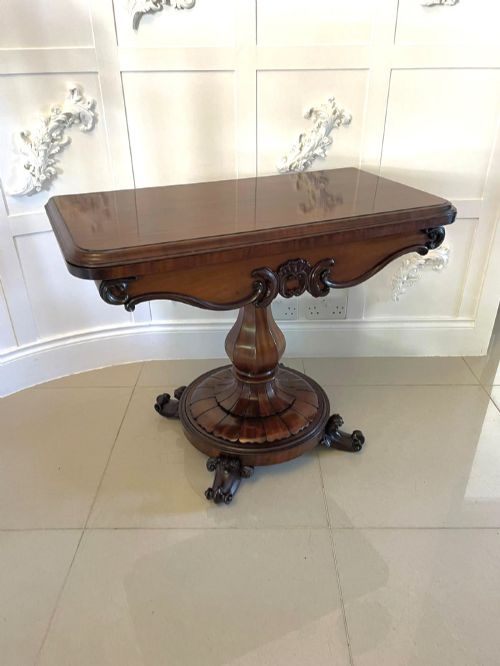
The most common formats on this page include turn-over tops, swivel tops, and fold-over mechanisms that reveal hidden storage compartments beneath the surface. Many examples double as tea tables or occasional furniture when closed against a wall.
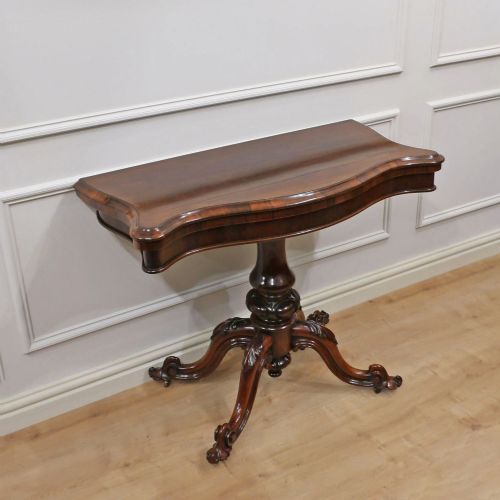
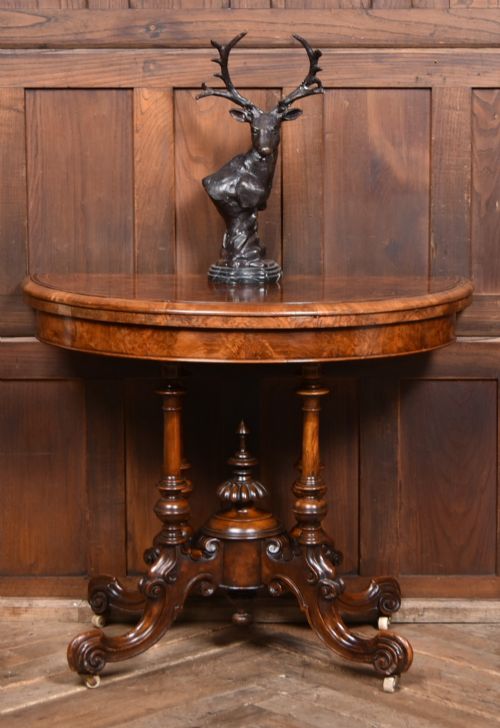
Makers adapted the form through revival styles such as Louis XV and the Aesthetic Movement, producing everything from serpentine demi-lune shapes to rectangular envelope tables with castors.
How They Were Made
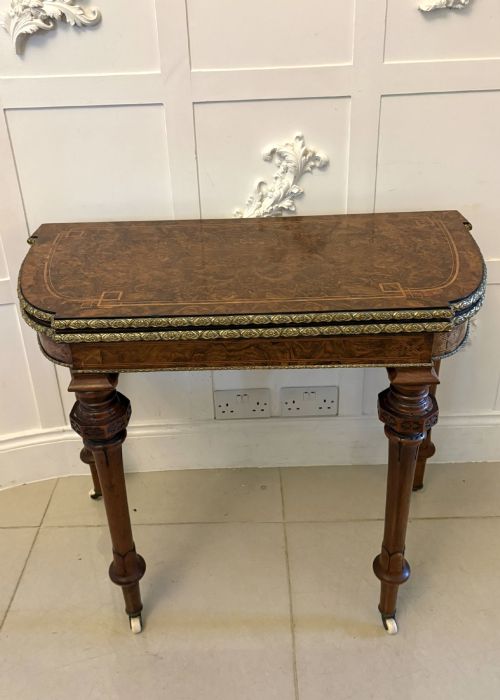
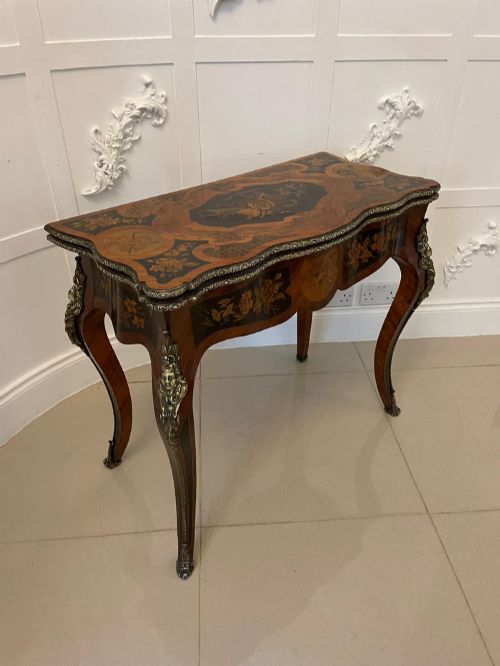
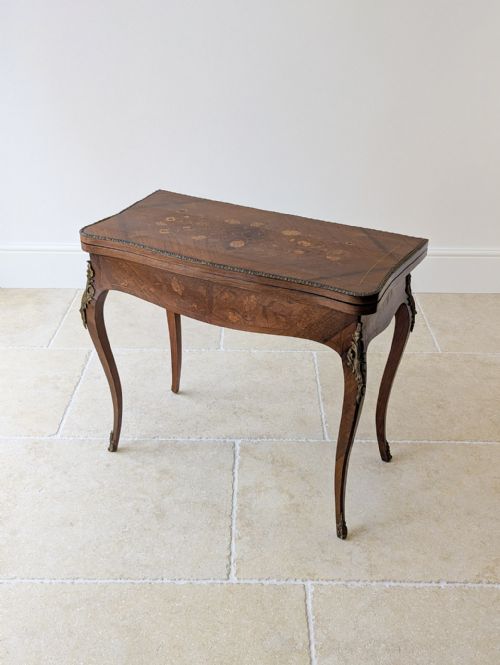
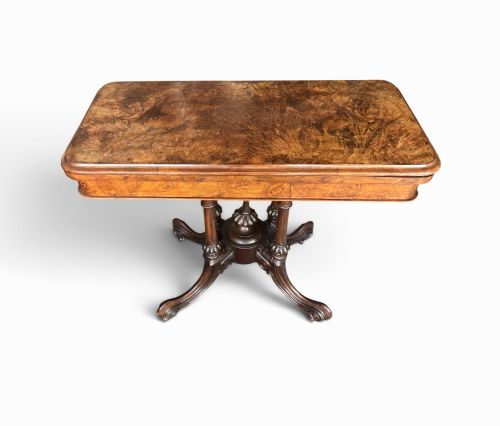
Cabinet-makers relied on dense timbers like mahogany and rosewood for structural stability, frequently applying burr walnut veneers to the visible top surfaces. Wood inlay, marquetry, and brass hardware added decorative contrast to the timber frames.
Ormolu mounts and porcelain plaques appeared on higher-end pieces influenced by French design, while hinged leaves and swivel pivots required precise joinery to ensure the folding tops aligned flat when opened.
Some tables hide compartments so deep they likely swallowed half the local card hands.
What Varies in Quality
The distinction between standard workshop production and exhibition pieces rests in the intricacy of the wood inlay, the depth of the carved supports, and the selection of figured burr veneers. Superior examples maintain rigid alignment when unfolded, with hinges and swivel mechanisms operating without friction.
Secondary woods, the crispness of ormolu mounts, and the integration of specialised compartments for chess or backgammon signal the original tier of manufacture.
James Shoolbred & Co.·G T Morant·Maple & Co.·Edwards & Roberts
The Victorian Folding Card Table Glossary
- Burr walnut
- Timber taken from the growth growths of a walnut tree, yielding complex, swirling grain patterns. This material was highly prized for table tops during the nineteenth century.
- Ormolu
- Gilded bronze applied as decorative mounts on furniture. It gained popularity during revival periods inspired by French design.
- Marquetry
- The art of applying decorative veneer pieces in geometric or floral patterns. Craftsmen used various tinted woods to create pictures on the table surface.
- Turn-over top
- A table design where the upper leaf hinges backward to double the surface area. This mechanism often conceals a well for storing playing cards.
- Demi-lune
- A half-moon shape common in console and card tables designed to sit flush against a wall. These pieces often feature folding leaves that open into a full circle or square.
Victorian Folding Card Table: Frequently Asked Questions
How do these tables work?
The top leaf rotates on a pivot or lifts on hinges to unfold across a supporting framework. This action expands a compact console into a stable surface for card games or tea.
Interior cavities often appear beneath the folded surface to hold counters, dice, and cards when the table is closed.
Were they only used for cards?
Many designs accommodated multiple domestic uses by functioning as tea tables, console tables, or side pieces during daily routines. Specialised interiors sometimes incorporated boards for chess and backgammon alongside standard playing surfaces.
Owners adapted the furniture to suit drawing rooms and parlours where space-saving versatility proved essential.
How do I date these pieces?
Early examples often display Regency influences in their rosewood frames, while mid-century pieces favour figured burr walnut and carved pedestal bases. Later Victorian items incorporate Aesthetic Movement ebonising or envelope folding mechanisms.
Construction methods, timber choices, and prevailing stylistic revivals help narrow the decade of manufacture.
Where should I place one?
These tables fit well against hallway or drawing room walls in their closed position, presenting a decorative wood surface. Opening the leaves requires clearance around the base for guests to sit comfortably during games.
Direct sunlight should be avoided to protect sensitive walnut and rosewood veneers from fading.