




Victorian Floral Watercolour
These Victorian floral watercolour paintings capture botanical studies and garden scenes on paper, offering delicate colour and period charm for your walls.
Victorian Floral Watercolour
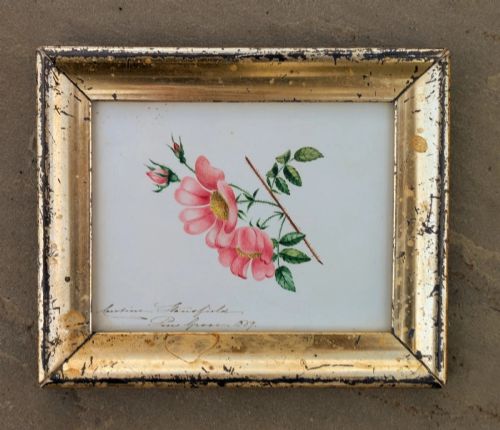
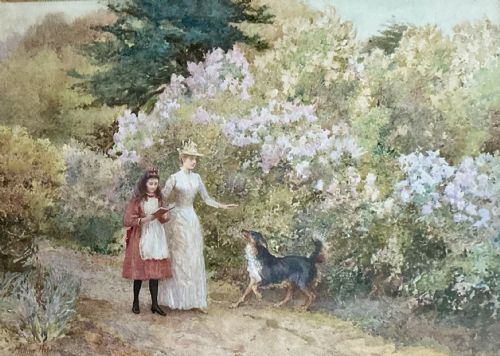
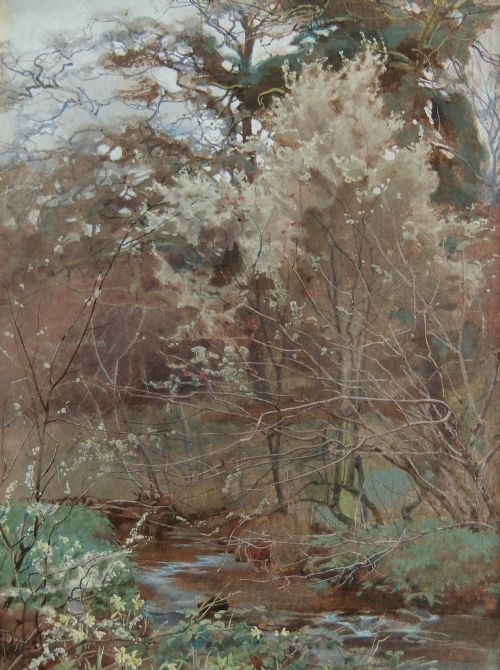
A victorian floral watercolour brings the rich detail of nineteenth-century gardens and hedgerows directly onto paper, capturing roses, primroses, and wild blossoms with careful observation. You will encounter botanical studies, careful still lifes with baskets or vases, and garden landscapes created across the nineteenth and early twentieth centuries.
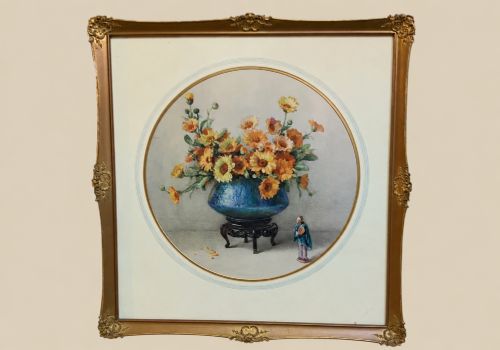
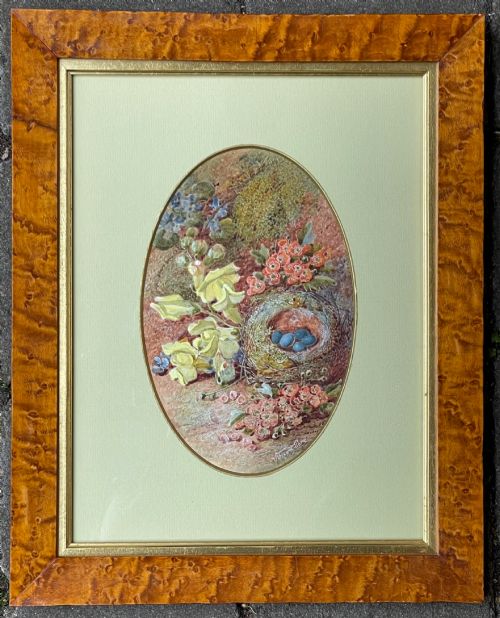
The works range from focused botanical watercolours of single flower species like fuchsias and wild roses to complex compositions featuring birds' nests on mossy banks or Chinese objects alongside marigolds. Many arrive framed, using glass and wood to protect the delicate pigments applied by artists of the period.
How They Were Made
Artists applied watercolour pigment and bodycolour or gouache onto paper supports, often building up translucent washes alongside opaque highlights to render petals and leaves with realistic depth. Detail work required fine brushes to capture the subtle veins of a blackthorn blossom or the delicate texture of pansies and wallflowers.
Many of these works incorporated gold leaf within their framing or decorative elements, while others were secured behind glass within wooden frames to preserve the fugitive water-based paints from light damage.
Victorian Floral Watercolour Retail Price Guide 2026
Typical asking prices for victorian floral watercolour among the pieces listed under this phrase on Sellingantiques today, from the lower quarter to the upper quarter. They describe what is for sale here now, not the wider market.
The selection includes works attributed to followers of Eloise Harriet Stannard and collaborations between Helen Cordelia Angell and Wiliam Stephen Coleman.
What Varies in Quality
The strength of the composition and the botanical accuracy dictate the standing of a piece, with master painters achieving a lifelike vitality in floral arrangements that lesser hands miss. The handling of light on petals and the integration of surrounding elements, such as rustic baskets or decorative jugs, separate accomplished academic work from simpler decorative sketches.
Vincent Clare·Alice Anne Renshaw·Harry Wanless·Henrietta Creswell·Arthur Hopkins·Lester Sutcliffe·William Hough·Eloise Harriet Stannard·Edith Barrow·Grace Hastie·Marian Chase·Alfred W Parsons·Jabez Bligh·Charlotte Isa James·David Woodlock·Annie Mary Youngman·John Sherrin·Arthur H Buckland·Helen Cordelia Angell·Wiliam Stephen Coleman·Minnie Smythe
The Victorian Floral Watercolour Glossary
- Watercolour pigment
- Finely ground colour particles mixed with a water-soluble binder, applied in washes to paper. This medium allows for luminous, transparent layers that capture the softness of flower petals.
- Gouache
- An opaque water-based paint often used alongside transparent watercolour in these works. It provides solid highlights and dense colour saturation for areas like bright azalea blooms.
- Still life
- An artwork depicting inanimate subject matter, typically featuring natural objects such as cut flowers, vases, and birds' nests. These compositions allowed artists to study colour and form closely in a controlled setting.
- Botanical watercolour
- A precise, scientifically informed painting of plant specimens. These works focus on the accurate representation of leaves, stems, and floral structures.
- Aesthetic Movement
- A late nineteenth-century style that emphasised visual beauty and art for art's sake over narrative or moral themes. Works influenced by this movement often integrate decorative objects with floral subjects.
Victorian Floral Watercolour: Frequently Asked Questions
How should I display a victorian floral watercolour?
Keep these works away from direct sunlight to prevent the watercolour pigments from fading over time. Hanging them in rooms with stable humidity protects both the paper support and the wooden frame.
Ensure the protective glass is clean and that the painting is mounted away from the glass surface to avoid condensation damage to the paper.
What subjects appear in these paintings?
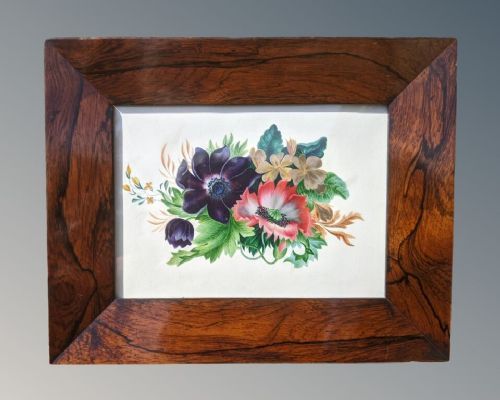
Artists focused on natural subjects, including still lifes of roses, pansies, pelargoniums, and apple blossoms arranged in vases, baskets, or resting on mossy banks. Garden landscapes and detailed botanical studies of single blooms also feature prominently.
Some compositions incorporate secondary elements such as Chinese objects, decorative jugs, or birds' nests alongside the floral arrangements.
How do I date a watercolour from this period?
Examine the signature, framing style, and any inscriptions on the reverse of the paper or frame. Many pieces from this era carry explicit dates or can be attributed to known artists working between eighteen-fifty and the early twentieth century.
Stylistic shifts, such as the move from tight botanical precision towards the looser touches of British Impressionism, also help narrow down the decade of creation.
What is the difference between watercolour and gouache here?
Watercolour relies on translucent washes that allow the white of the paper to shine through, creating a luminous effect on petals. Gouache contains added chalk or white pigment, making the paint opaque.
Artists frequently combined both mediums on the same sheet, using transparent washes for background shadows and opaque gouache for bright highlights on flowers.