

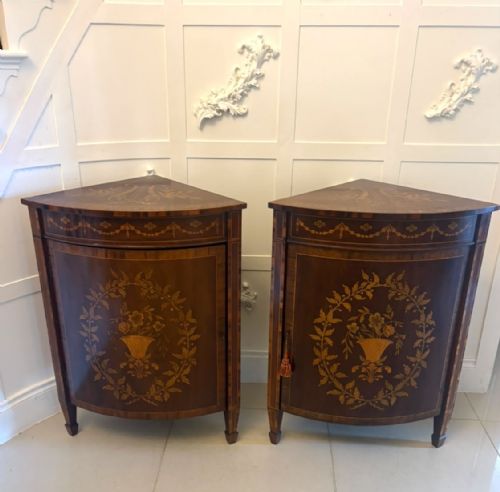
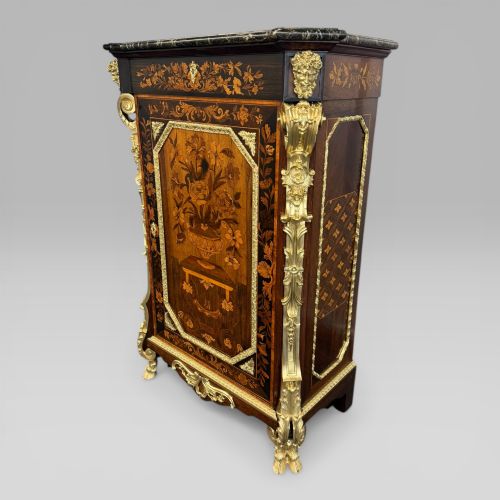
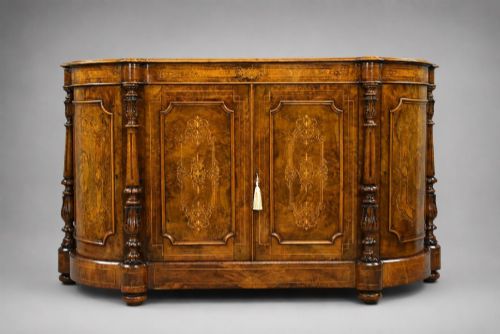
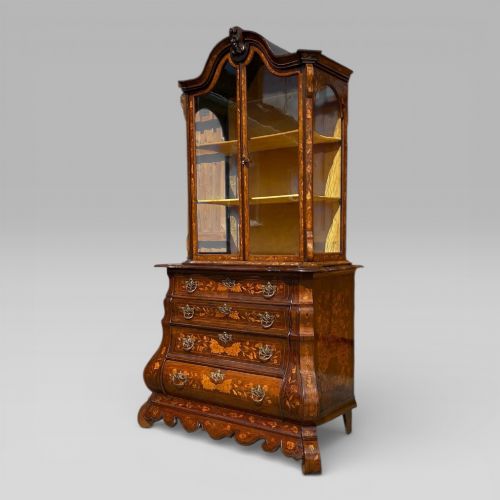
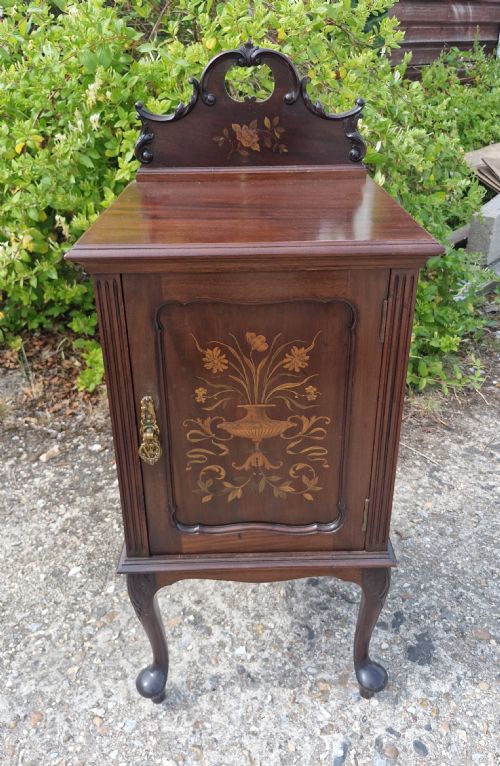
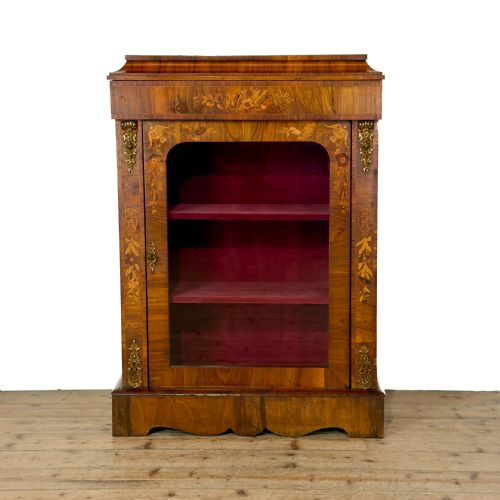
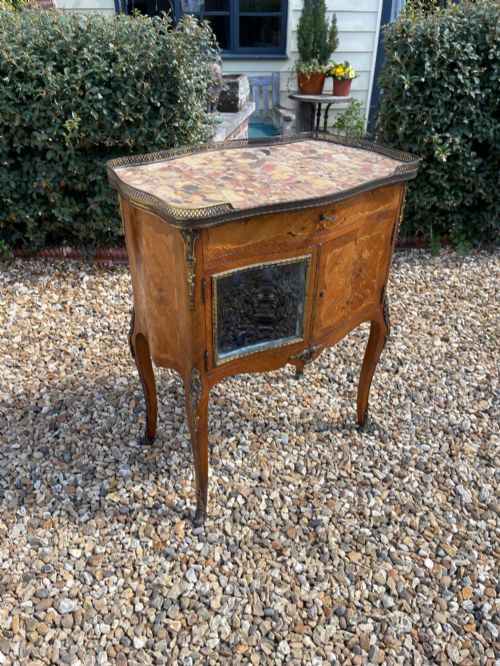
Victorian Floral Marquetry Cabinet
These pieces unite rich timber surfaces with delicate floral marquetry, offering storage built with Victorian decorative ambition.
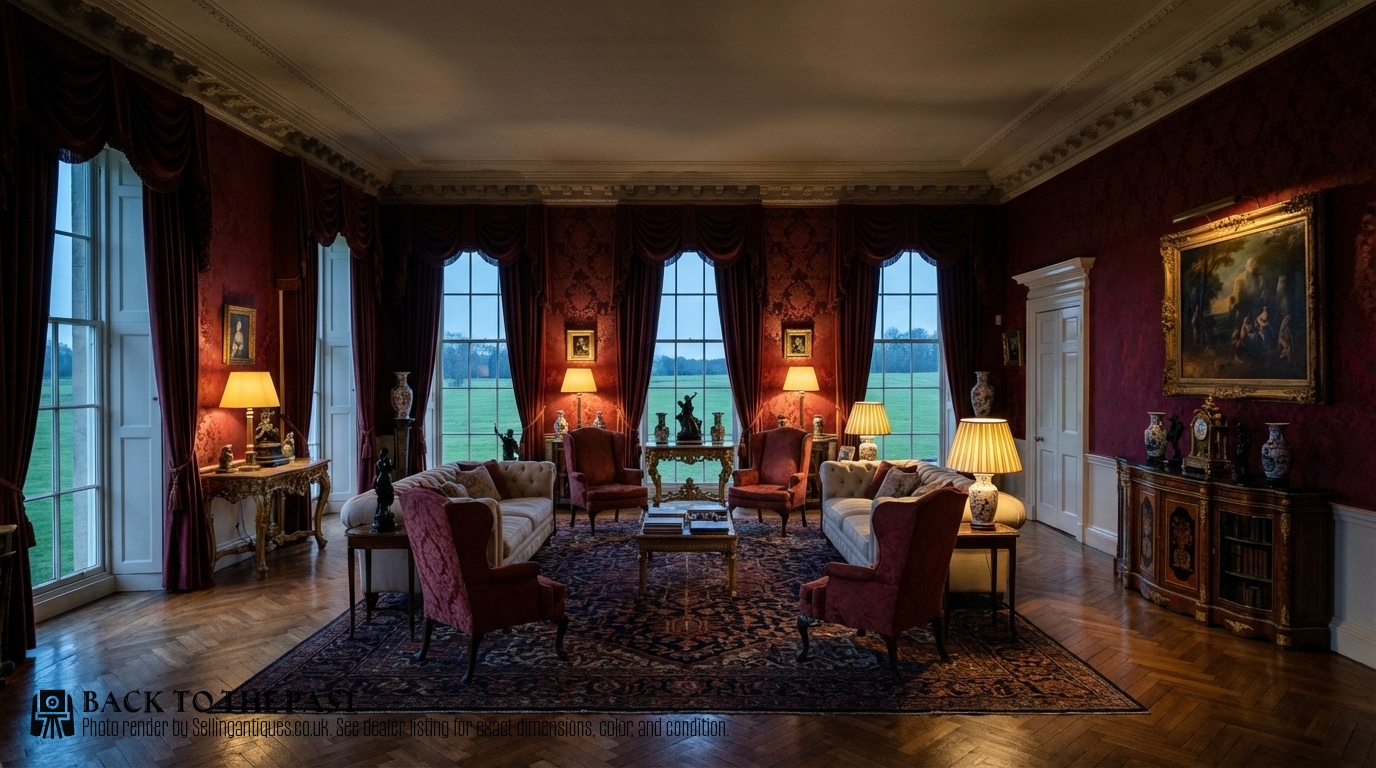
Victorian Floral Marquetry Cabinet
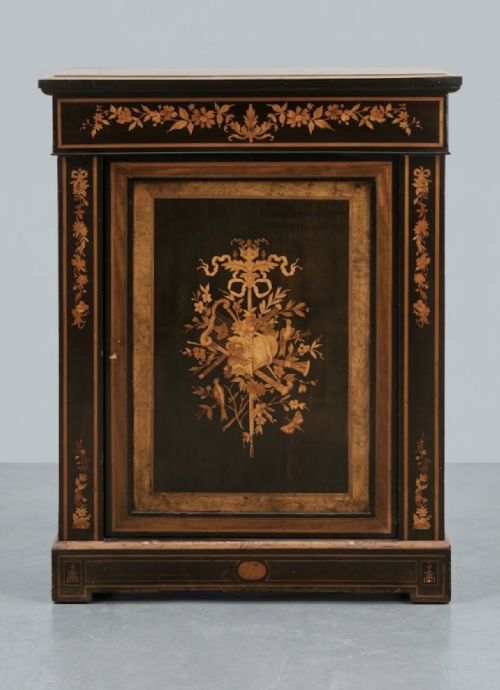
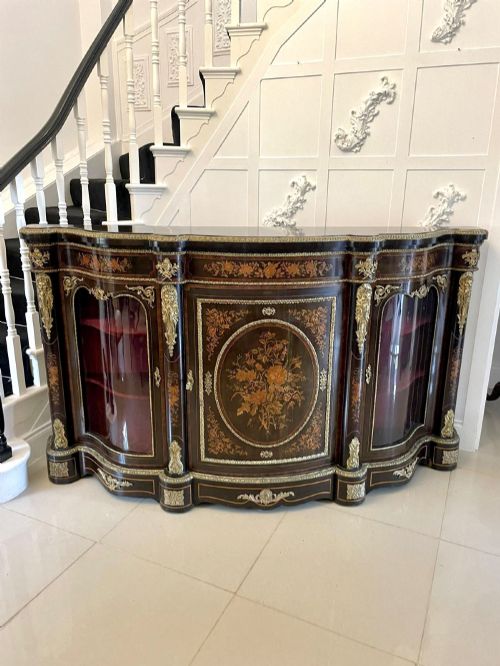
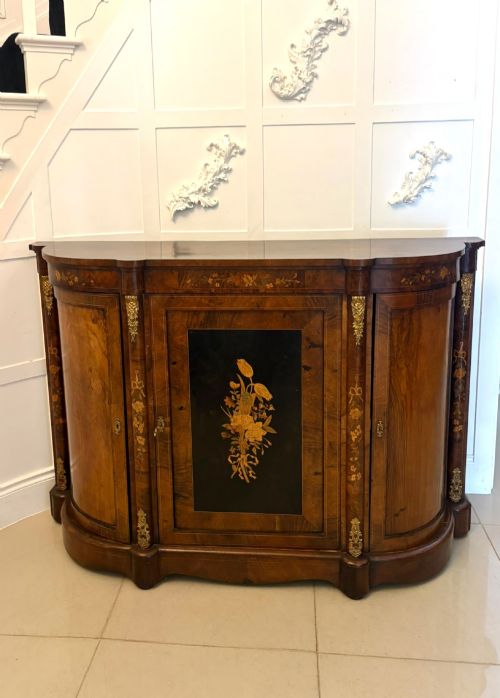
A victorian floral marquetry cabinet brings together mid-nineteenth century case furniture and intricate wood-inlaid botanical motifs. You will most frequently encounter credenzas, side cabinets, and pier cabinets shaped from burr walnut, rosewood, or ebonised wood.
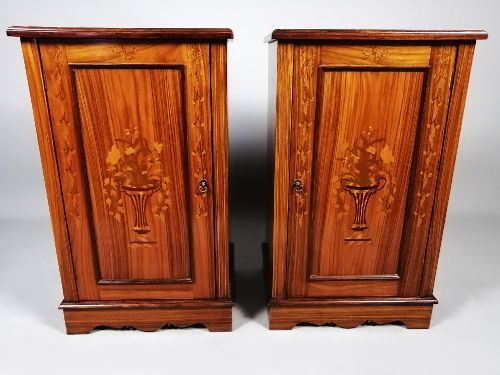
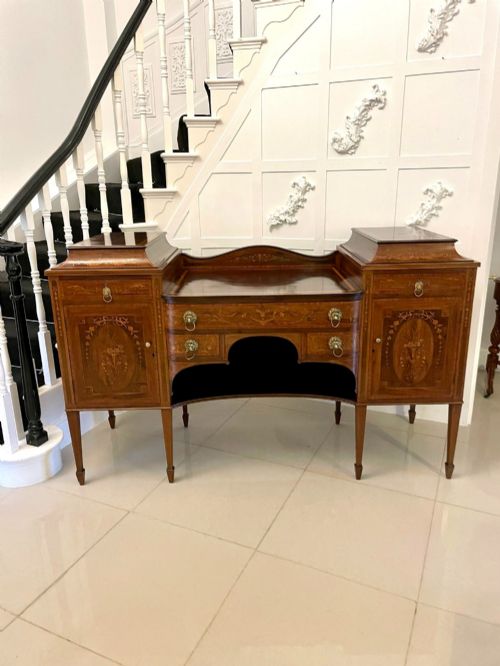
The form spans low display pieces with glass doors to upright bedside cupboards and taller breakfront sideboards. Most examples date from the Victorian era, particularly the middle decades around eighteen-sixty, though related Edwardian and French revival styles also appear.
Materials and Construction
Cabinet makers laid thin veneers of burr walnut, rosewood, or mahogany over secondary woods to create richly figured surfaces for the body. They then set contrasting woods like boxwood into recesses to form floral marquetry sprays and ribbon scrolls.
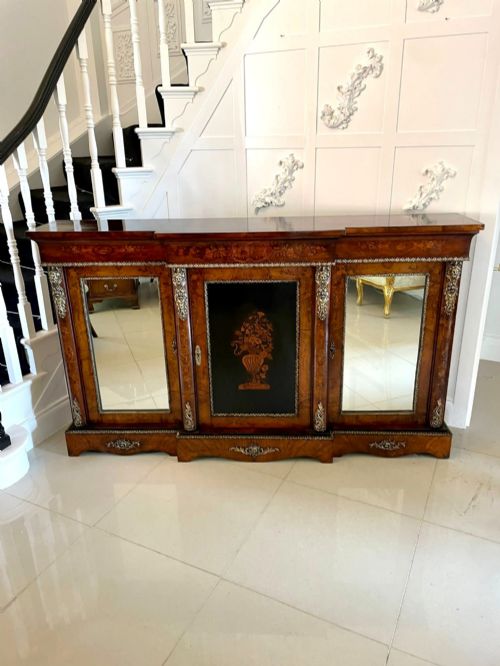
Gilding and cast brass or ormolu mounts frequently accent the borders, pilasters, and feet of grander credenzas. Glass panels are often curved to fit serpentine fronts, demanding skilled glazing techniques.
Victorian Floral Marquetry Cabinet Retail Price Guide 2026
Typical asking prices for victorian floral marquetry cabinet among the pieces listed under this phrase on Sellingantiques today, from the lower quarter to the upper quarter. They describe what is for sale here now, not the wider market.
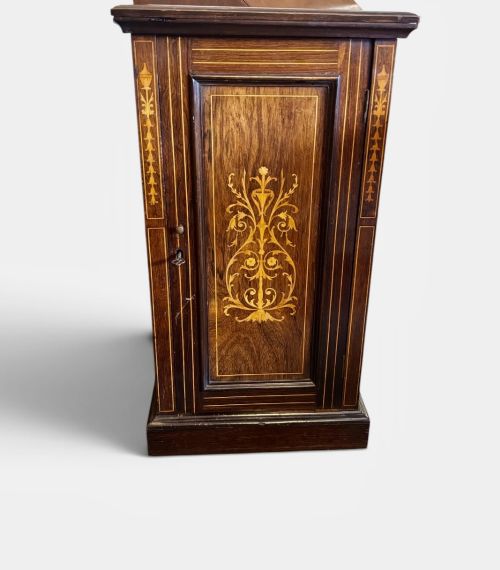
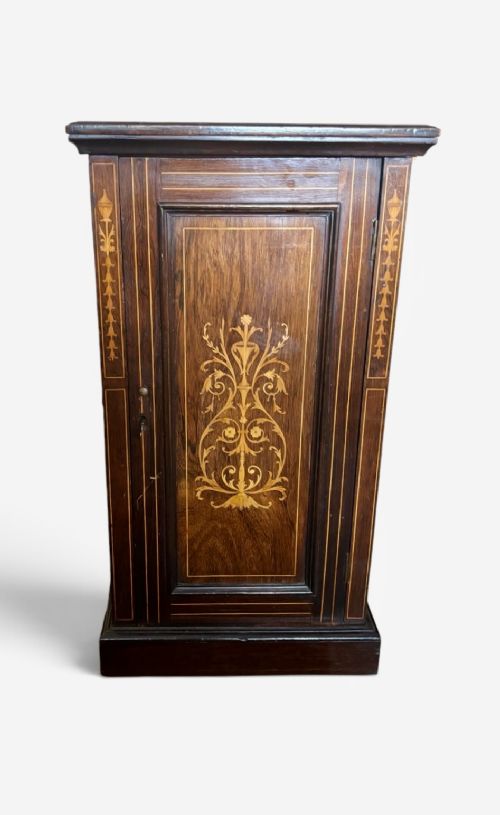
Several diminutive bedside cupboards prove that even morning tea arrangements required elaborate floral wood art.
Judging Quality
The refinement of the marquetry cutter dictates the visual success of the foliage, where shading achieved by scorching veneer edges gives petals a three-dimensional depth. Dense burr walnut with symmetrical grain matching across doors displays a more deliberate selection of timber.
Mounts cast in chased ormolu rather than plain brass signal a higher tier of production. Structural integration of serpentine curves and crispness in the applied mouldings separate standard production from exhibition pieces.
Hewetsons London·Edwards Roberts·Edward Holmes Baldock·Blake
The Victorian Floral Marquetry Cabinet Glossary
- Marquetry
- The art of forming decorative patterns by fitting together thin slices of wood veneer onto a structural core. It differs from inlay by assembling the entire design on a backing before gluing it down.
- Credenza
- A low cabinet, typically featuring a central door flanked by curved glass display compartments. They became centrepieces for Victorian drawing rooms.
- Pier Cabinet
- A narrow, freestanding display cabinet designed to fit the wall space between windows. These pieces often incorporate glazed doors and velvet-lined interior shelves.
- Ormolu
- Gilded bronze mounts applied to furniture edges and feet for decorative contrast. The technique involves coating bronze in a mercury and gold amalgam.
- Burr Walnut
- Timber taken from walnut tree growths, producing swirling and mottled grain patterns. It provided makers with highly decorative surfaces for panel fronts.
Victorian Floral Marquetry Cabinet: Frequently Asked Questions
What rooms suit a credenza?
These low cabinets fit well in living rooms or dining spaces where surface display and closed storage are both required.
Their elongated proportions allow them to sit beneath large mirrors or artwork without overwhelming the wall.
How do I care for walnut veneer?
Keep these pieces away from direct sunlight and strong heat sources to prevent the burr walnut veneer from drying and lifting.
Dust gently with a dry cloth and apply occasional high-grade wax polish to preserve the timber's lustre.
What is the difference between a pier cabinet and a credenza?
Pier cabinets are built tall and narrow to occupy specific wall sections between windows, usually resting on low feet.
Credenzas stand lower and wider, often featuring three cabinet doors with the central section projecting forward.
How can I date a marquetry cabinet?
Look to the primary timber choices, such as ebonised wood or figured burr walnut, which peak during the mid-Victorian decades.
Construction methods like hand-cut dovetails and the style of ormolu mounts also point towards specific decades within the nineteenth century.