



Victorian Floor Standing Lamp
A victorian floor standing lamp brings height, presence and period character to a room, casting warm illumination from a commanding position.
Victorian Floor Standing Lamp
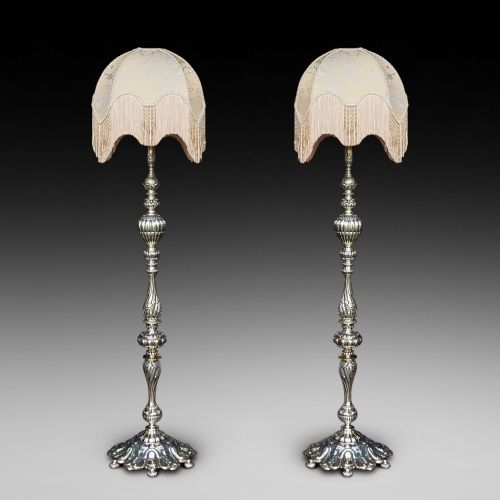
A victorian floor standing lamp is a tall lighting fixture designed to rest directly on the floor, providing elevated illumination for reading or general room lighting. These pieces originate across the nineteenth and early twentieth centuries, spanning periods from Victorian and Edwardian reigns through to the 1930s.
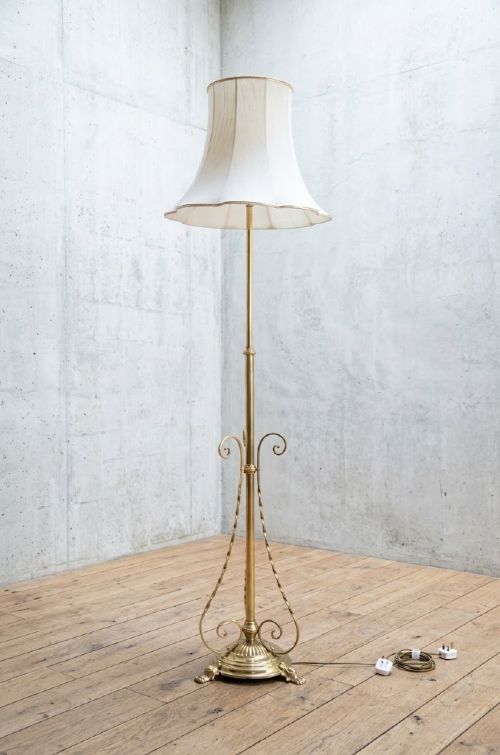
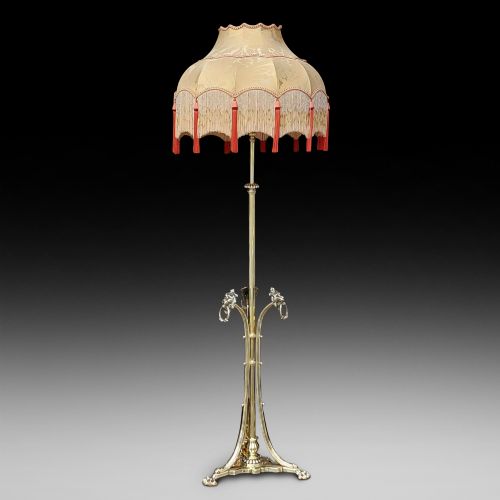
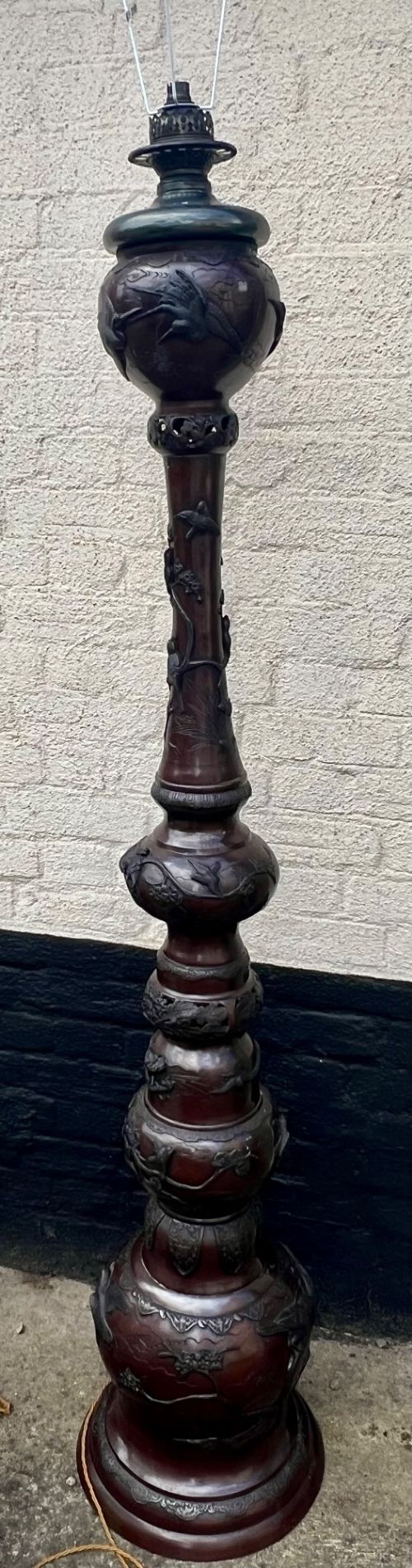
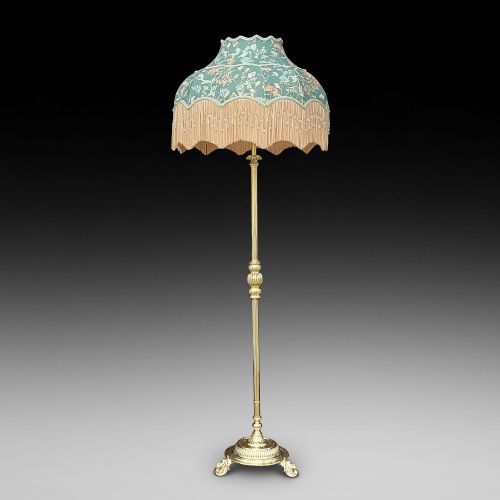
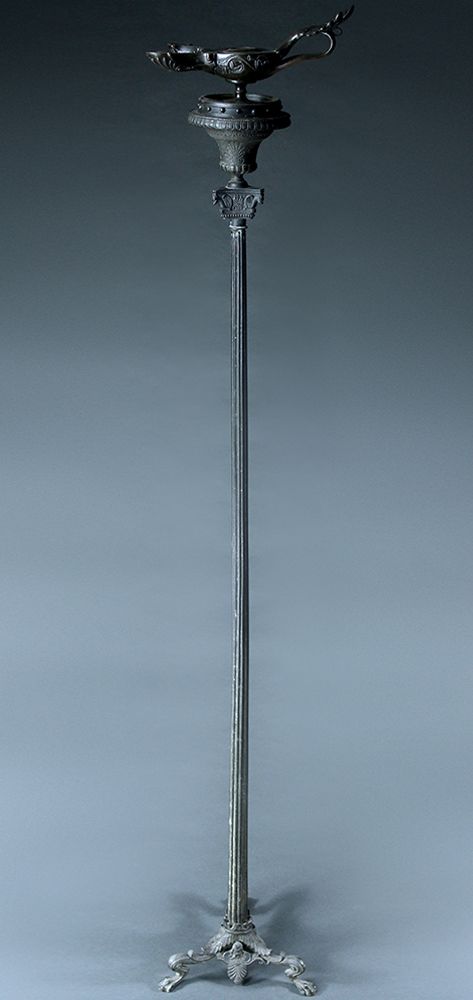
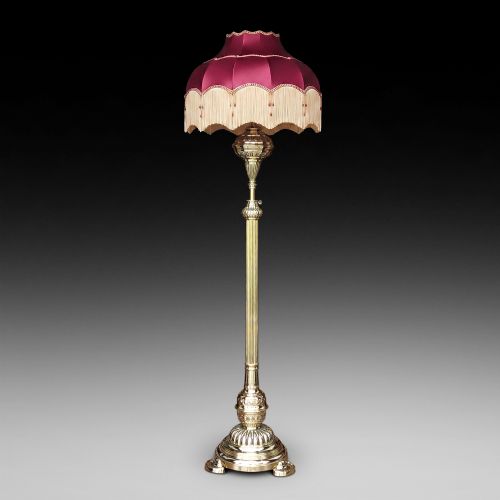
The most common examples encountered on this page are constructed from polished brass, often featuring telescopic mechanisms that allow the height to be adjusted. Alongside standard upright shafts, buyers will find variations including oil lamps converted to electric, lantern stands, and floor candelabras.
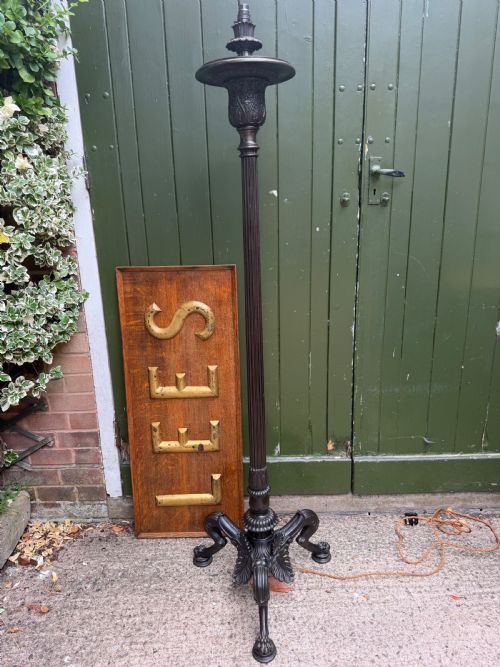
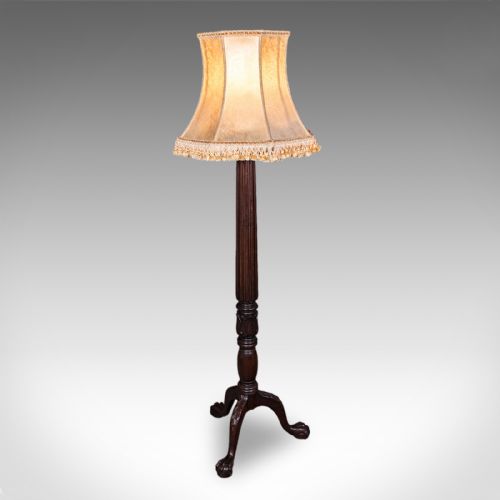
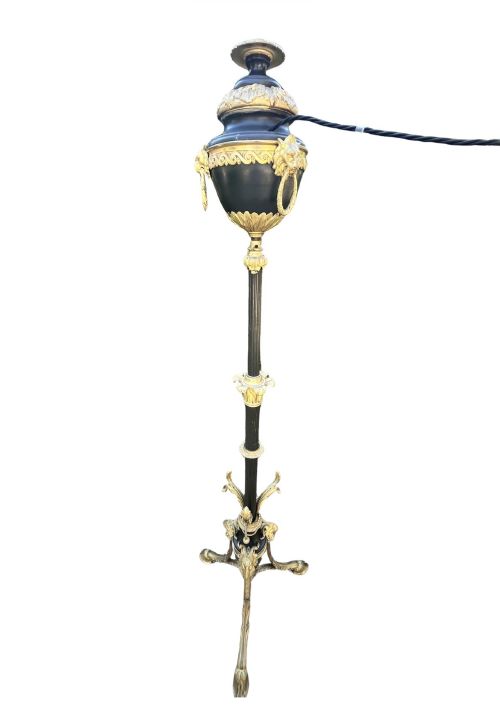
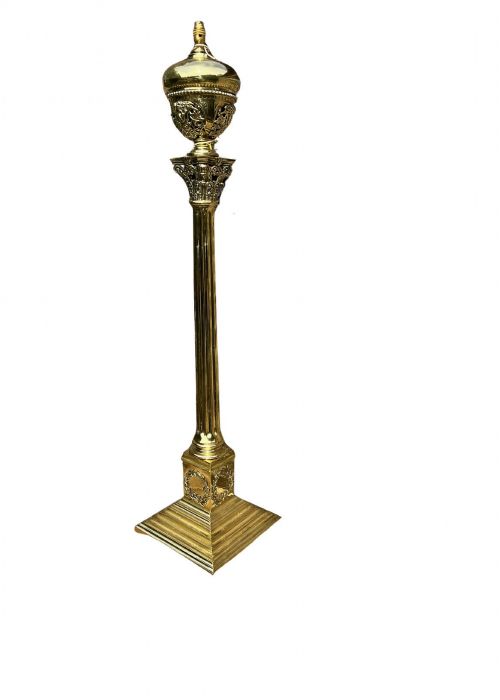
Makers utilised diverse forms ranging from Corinthian columns to Arts and Crafts designs, with occasional pieces incorporating secondary materials like copper, wrought iron, mahogany and onyx. The object types vary from simple domestic lighting to monumental grand pieces influenced by classical Grecian and Neo-Pompeian styles.
Materials and Construction
Metals form the structural core of these standard lamps, with brass appearing most frequently alongside cast iron, bronze, copper and wrought iron. Heavy cast bases provide stability for the extended shafts, while telescopic mechanisms utilise sliding brass tubes secured by screw keys.
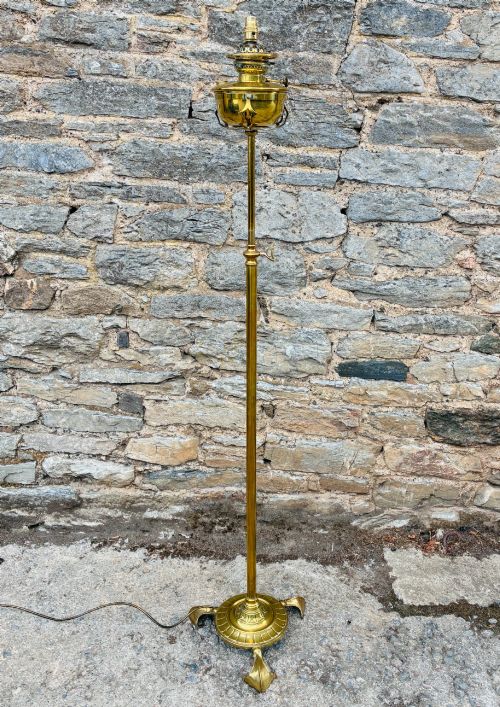
Wood and stone appear in specific regional and stylistic variants, notably carved mahogany and French onyx paired with ormolu mounts. Many surviving examples began life as oil lamps fitted with cranberry glass fonts before undergoing later conversion to electricity.
The archive reveals standard lamps spanning the Victorian era, the Edwardian period, and into the 1920s and 1930s.
Assessing Quality
Quality in a standard lamp is determined by the weight and gauge of the metal used in the shaft and base, where heavier castings prevent tipping and ensure rigid stability when extended. Finer examples display crisp chasing on Corinthian capitals, detailed floral openwork, or robust telescopic engineering by known makers.
Design ambition separates standard commercial production from exceptional pieces, visible in classical Grecian proportions, figural elements, or specialised forms like steamer lamps and lantern stands. The integrity of the materials, from uncompromised brass columns to undamaged onyx inserts, dictates the standing of the piece.
Hinks of B'ham
The Victorian Floor Standing Lamp Glossary
- Telescopic
- An adjustable two-part shaft that allows the overall height of the lamp to be raised or lowered via an internal sliding mechanism. This feature enabled users to direct light precisely where required.
- Standard Lamp
- A traditional British term for a floor-standing lamp designed to illuminate a room from a vertical post. These fixtures typically support a fabric shade at the summit.
- Corinthian Column
- A classical architectural column style featuring an ornate capital decorated with acanthus leaves. This motif was frequently adopted for high-end Victorian brass lamp standards.
- Cranberry Glass
- A rich pinkish-red glass created by adding gold chloride to the molten batch. It appears on period oil lamp fonts integrated into floor standards.
- Ormolu
- Finely ground high-carat gold applied to a bronze or brass base metal object. It provides a bright golden finish on decorative mounts and fittings.
Victorian Floor Standing Lamp: Frequently Asked Questions
How do I adjust a telescopic lamp?
Telescopic lamps feature a central key or screw mechanism located on the outer collar of the shaft. Loosening this fixture allows the inner brass tube to slide upward or downward to the desired height.
Once positioned, tighten the key firmly to secure the upper section in place before operating the lamp.
Were these lamps originally electric?
Many Victorian floor standards were originally manufactured to burn oil or gas rather than run on electricity. These early pieces frequently retain their original burners, fonts, or galleries even after later conversion.
Conversion to electricity usually involves running a cord discreetly through the internal channels or down the exterior of the weighted brass column.
Where should I place a floor lamp?
These tall fixtures suit corners, beside heavy armchairs, or near reading desks where their elevated height can cast light downward over a wide area. Their architectural presence makes them suitable as standalone decorative focal points in larger reception rooms.
Ensure the heavy cast base rests on a stable, level surface, particularly when the telescopic shaft is fully extended.
How do I identify a Victorian standard lamp?
Victorian examples typically display heavy brass construction, classical column designs, or cast iron bases influenced by Gothic, neoclassical, or Arts and Crafts movements. Look for period manufacturing traits such as threaded brass components, hand-finished castings, and functional oil lamp reservoirs.
Later Edwardian and 1920s iterations often introduce lighter proportions, steamer designs, or simplified geometric styling.