


Victorian Flatback Ceramic Pair
These victorian flatback ceramic pair figures bring mid-nineteenth-century mantelpiece display directly into modern rooms.
Victorian Flatback Ceramic Pair
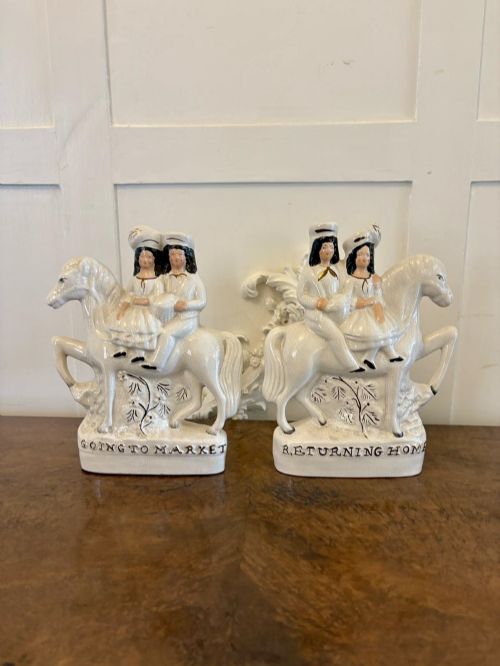
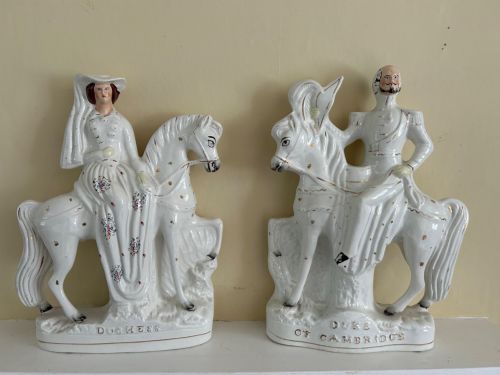
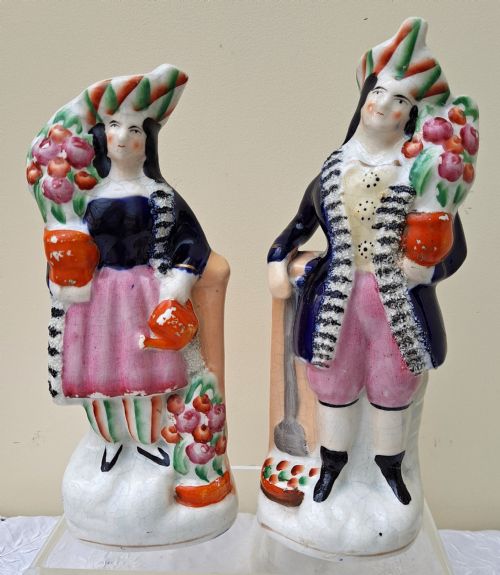
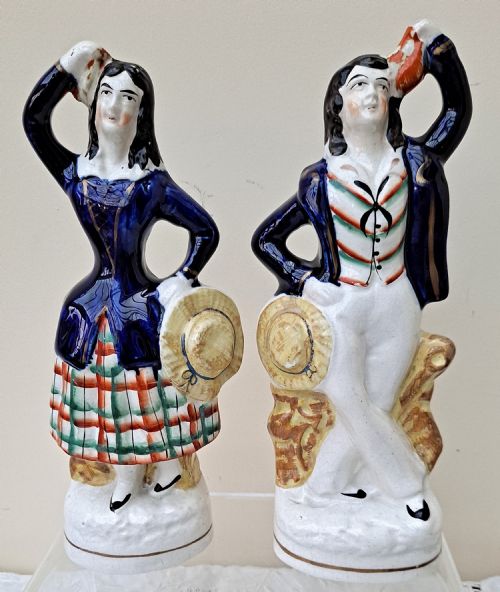
A victorian flatback ceramic pair represents nineteenth-century Staffordshire pottery moulded specifically for display against a wall. The back of each figure remains unglazed or simply finished because viewers would only observe the front and sides from a mantelpiece or shelf.
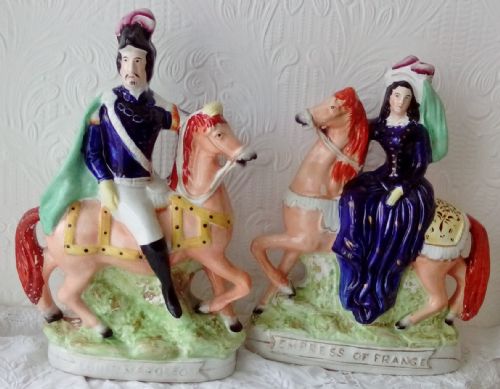
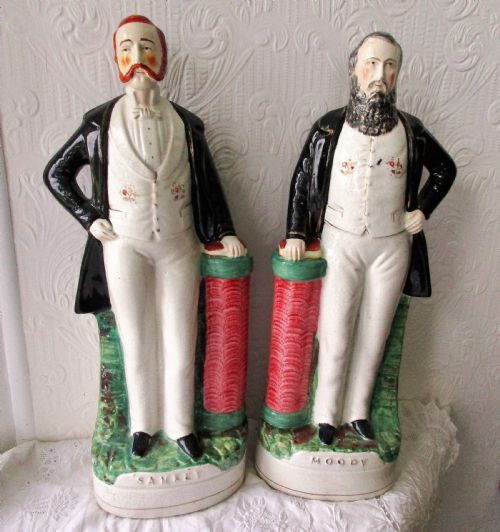
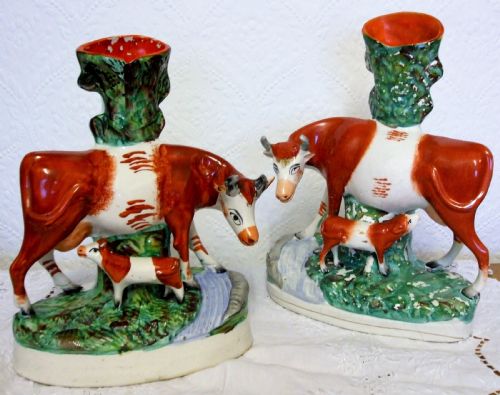
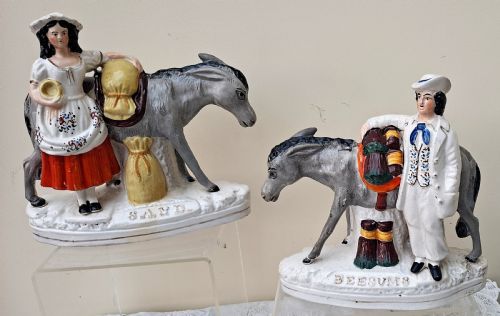
Most examples on this page take the form of decorative figurines, pottery figures, and spill vases shaped as royal portraits, theatrical characters, animals, and rural workers. These pieces emerge from the Victorian era, spanning the mid-to-late nineteenth century around eighteen-sixty to eighteen-eighty.
Materials and Construction
Potters shaped these earthenware figures using moulds before applying lead glaze and enamel paint for colour and surface sheen. Artisans often added gilt highlights to accentuate details on costumes and bases.
The ceramic bodies rely on local clay fired in kilns before hand-painting takes place across the surface. Enamel colours and lead glazes seal the earthenware underneath, creating the characteristic glossy finish seen on these nineteenth-century figures.
Spill vases doubled as miniature household storage for wooden tapers, keeping fire-lighting tools right beside the mantelpiece ornaments.
Judging Quality and Execution
The Victorian Flatback Ceramic Pair Glossary
- Flatback
- A figure moulded with a flat unglazed reverse designed to stand flush against a wall. This technique saved clay and production time for mantelpiece ornaments.
- Spill Vase
- A hollow ceramic figure incorporating an attached cylindrical holder meant to contain wooden spills for lighting pipes or fires. These vessels combine domestic utility with decorative portrait or animal subjects.
- Earthenware
- A porous pottery body fired at lower temperatures than stoneware or porcelain. It requires a glaze layer to hold liquids and provide a smooth surface for enamel painting.
- Enamel Paint
- Opaque vitreous colours fused to the glazed ceramic surface during a secondary low-temperature kiln firing. This medium provides the bright reds, blues, and blacks on Victorian figures.
- Lead Glaze
- A glossy coating containing lead oxide applied to earthenware before firing to seal the porous clay. It gives these nineteenth-century pieces their characteristic shiny appearance.
Victorian Flatback Ceramic Pair: Frequently Asked Questions
What subjects do these figures show?
The subjects range from royal portraits and theatrical characters to animals like dogs, cats, goats, and cows. You will also find occupational figures such as gardeners, harvesters, and musicians.
Many depict historical or contemporary public figures, including political leaders and evangelists, alongside traditional rural scenes.
Why are the backs flat?
Potters designed these items to stand on narrow mantelpieces or shelves against a wall. Leaving the back unglazed and flat saved material and production effort.
This construction method focuses all visual detail on the front and sides where people would actually look.
How are spill vases used?
A spill vase includes an integrated cylinder alongside the main figure to hold thin wooden matches called spills. Households used these to transfer flames from the hearth to candles or lamps.
They served a practical everyday function while remaining decorative mantel ornaments.
What materials make up these pairs?
These pieces consist of earthenware ceramic bodies finished with lead glazes and enamel paint. Artisans frequently added gilt details to enhance the visual appeal of clothing and bases.
The combination of moulded clay and hand-painted surface decoration defines nineteenth-century Staffordshire pottery.