

Victorian Flame Mahogany Credenza
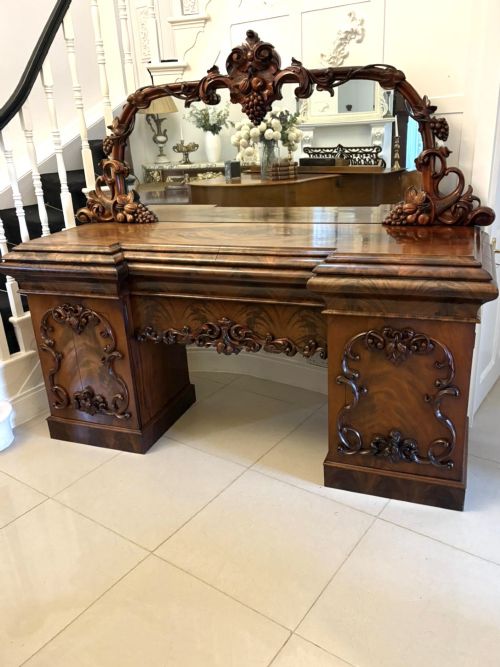
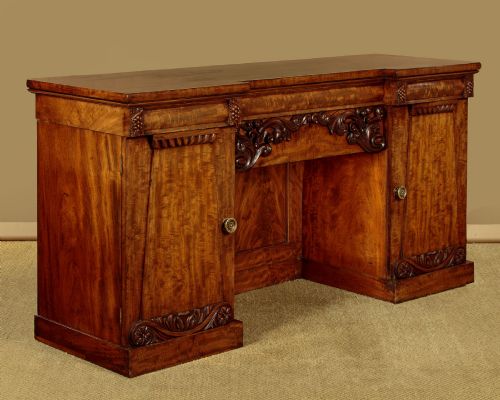
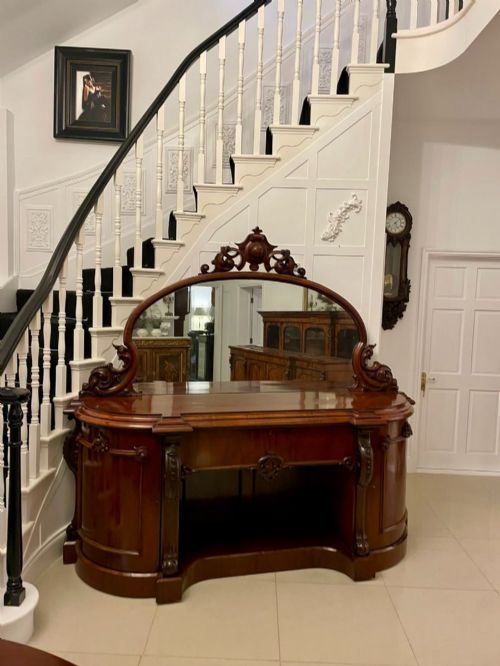
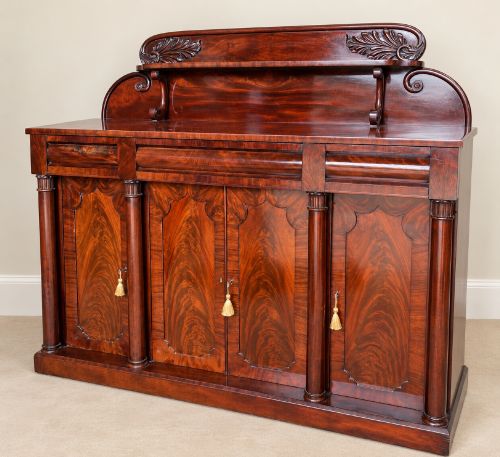
A victorian flame mahogany credenza offers deeply figured timber and substantial presence, anchoring a formal dining room or spacious hallway with period authority.
Victorian Flame Mahogany Credenza
When searching for a victorian flame mahogany credenza, buyers encounter large formal sideboards, smaller chiffoniers, and breakfront cabinets spanning the nineteenth century. These pieces serve primarily for storage and display, originating from periods such as the eighteen-fifties and eighteen-sixties.
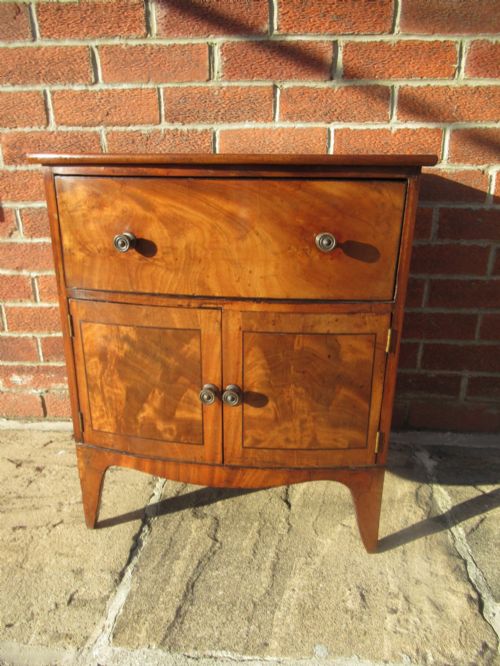
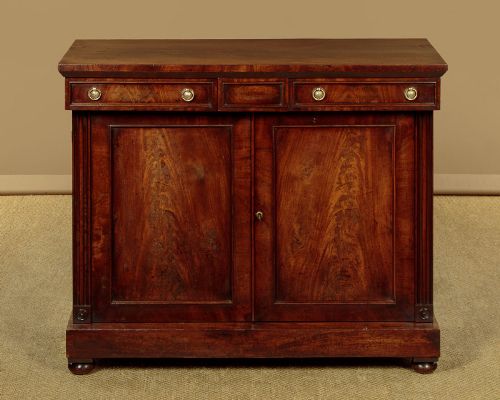
The selections on this page lean heavily toward classic Victorian sideboards and chiffoniers constructed from rich mahogany timbers. Examples range from simple two-door cupboards to grand pedestal sideboards featuring mirror backs and carved details.
Materials and construction
Cabinet makers utilised solid mahogany and flame mahogany veneer applied over secondary softwood or hardwood carcases. The characteristic figuring is achieved by slicing timber cut from fork joints or specific growths.
Secondary elements incorporate brass hardware, glass panels for doors or mirrors, and occasional marble tops. Joinery relies on traditional techniques suited to heavy sideboard construction and large cabinet doors.
Listings span the nineteenth century, encompassing early Victorian and later decades with mahogany veneers, brass fittings, and mirror glass.
Assessing quality and craftsmanship
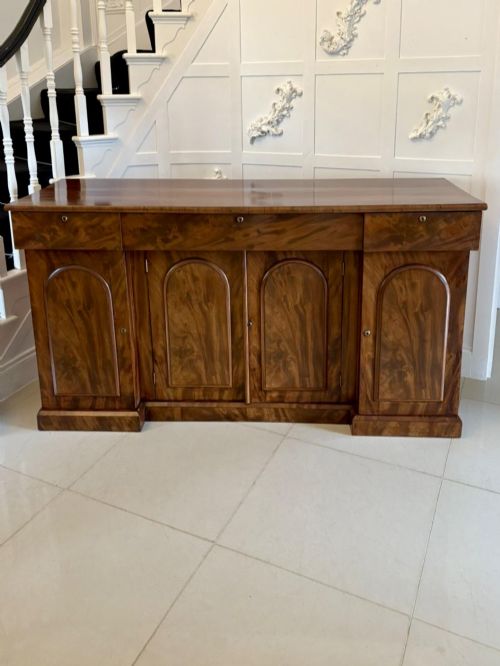
Superior examples display intensely rippled flame mahogany veneers book-matched across doors and drawer fronts to create symmetrical patterns. Lesser pieces rely on plain mahogany boards with minimal figure and simpler surface finishing.
Carving depth and sharpness separate fine cabinet work from standard production. Crisp mouldings, substantial timber thicknesses, and well-fitted internal shelving indicate higher workshop standards.
Gillows
The Victorian Flame Mahogany Credenza Glossary
- Flame mahogany
- A veneer cut from the branch junctions of the mahogany tree, producing a distinctive, swirling flame-like pattern. It is prized for its decorative visual impact.
- Chiffonier
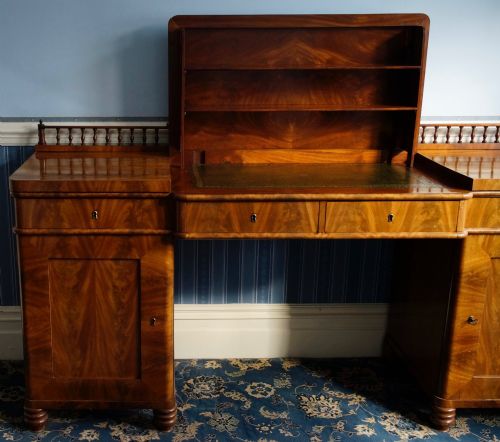
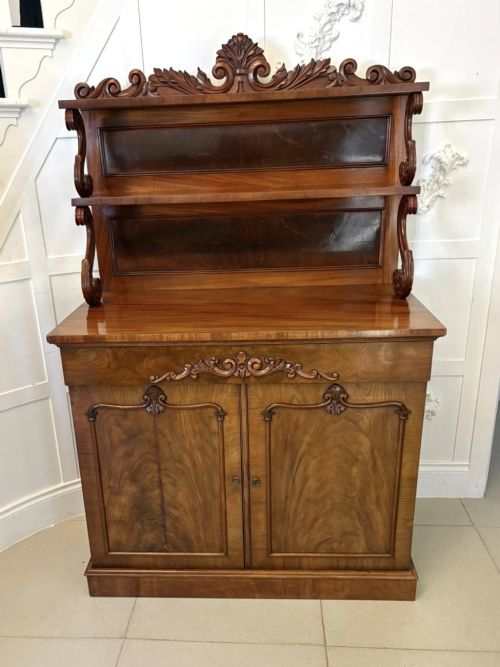
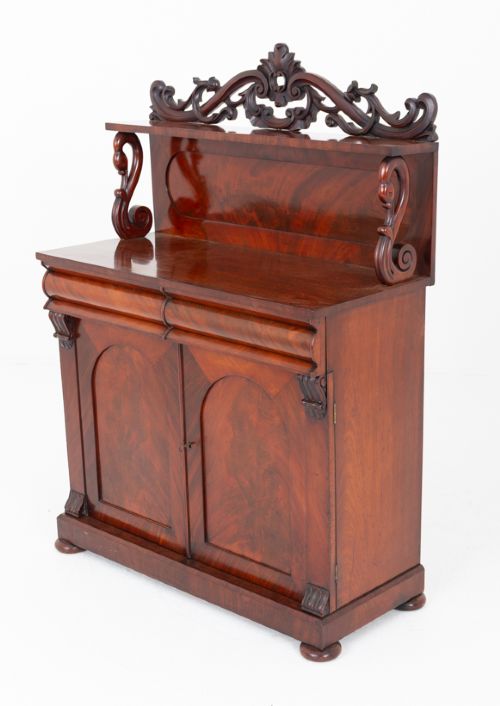
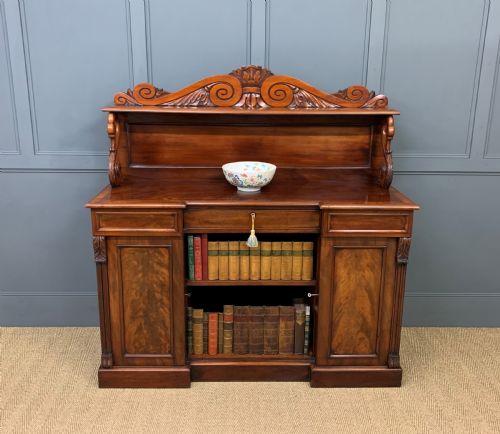
- A smaller sideboard variant, usually featuring a low shelf or cupboard base with a shelved superstructure above. These appeared frequently in mid-nineteenth-century parlours.
- Breakfront
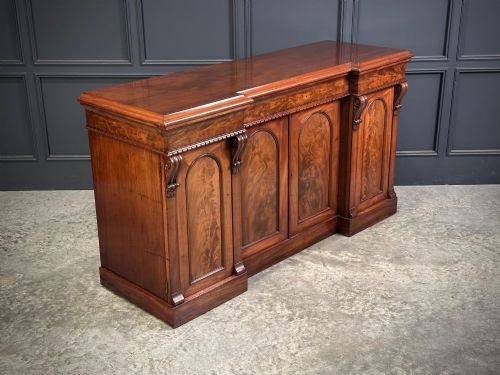
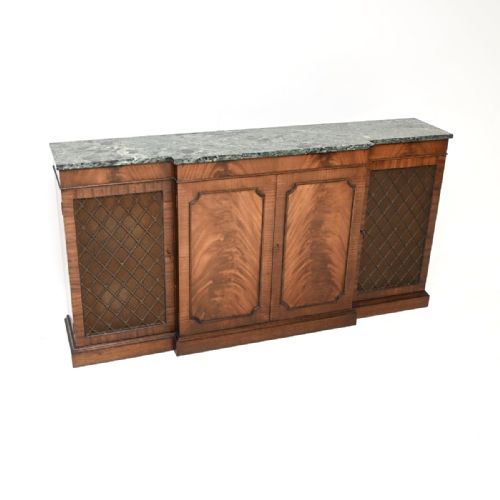
- A cabinet design where the central section projects forward from the flanking outer sections. This configuration adds architectural depth to large sideboards.
- Pedestal sideboard
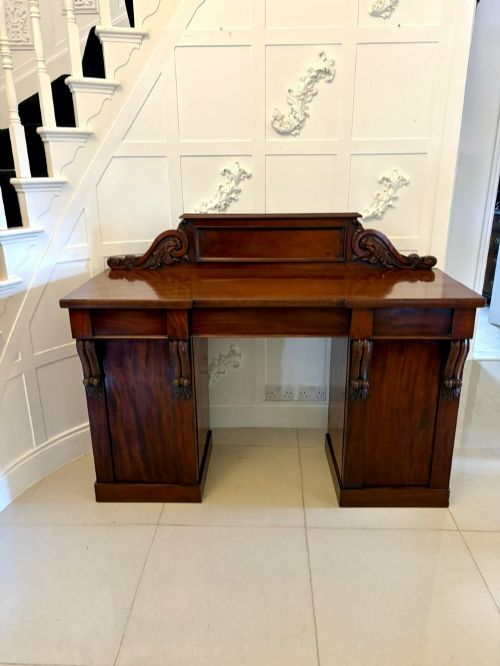
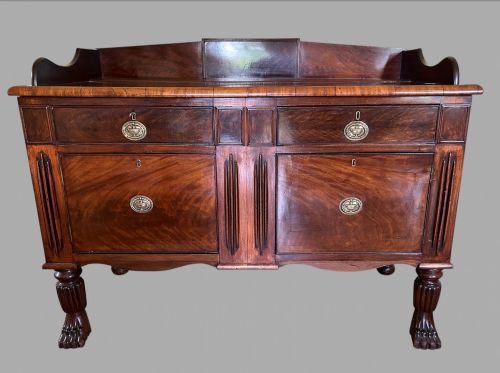
- A heavy sideboard style featuring two substantial pedestals or cupboards supporting a central drawer section. They dominate large dining spaces due to their scale.
Victorian Flame Mahogany Credenza: Frequently Asked Questions
What is a flame mahogany credenza?
A large nineteenth-century storage cabinet featuring highly figured wood veneer with swirling grain patterns. These pieces function as decorative sideboards in traditional interiors.
They provide enclosed cupboard space alongside surface display areas for dining china or silver.
How do I date a Victorian sideboard?
Examine the timber selection, secondary woods, and stylistic influences present in the carving or mirror frames. Mid-century examples often display rich flame veneers and rounded ogee mouldings.
Later Victorian pieces introduce heavier proportions and denser carved ornamentation reflecting changing interior fashions.
Where were these cabinets used?
Dining rooms formed the primary location for these large case pieces, serving families during formal meals. They held serving dishes, cutlery, and linens behind locked doors.
Smaller chiffonier variants frequently stood in drawing rooms or parlours for displaying books and decorative objects.
What is the difference between a sideboard and a chiffonier?
Sideboards are typically larger, longer pieces designed for formal dining spaces with extensive storage capacity. They often incorporate pedestals or heavy backboards.
Chiffoniers represent a more compact form, traditionally featuring a low enclosed cabinet base topped by a raised shelf structure.