
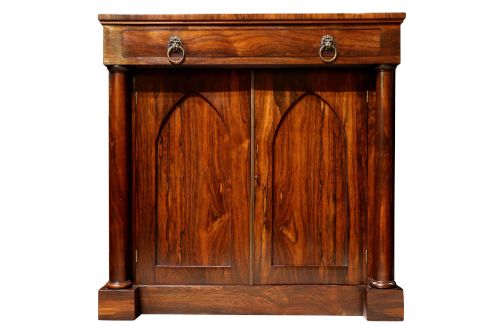
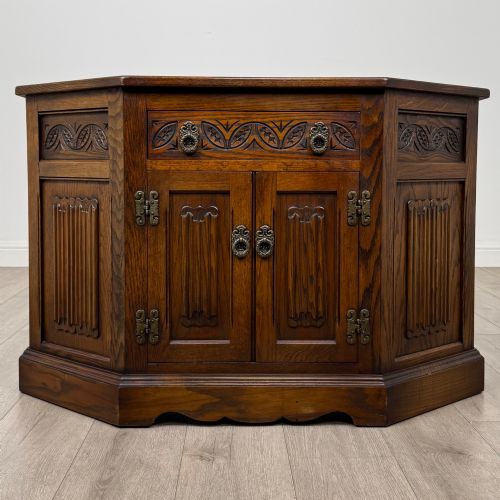
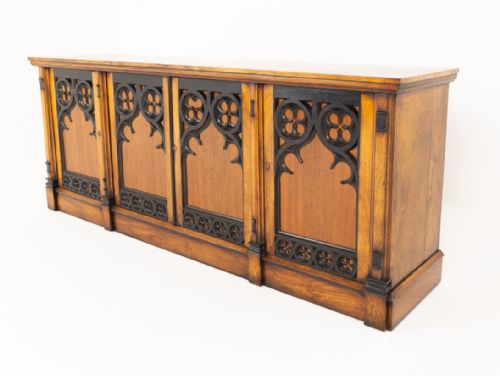
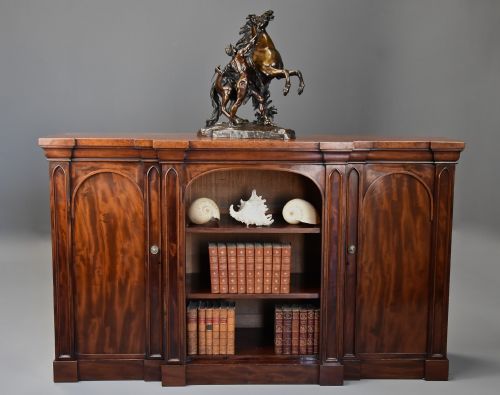



Gothic Revival Low Cabinet
These gothic revival low cabinet pieces bring nineteenth-century architectural verticality and rich timber grain directly into domestic spaces.
Gothic Revival Low Cabinet
A gothic revival low cabinet combines mediaeval architectural motifs with the practical storage needs of nineteenth-century interiors. These items encompass bookcase forms, side cabinets, and chiffoniers drawn from the Victorian and Edwardian eras.
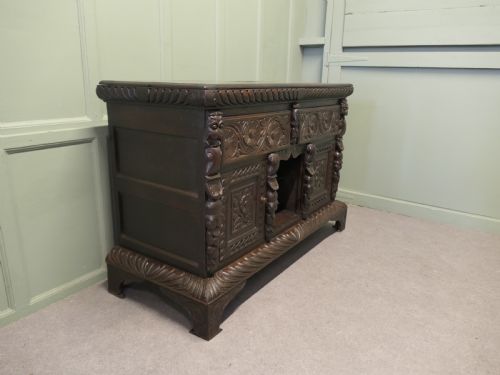
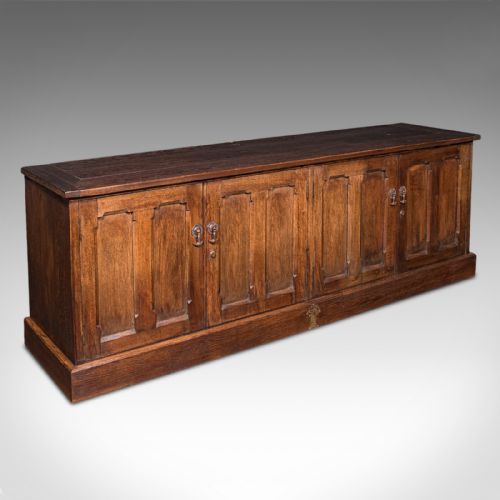
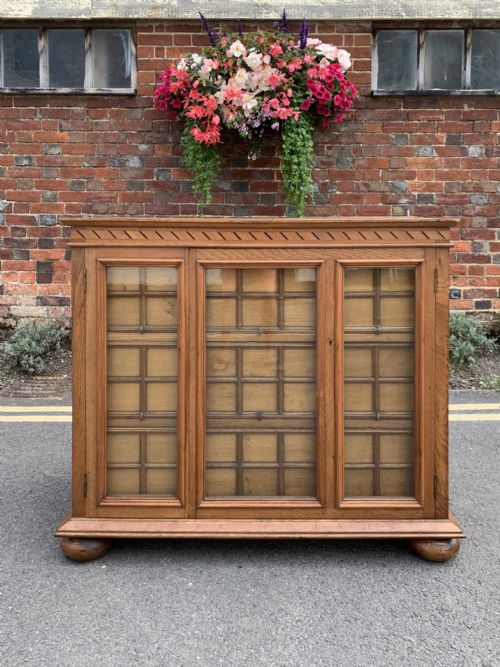
The versions most commonly met on this page are carved from oak and mahogany, adopting styles that reference Tudor, Jacobean, and strict Gothic traditions. Buyers frequently encounter low bookcases and cupboards featuring characteristic pointed arches and panelled doors.
Makers often drew inspiration from ecclesiastical architecture, translating tracery, linenfold carving, and green man masks into domestic furniture. Such pieces functioned as bookcases, display cabinets, and vestry cupboards across nineteenth-century homes.
What varies in quality
The standard of carving distinguishes superior examples from simpler utilitarian pieces, with crisp undercutting and balanced proportions marking out the finest work. Workshops influenced by specific designers invested greater labour in architectural detailing.
Timber selection and veneer matching dictate the visual depth of the finished surface, particularly across mahogany and oak examples. Heavier structural design and integrated brass hardware also indicate a more ambitious commission.
Materials recorded across current pieces include oak, mahogany, rosewood, walnut, brass, and glass.
Richard Bridgens
The Gothic Revival Low Cabinet Glossary
- Linenfold
- A carved wooden panel moulding that imitates folded fabric or linen. This decorative motif appears frequently on fifteenth-century ecclesiastical woodwork and later revival furniture.
- Breakfront
- A piece of furniture having a central section that projects forward from the flanking sections. This configuration adds architectural depth to bookcases and sideboards.
- Green Man
- A sculptural architectural ornament depicting a human face disgorged from foliage or vines. Carvers utilised this pagan symbol across mediaeval stonework and nineteenth-century revival woodwork.
- Tracery
- Openwork intersecting stone or wooden ribs forming geometric patterns in the upper part of a window or screen. Cabinet makers adapted this Gothic architectural feature for glazed doors.
- Chiffonier
- A low sideboard or cabinet featuring shelves or drawers, popular during the nineteenth century. These items typically provided compact storage for dining rooms and libraries.
Gothic Revival Low Cabinet: Frequently Asked Questions
What is a gothic revival low cabinet?
A gothic revival low cabinet is a nineteenth-century storage piece decorated with mediaeval architectural motifs like pointed arches and tracery.
These items were built primarily from oak and mahogany to serve as practical bookcases and cupboards in domestic rooms.
How do I date a gothic revival cabinet?
Dating relies on examining the timber selection, construction techniques, and specific revival style influences present in the piece.
Cabinets from the early nineteenth century often utilise rosewood or mahogany, while later Victorian and Edwardian examples lean heavily toward carved solid oak.
Are these cabinets suitable for modern homes?
These cabinets provide functional storage while introducing strong nineteenth-century architectural character and rich timber textures to contemporary interiors.
Their lower proportions make them versatile for placement beneath windows or against living room walls.
What woods were used for these cabinets?
Cabinet makers predominantly used solid oak, mahogany, and walnut, occasionally incorporating flame mahogany veneer or ebonised wood.
Brass hardware and glass doors frequently supplemented these primary timbers.