
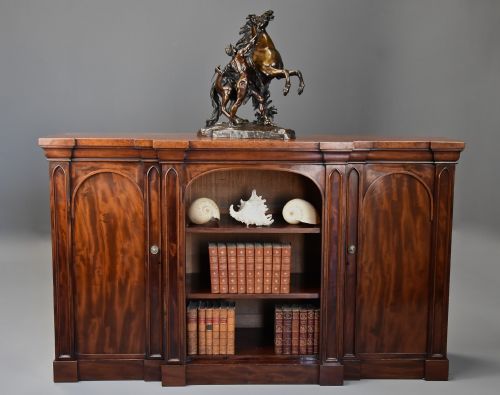
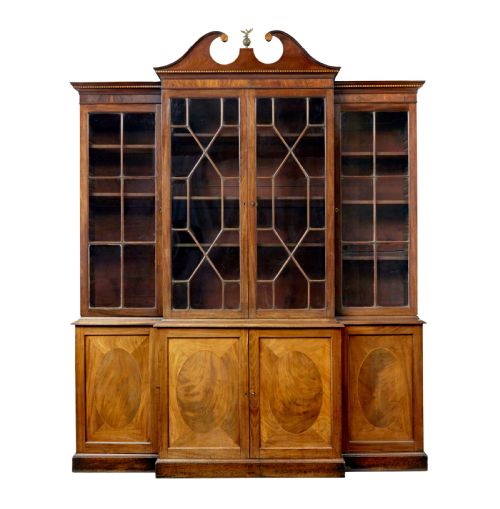


Mid Victorian Breakfront Cabinet
These mid victorian breakfront cabinet pieces bring substantial timber and grand proportions into a room, offering display space and storage.
Mid Victorian Breakfront Cabinet
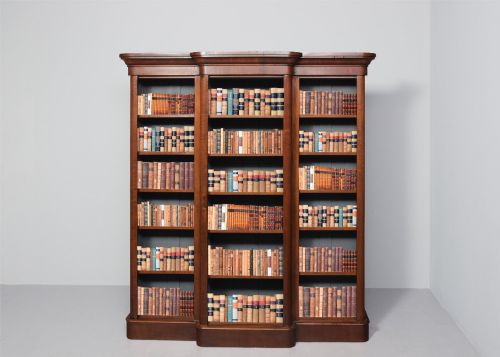
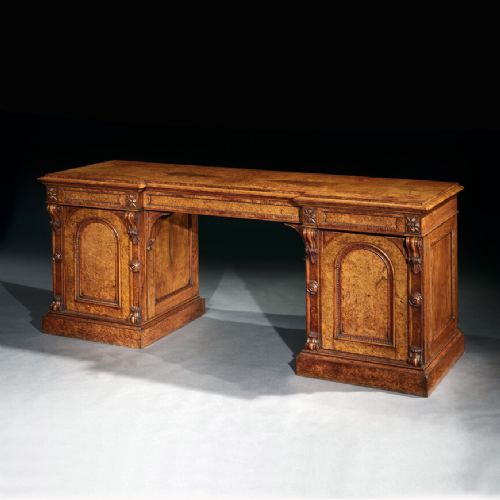
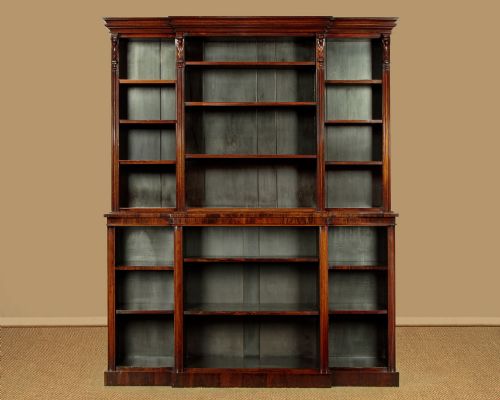
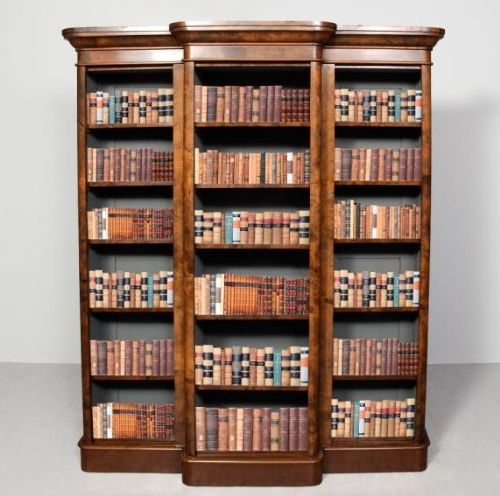
A mid victorian breakfront cabinet provides substantial furniture forms originating in the nineteenth century, predominantly appearing as bookcases and credenzas with projecting central sections. You will most frequently meet walnut, burr walnut, and mahogany variants dating from around eighteen fifty to eighteen sixty, often displaying open shelving or glazed doors.
The design divides the front elevation into three sections, creating architectural depth that sets these cabinets apart from flat-fronted sideboards. Pieces in the current selection range from open bookcases with adjustable shelves to monumental carved bookcase cabinets and ormolu-mounted credenzas.
Materials and construction methods
Cabinet makers utilised dense native and imported timbers, applying flame mahogany veneer and burr walnut over solid oak carcases to create rich surface figure. Highly figured grain patterns receive careful matching across the breakfront facade, whilst secondary timbers such as oak form internal shelving and drawer linings.
Metal mounts in cast ormolu, brass details, and intricate marquetry inlay integrate with the wooden structures, particularly on credenzas and Gothic revival pieces. Glazing bars and adjustable shelf systems demonstrate the practical joinery standards employed in mid nineteenth century workshops.
Current listings feature pieces spanning the mid-nineteenth century, predominantly utilising burr walnut, mahogany, and ormolu mounts.
Assessing quality in these cabinets
Superior examples separate themselves through the selection of timber veneers, where symmetrical burr walnut or flame mahogany exhibits exceptional depth and movement across the breakfront panels. The integration of decorative elements such as fire-gilded ormolu mounts, intricate marquetry inlay, and carved architectural details distinguishes finer commissions from standard production pieces.
Construction integrity dictates the long-term utility of the furniture, visible in the precision of the breakfront joints, the stability of adjustable shelving, and the condition of original brass hardware. Credenzas featuring fitted secretaire drawers or complex Gothic revival influences represent more ambitious cabinet-making endeavours.
The Mid Victorian Breakfront Cabinet Glossary
- Breakfront
- A cabinet design where the central section projects forward from the flanking wings. This configuration creates visual depth and architectural presence.
- Ormolu
- Gilt bronze mounts applied to furniture for decorative effect. It adds metallic contrast against dark woods like walnut and mahogany.
- Burr Walnut
- Timber taken from the warted growths of walnut trees, yielding highly swirled grain patterns. Cabinet makers prized it for veneering prominent surfaces.
- Credenza
- A low cabinet piece often featuring doors and central display areas, popular in the Victorian period. These frequently incorporate ormolu mounts and marquetry.
- Secretaire
- A desk drawer containing small compartments and a writing surface. Some mid-nineteenth century credenzas incorporate this feature.
Mid Victorian Breakfront Cabinet: Frequently Asked Questions
What rooms suit a breakfront cabinet?
These large pieces demand generous wall space and high ceilings to balance their grand proportions. Libraries, drawing rooms, and large dining spaces accommodate their depth and height effectively.
Positioning them away from direct sunlight protects vulnerable walnut and mahogany veneers from fading over time.
How do I adjust the shelves?
Many mid-nineteenth century bookcases utilise traditional wooden ratchets or metal pin systems to support the timber shelves. These mechanisms allow you to reposition shelves vertically depending on book heights.
Care must be taken when moving heavy mahogany or oak boards within older cabinetry.
What is a credenza?
A credenza is a low form of Victorian cabinet work, often featuring glazed central doors flanked by curved cupboards. They served both display and storage functions in formal rooms.
Examples from this period frequently display burr walnut veneers and ormolu mounts.
How do I care for burr walnut?
Burr walnut requires stable indoor humidity and minimal exposure to extreme temperature shifts. Regular dusting with a dry, soft cloth preserves the polished finish.
Applying specialised wax sparingly maintains the lustre of the wood without building up heavy residue.