
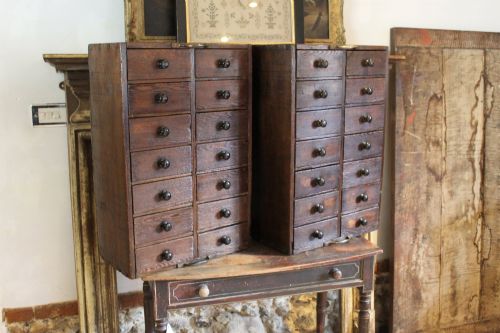


Victorian Filing Drawers
These Victorian filing drawers organise correspondence, ledgers and small items within multi-drawer housings built for nineteenth-century offices, shops and studies.
Victorian Filing Drawers
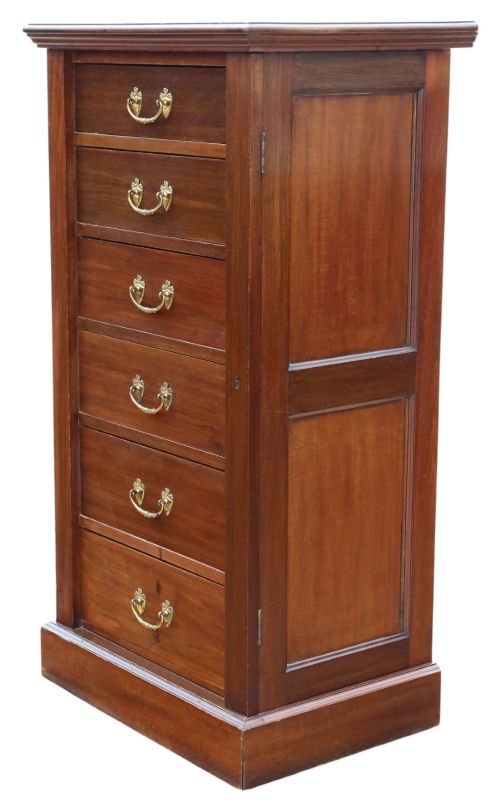
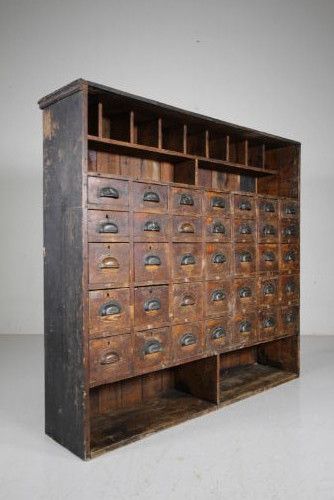
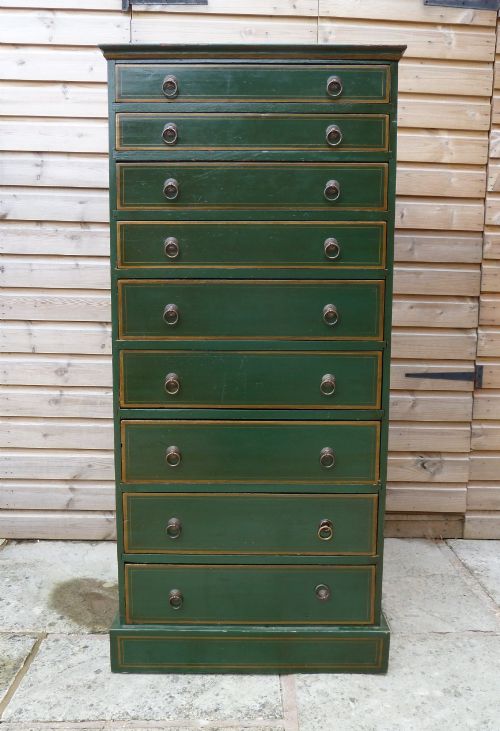
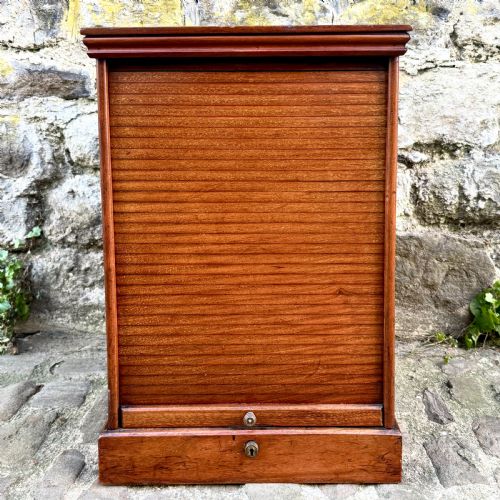
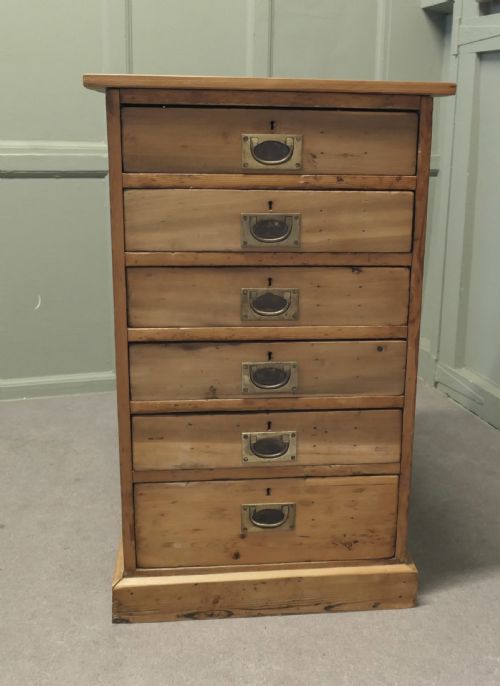
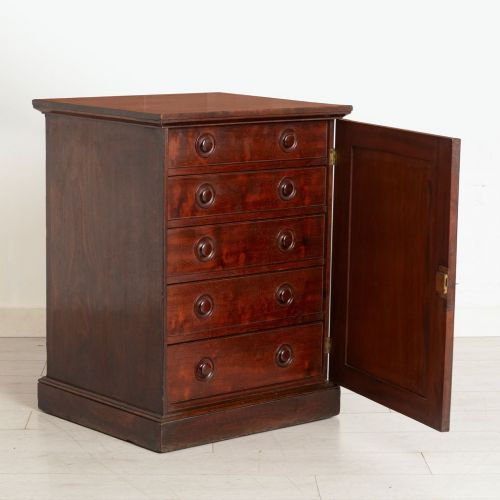
Victorian filing drawers emerge primarily as banks of drawers, Wellington chests and specialised letter files originating from the nineteenth century through to the Edwardian period. Buyers encounter tall narrow chests, shallow pine compartments, shop chests and campaign pieces designed for systematic storage.
The evidence shows forms ranging from large multi-drawer office cabinets and watchmakers' banks to collectors' cabinets in walnut, mahogany and pine. These functional items served demanding commercial and domestic roles, resulting in sturdy proportions and compartmentalised layouts.
How they were made
Cabinet makers utilised dense hardwoods like mahogany, walnut and oak alongside utilitarian softwoods such as pine, incorporating brass handles, drop flaps and patent locking mechanisms. Construction relies on solid timber carcases built to withstand heavy daily use in commercial offices and retail spaces.
Surfaces receive polished or painted finishes that highlight figured walnut veneers, burr walnut and mahogany grains. Drawer construction often employs graduated tiers, scalloped brass pulls and internal filing frames tailored to specific organisational needs.
Listings feature items from the 1850s to the 1960s, spanning the Victorian and Edwardian eras with materials including brass, mahogany, pine, oak, metal and walnut.
What varies in quality
Quality rests upon the choice of timber and the sophistication of the internal mechanism, distinguishing standard utility pine from finely figured burr walnut or mahogany cabinets with patent locking bars. Superior examples display meticulous drawer graduation, robust brass hardware and integrated security elements like Wellington locking arms.
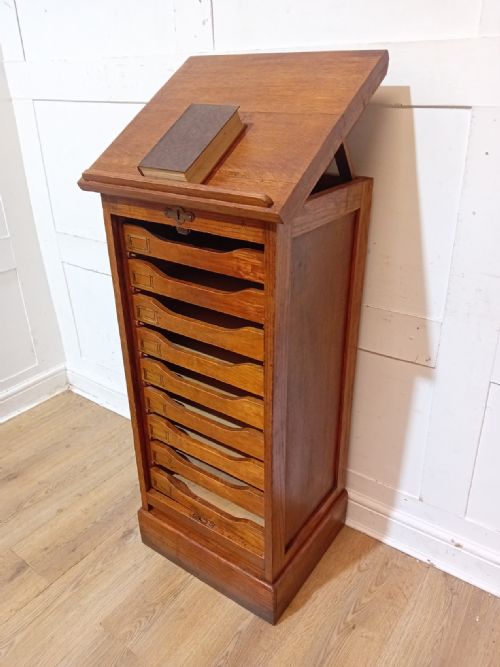
Design complexity marks the upper tier of pieces, where specialised adaptations such as drop fronts, lectern tops and multi-drawer banks reflect higher bespoke manufacturing standards. The integrity of the timber selection and the precision of the drawer fit separate everyday office furniture from exceptional workshop production.
D Napier & Sons·Amberg·Maple and Co
The Victorian Filing Drawers Glossary
- Wellington chest
- A tall, narrow chest of drawers secured by a hinged locking side bar that fastens with a key. This design secures all drawers simultaneously.
- Campaign chest
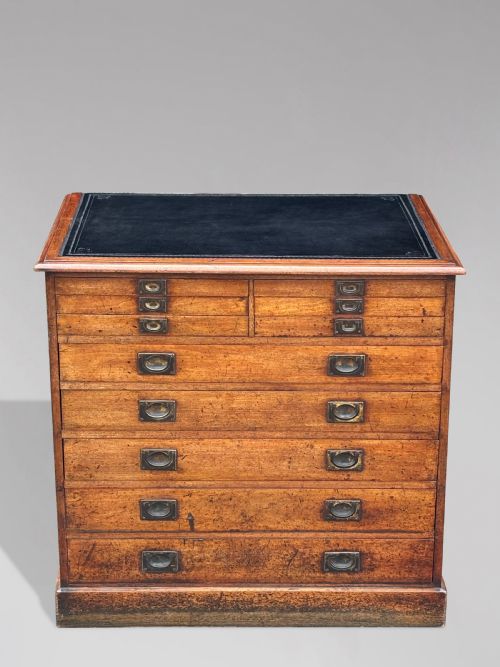
- Portable furniture built in sections with recessed brass carrying handles, originally made for military officers on the move. They divide into manageable modular blocks.
- Bank of drawers
- A large multi-drawer cabinet constructed for commercial or workshop storage. These pieces hold substantial numbers of shallow compartments.
- Collectors cabinet
- A specialised housing with numerous small drawers built for specimens, coins or documents. They often feature dense hardwoods and refined internal dividers.
Victorian Filing Drawers: Frequently Asked Questions
How were these drawers used?
These pieces organised correspondence, ledgers, trade samples and small items in Victorian offices, banks and shops. Staff sorted papers into shallow compartments or patent filing systems for rapid retrieval.
Many designs served specialised trades, functioning as watchmakers' banks, music cabinets or estate storage. Their compartmentalised layouts kept workspaces orderly before modern steel filing equipment took over.
What woods appear most often?
The evidence shows frequent use of mahogany, walnut, oak and pine across these cabinets. Finer pieces employ figured walnut, burr walnut and satin birch for display surfaces.
Utilitarian workshop and office pieces rely on robust pine, teak and pitch pine. Brass hardware and cast iron elements frequently complement these timber carcases.
How do I identify a Wellington chest?
A Wellington chest appears as a tall, narrow cabinet secured by a vertical locking flap on one side. Swinging this hinged stile outward unlocks the column of drawers.
This specific mechanism kept contents secure in busy Victorian offices and private studies. The pieces listed in this style typically feature six to nine graduated drawers.
Are campaign filing drawers portable?
Campaign filing drawers were originally built in modular sections to travel with military officers or colonial administrators. Recessed brass handles and protective corner brackets allowed safe transport.
These pieces divide into stacked blocks that lock together securely. Surviving examples combine functional portability with fine mahogany or pitch pine construction.