
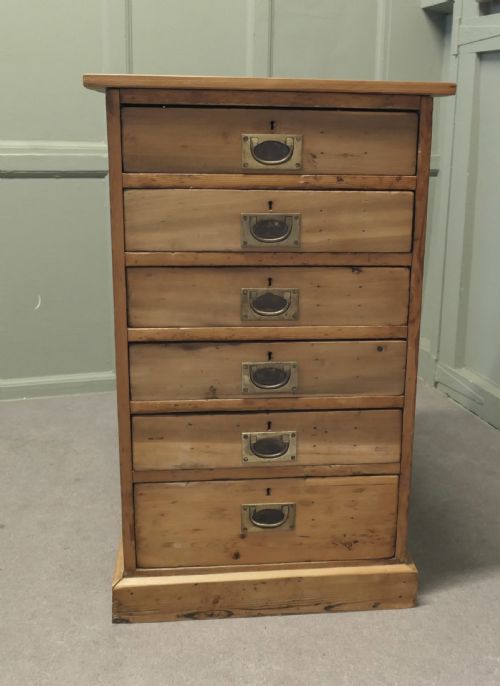
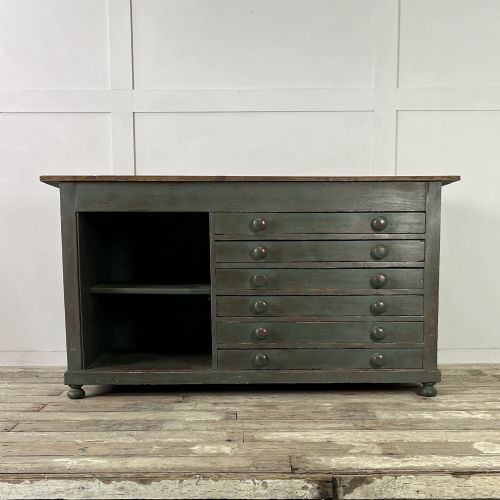
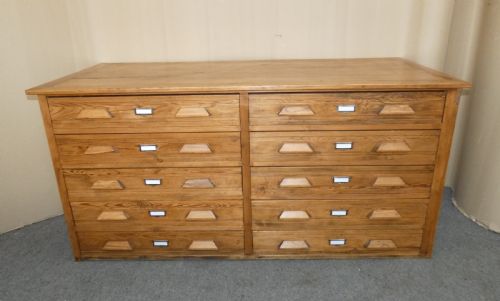


Shallow Pine Drawers
Shallow pine drawers are practical storage pieces offering compact organisation, and you want one for its versatile utility and honest timber grain.
Shallow Pine Drawers
Shallow pine drawers encompass a range of functional storage forms including filing drawers, artists chests, specimen cabinets, and plan chests. These pieces span the nineteenth century, Victorian era, Edwardian period, and the 1920s, reflecting practical utility and utilitarian design.
The most common versions met here are Victorian pine chests and collectors cabinets. These items combine softwoods like pitch pine and standard pine with brass or metal hardware, serving purposes from filing to specimen storage.
How they were made
Makers utilised solid pine and figured pitch pine, sometimes applying paint or stain to the exterior surfaces. Construction relied on durable timber framing suited to everyday sorting and storage tasks.
Hardware typically includes brass and metal pulls or handles affixed to the drawer fronts. Interiors were built to hold specimens, plans, or documents efficiently within shallow depths.
Listings feature nineteenth-century and Victorian pieces constructed from pine, pitch pine, and mahogany, incorporating brass and metal hardware.
What varies in quality
Quality differences emerge in the selection of timber, such as the use of figured pitch pine versus standard painted pine. Cabinetmaking standards distinguish simpler utility builds from finely constructed collectors cabinets and plan chests.
The integrity of the original hardware and the preservation of painted or waxed surfaces set superior examples apart. Pieces retaining their original configuration and multi-drawer arrangements command greater interest.
J.T.Crockett
The Shallow Pine Drawers Glossary
- Pitch pine
- A durable resinous softwood noted for its pronounced grain patterns. It was frequently utilised for robust nineteenth-century furniture.
- Plan chest
- A large piece of furniture comprising multiple shallow drawers designed for storing architectural drawings and maps flat. These items originate from institutional and studio settings.
- Collectors cabinet
- A specialised storage unit fitted with numerous shallow drawers for organising natural history specimens or small objects. They often feature tightly fitted enclosures.
- Specimen chest
- A compact cabinet designed to hold scientific samples or small collections securely. These pieces rely on clean internal proportions to protect delicate contents.
Shallow Pine Drawers: Frequently Asked Questions
What were shallow pine drawers used for?
These cabinets and chests served various administrative, artistic, and scientific purposes. They were designed to hold flat plans, specimens, or documents.
Their shallow proportions kept small items organised and easily accessible in studios, offices, and studies.
How do I date a pine chest?
Dating relies on observing construction methods, timber selection, and hardware styles across periods like the Victorian era or Edwardian times. Details such as brass pulls and drawer joints offer chronological clues.
Comparing the piece to known nineteenth-century or early twentieth-century examples helps confirm its age.
Are painted pine drawers original?
Many nineteenth-century and Victorian utility pieces received painted finishes during their working lives. Original paint layers contribute to the authentic character of industrial and utilitarian furniture.
Assessment of the surface requires looking at how the finish has aged alongside the pine timber underneath.
How do I care for antique pine?
Maintain waxed or polished pine surfaces by avoiding excessive moisture and direct sunlight. Regular gentle dusting preserves the integrity of the soft timber and any applied finishes.
Keep the environment stable to prevent movement in the pine drawers and their surrounding frames.