



Vintage Pine Office Storage
Vintage pine office storage brings honest utility and warmth to a workspace, offering sturdy organisation built from timber and metal.
Vintage Pine Office Storage
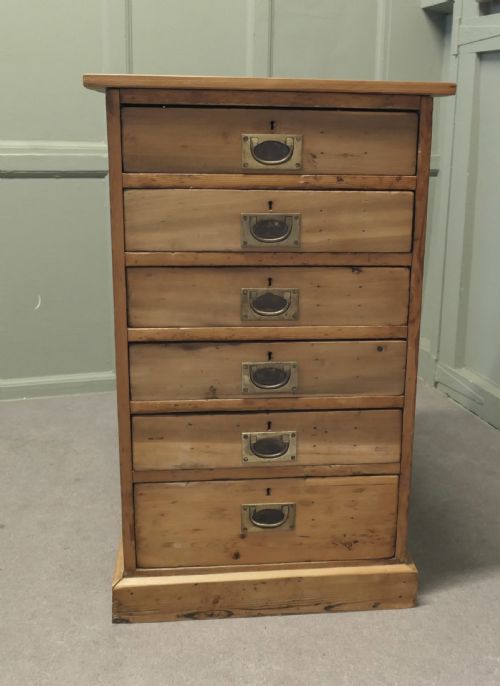
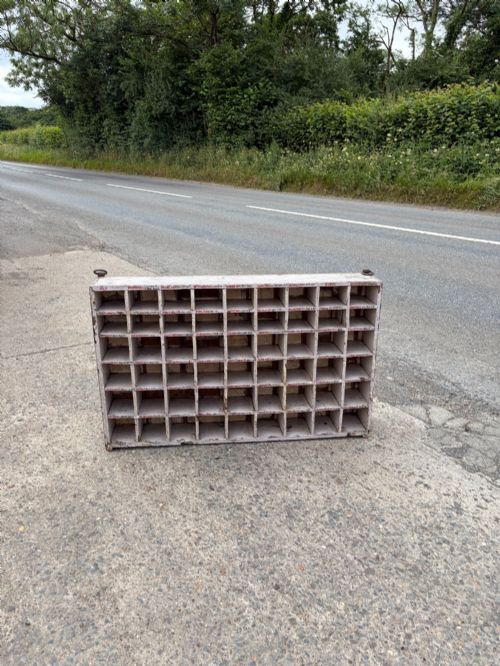
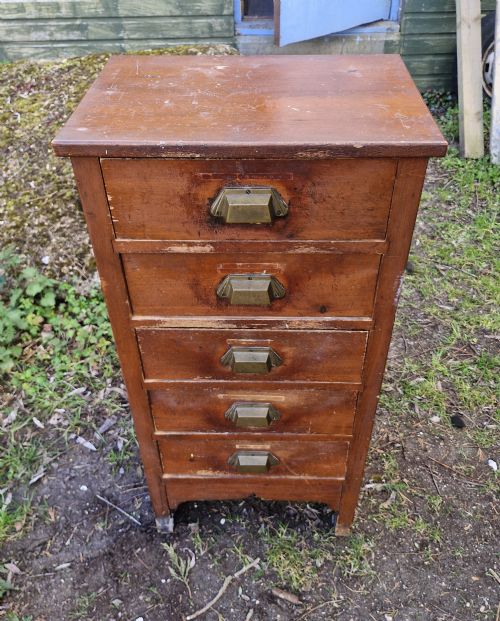
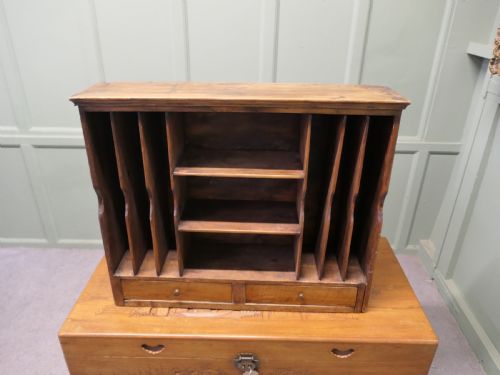
Vintage pine office storage encompasses functional workspace furnishings built from timber, featuring pieces from the 19th century, Victorian era, Edwardian period, and the 1920s to 1960s. Buyers searching for vintage pine office storage encounter practical forms designed for paperwork and supplies, including filing cabinets, pigeon holes, cupboards, and desktop organisers.
The selection on this page relies heavily on institutional and utilitarian forms originating from British and French contexts. Examples span specific school cupboards, post office filing shelves, and travelling trunks alongside general drawer units and storage shelving.
Earlier examples span 19th-century shallow drawers and Victorian pieces, while later options extend through 1900, 1920, and 1930s designs up to mid-century 1960s cabinets. These items share a utilitarian heritage, prioritising robust construction and straightforward organisation over decorative excess.
How vintage pine office storage was made
Construction relies primarily on solid timber, specifically pine, complemented by functional hardware in brass and iron. Structural integrity depends on straightforward joinery suited to daily institutional and commercial use.
Metal components appear in structural bracing, hinges, and notably in period brass handles that secure drawers and doors. Surface finishes combine bare timber with painted treatments, reflecting the utilitarian demands of schools, post offices, and offices.
A travelling trunk designed for a Victorian journey now happily holds paperwork instead of garments.
What varies in quality
Quality separates through the integrity of the timber construction and the originality of fitted hardware, such as period brass handles. Pieces retaining their original painted surfaces or institutional provenance demonstrate greater historical character.
Proportion and form dictate the distinction between standard utilitarian boxes and refined institutional cabinetry, such as multi-drawer filing units and compartmentalised pigeon holes. The calibre of the original joinery determines how securely drawers slide and doors align after decades of service.
The Vintage Pine Office Storage Glossary
- Pigeon holes
- A system of small, open compartments designed for sorting mail, documents, or stationery. These units form a staple of archival and postal furniture.
- Filing cabinet
- An upright piece of furniture containing multiple drawers meant for vertical or horizontal document storage. They provide structured organisation for commercial offices.
- Cupboard
- An enclosed storage unit fitted with doors and internal shelving for concealing supplies. Institutional examples often originate from schools and offices.
- Travelling trunk
- A heavy-duty container built for transporting belongings or documents securely. Late Victorian iterations in pine combine robust timber construction with iron hardware.
Vintage Pine Office Storage: Frequently Asked Questions
What defines vintage pine office storage?
Vintage pine office storage comprises utilitarian wooden furnishings created for workspaces, schools, and institutions from the nineteenth century through the mid-twentieth century.
These items range from compartmentalised pigeon holes and shallow filing drawers to large cupboards and desktop organisers.
How were these pieces used originally?
These cabinets and shelving units served in demanding environments like schools, post offices, and administrative offices to sort correspondence and store paperwork.
Their robust construction in timber and metal ensured they withstood daily commercial and institutional routines.
How do I date a piece?
Dating relies on construction methods, hardware styles, and documented origins spanning Victorian, Edwardian, and twentieth-century institutional periods.
Stylistic cues, such as brass handles and painted finishes, help place items within the nineteenth or twentieth centuries.
How do I style these in a modern room?
These storage units integrate naturally into contemporary studies and home offices by introducing natural timber texture and practical surface area.
Their straightforward forms allow them to function as standalone display surfaces or active workspace organisers.