
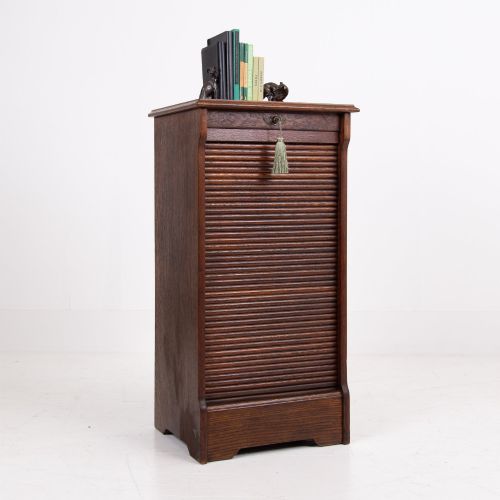
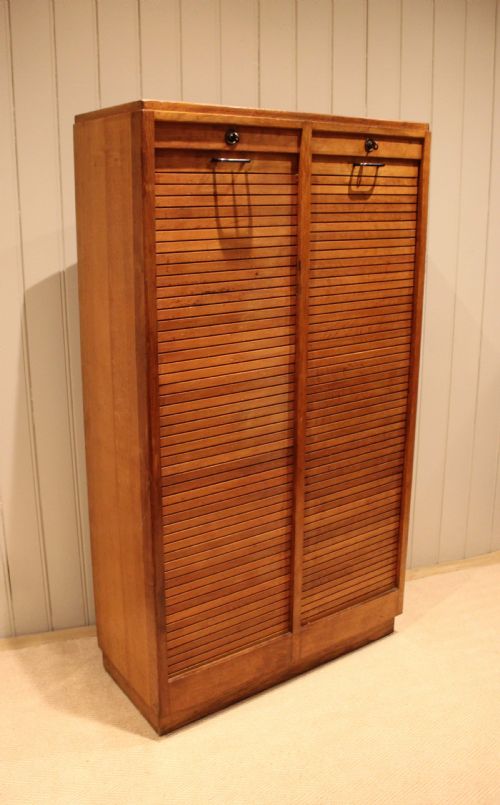
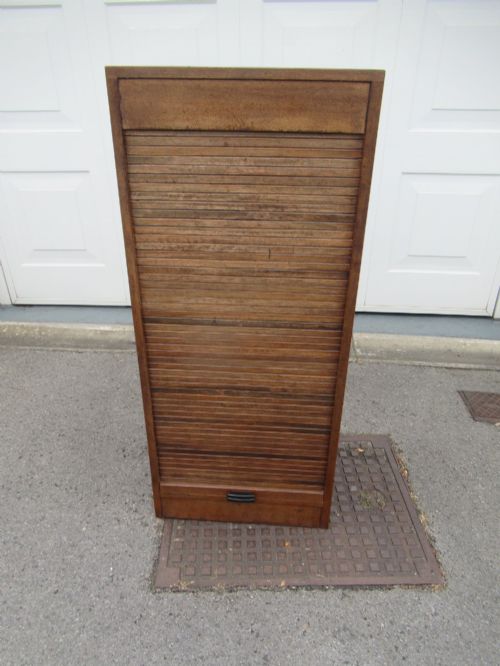


Antique Tambour Shutter Cabinet
An antique tambour shutter cabinet offers ingenious slatted doors that slide smoothly around a curved track to conceal office paperwork.
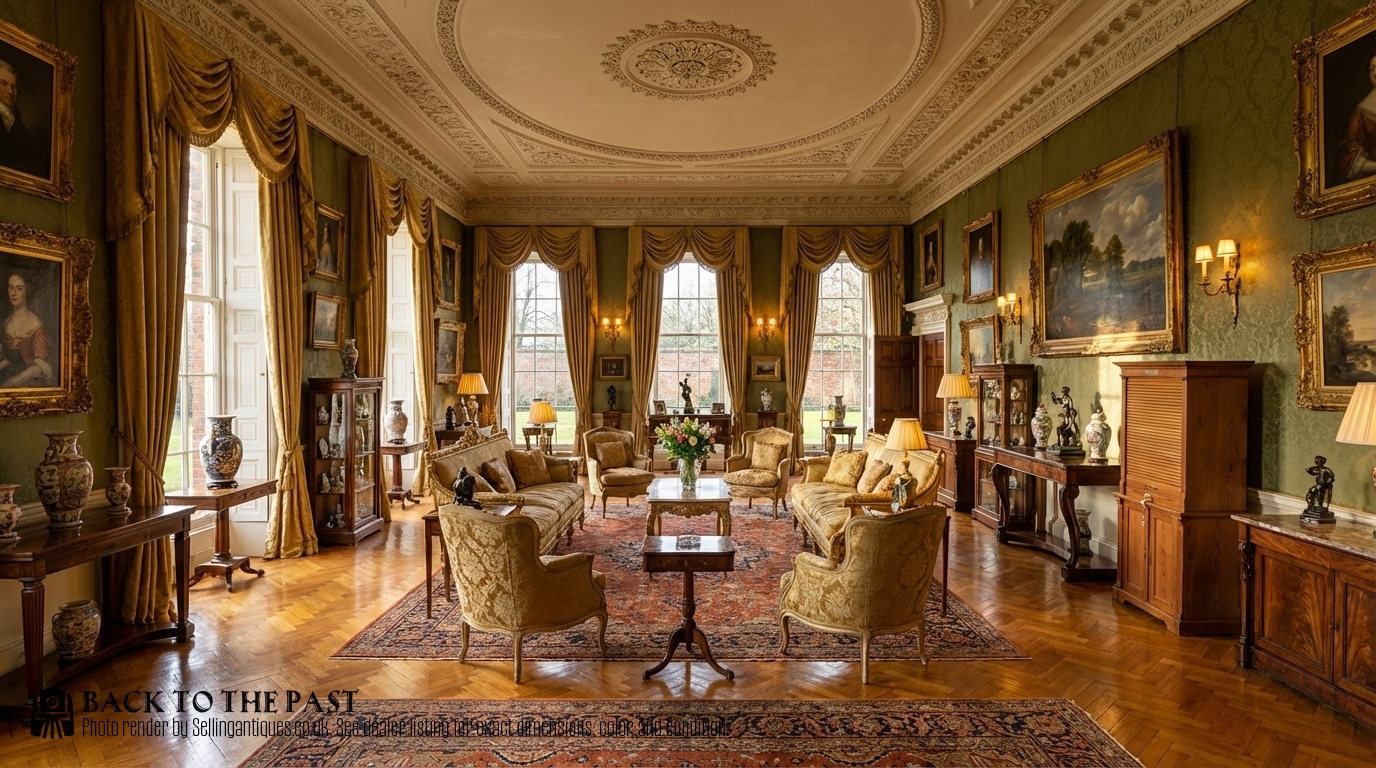
Antique Tambour Shutter Cabinet
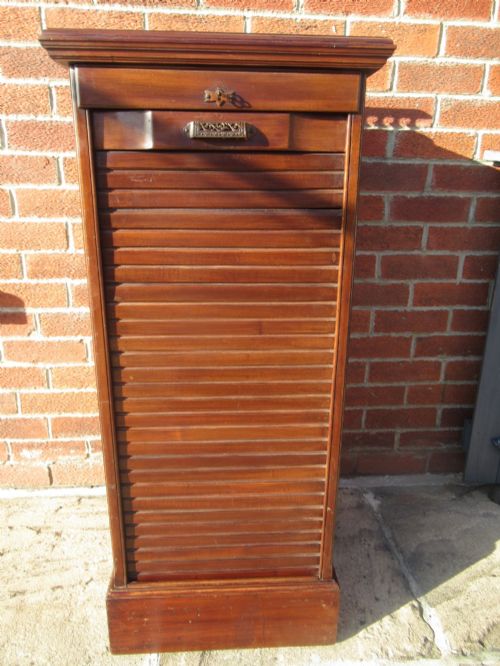
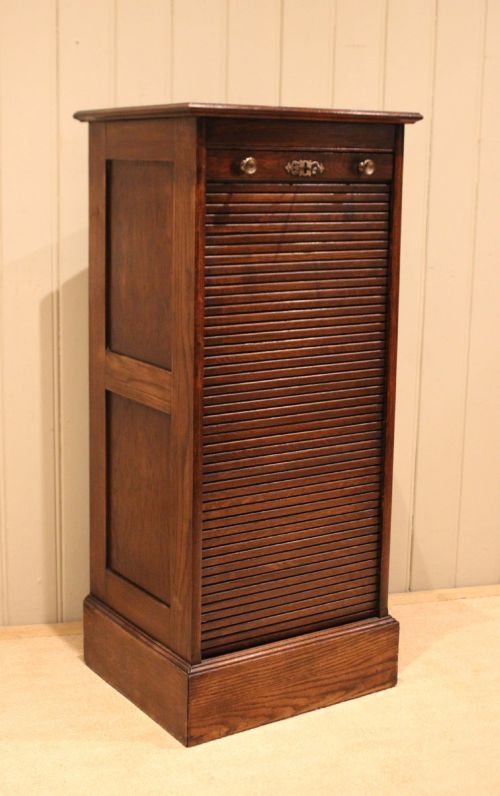
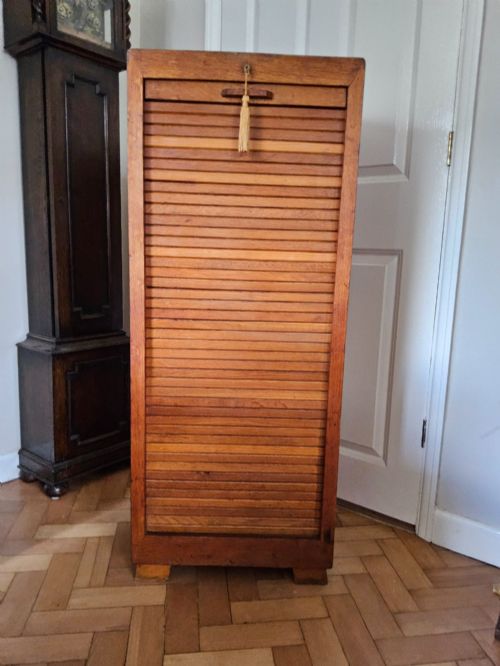
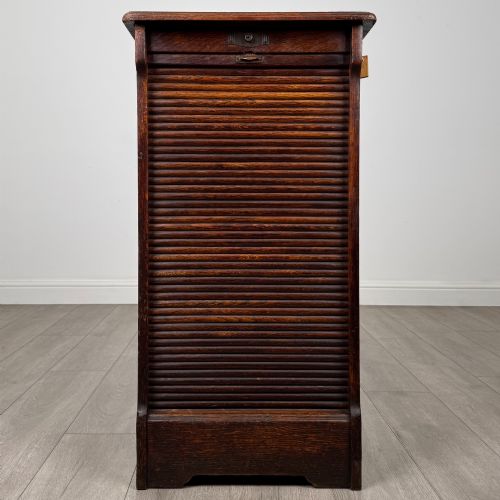
An antique tambour shutter cabinet is primarily an office filing cabinet or storage unit designed to save space in tight rooms. These pieces use flexible wooden slats glued to canvas or fabric backings, allowing the door to glide effortlessly along side grooves rather than swinging outward.
Most examples found here date from the Edwardian era through the early twentieth century, spanning periods such as 1900, 1910, 1920, 1930, and 1940. Alongside standard office filing cabinets, buyers will also encounter smaller bedside tables, office stands, and double tambour configurations.
English and French origins dominate the selection, showcasing regional variations in form and proportion. Whether searching for a compact bedside table or a full height filing cabinet, these units provide practical storage disguised by clever engineering.
How they were made
Cabinetmakers constructed these units predominantly in solid oak, walnut, mahogany, and pine, often relying on dark or light oak for standard office pieces. The timber was selected for stability and grain, ensuring the cabinet body remained square while housing the moving mechanism.
The defining characteristic involves mounting individual wooden slats onto a flexible backing material like canvas, allowing the shutter to bend around tight internal corners. Brass and metal hardware, including locks and handles, completed the construction, while steel components occasionally reinforced internal drawer frames.
What varies in quality
The smoothness of the shutter movement distinguishes superior examples from lesser pieces, reflecting the precision of the original wooden tracks and the flexibility of the canvas backing. Cabinets that glide without sticking demonstrate careful initial fitting and minimal warping of the timber over decades of use.
Timber selection and finish define the visual appeal, ranging from plain pine utility pieces to finely figured walnut and mahogany models. Finer specimens exhibit well matched grain patterns across the tambour slats and cabinet body, alongside quality brass fittings that endure heavy daily handling.
The Antique Tambour Shutter Cabinet Glossary
- Tambour
- A flexible door made of narrow wooden slats glued to a canvas backing. This construction allows the shutter to slide sideways or vertically around a curved track.
- Edwardian
- A stylistic period spanning the reign of King Edward VII until the First World War. Furniture from this era often retains traditional proportions while embracing practical office designs.
- Art Deco
- A design style prominent in the 1920s and 1930s characterised by geometric forms and streamlined shapes. Pieces from this period apply modern aesthetics to traditional office storage.
- French Utility
- A functional design movement emerging in France during the 1940s. These pieces prioritise honest construction and utilitarian forms to cope with material shortages.
- French Provincial
- A rustic yet refined regional style originating from French rural areas. Cabinets from this tradition often feature panelled woodwork and traditional joinery.
Antique Tambour Shutter Cabinet: Frequently Asked Questions
How do tambour doors work?
Tambour doors consist of narrow strips of wood attached to a flexible fabric backing like canvas. This allows the entire shutter to bend and slide smoothly along recessed tracks built into the sides of the cabinet.
The design allows access to the interior contents without requiring clearance space for swinging doors, making these units ideal for cramped offices or small bedrooms.
What periods do these cabinets cover?
The selection spans the late nineteenth century through to the 1940s. Edwardian examples and pieces from the 1910s and 1930s appear most frequently in the current listings.
Earlier nineteenth century pieces and later French utility models from 1940 also feature, showing how office furniture evolved across different decades.
Where were these cabinets used originally?
These units served primarily as office filing cabinets for sorting paperwork, ledgers, and correspondence. Their compact footprint made them essential furniture for busy clerks and administrators.
Over time, smaller variations found their way into domestic settings, functioning as bedside tables, lamp stands, or general household storage.
What woods are commonly found?
Oak is the predominant timber, appearing in both light and dark finishes across numerous Edwardian and early twentieth century office cabinets. Walnut and mahogany provide finer alternatives, particularly on French panelled stands.
Pine also occurs, typically on utilitarian or regional pieces where the primary goal was practical storage rather than decorative display.
Can I use a filing cabinet as a bedside table?
Small proportioned tambour cabinets make excellent bedside tables because the sliding shutter conceals nighttime clutter effectively. Their compact dimensions fit well beside standard bed heights.
The enclosed shelving keeps books and personal items out of sight while maintaining a neat, streamlined appearance in the bedroom.