

Victorian Filing Cabinet
A victorian filing cabinet brings serious nineteenth-century organisation to a room, offering clever internal mechanisms and handsome timber construction.
What a Victorian filing cabinet is
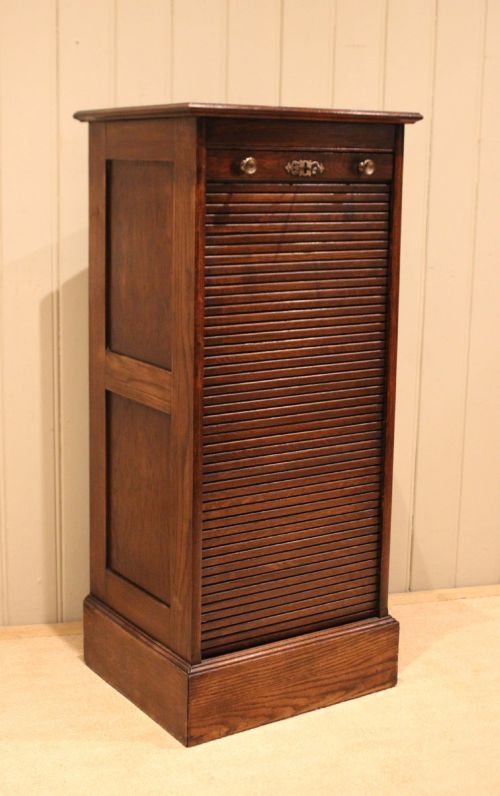
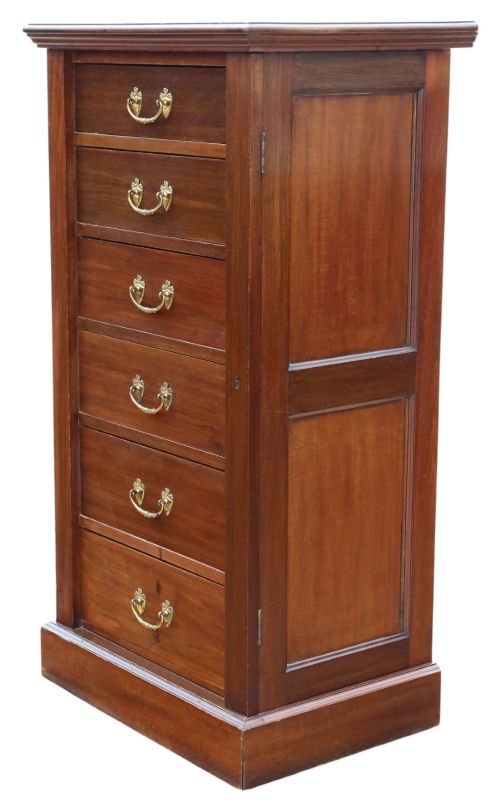
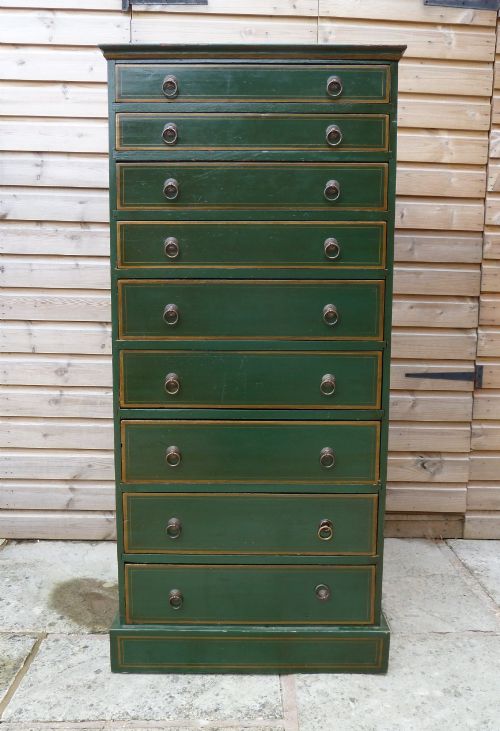
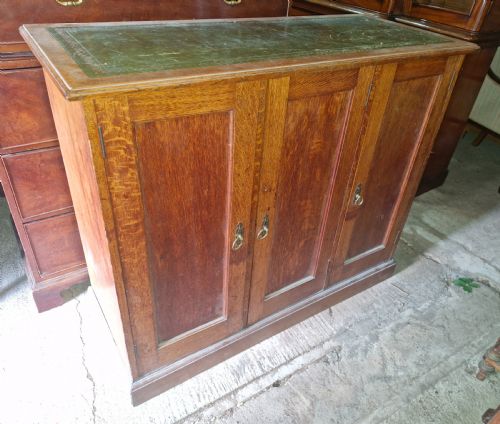
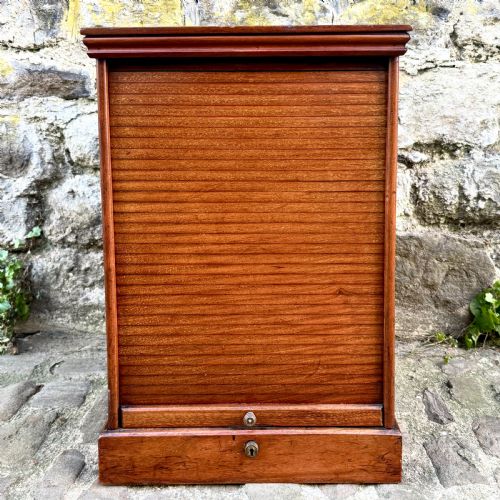
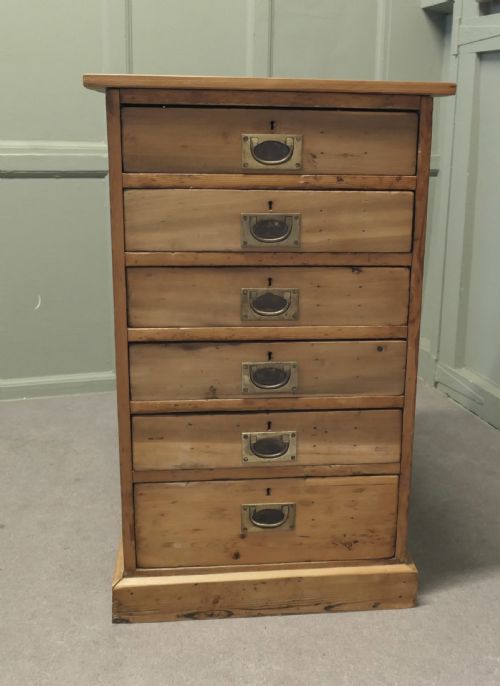
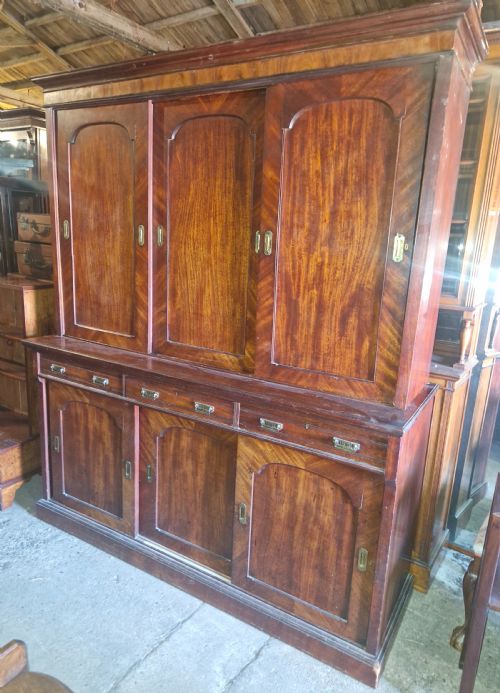
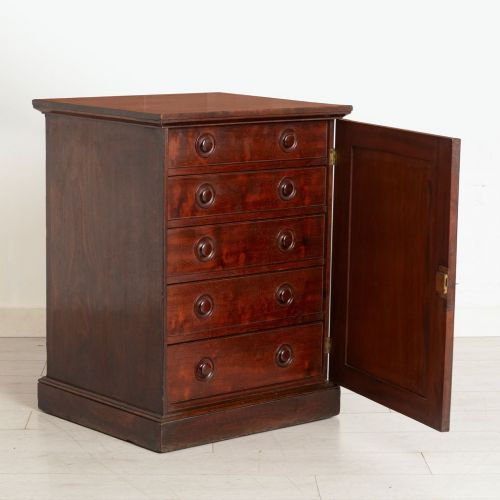
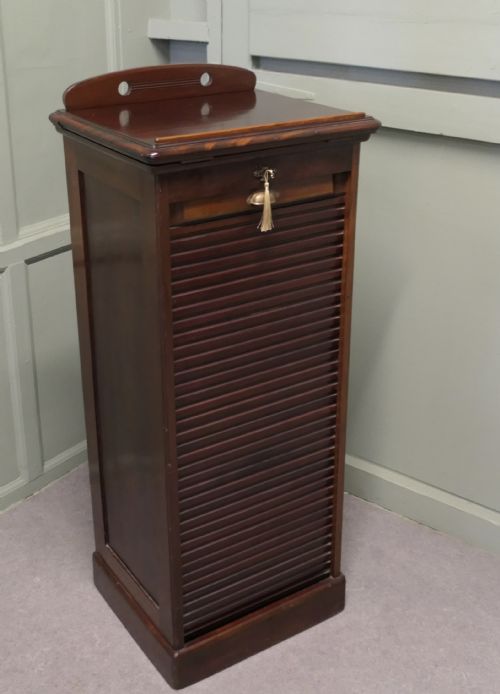
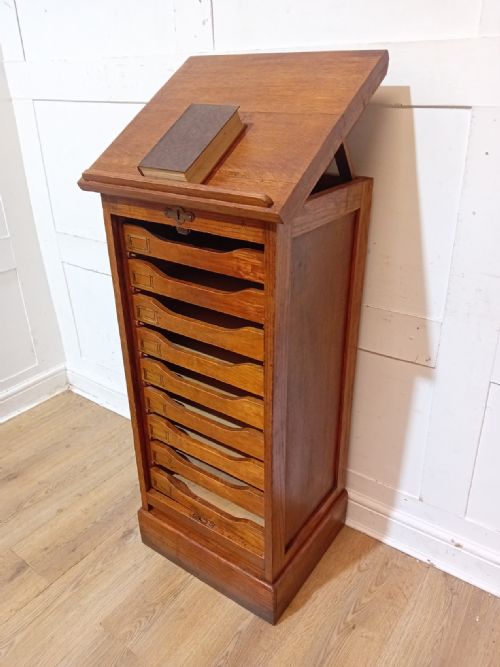
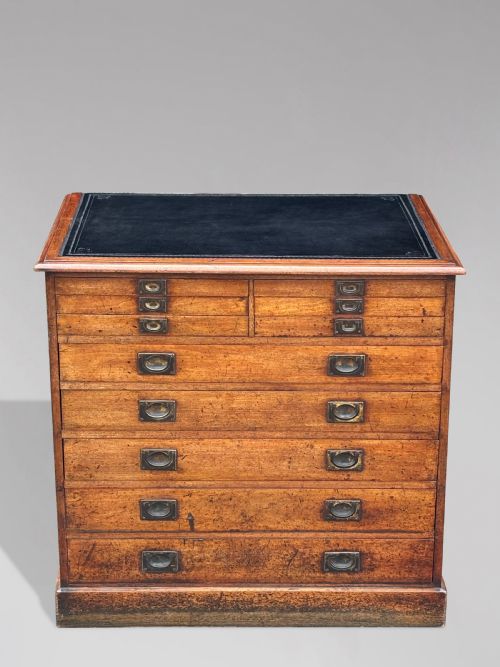
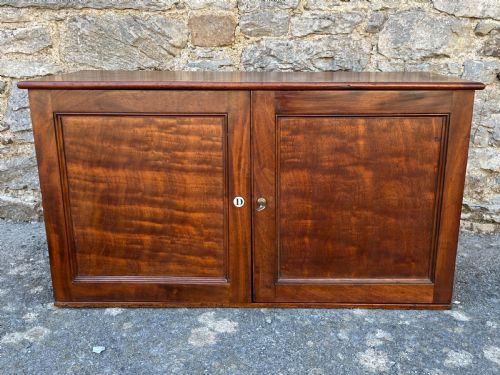
A victorian filing cabinet is a purposeful piece of office furniture designed to sort correspondence, ledgers, and documents efficiently. These pieces take various forms, including upright chests of drawers, tambour-front units, and specialised campaign or desk-top designs.
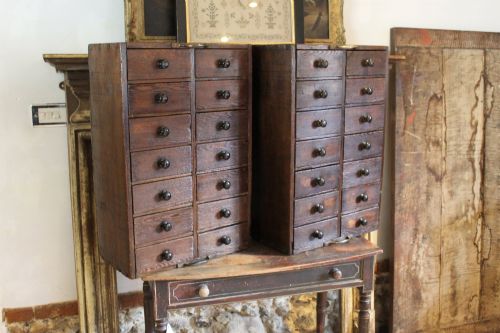
The most common versions encountered here are constructed from durable timbers like oak and mahogany, often featuring multiple shallow drawers or patent letter filing systems. Collectors also encounter banks of drawers and collectors cabinets adapted or built for organised storage.
Originating predominantly from the late nineteenth century, these cabinets reflect the bureaucratic expansion of the era. They combine utilitarian function with the rich cabinet-making standards of the period.
How they were made
Cabinet-makers relied on solid hardwoods such as oak, mahogany, walnut, and rosewood, alongside secondary woods like pine for internal elements. Metal fixtures, brass handles, and leather details provided both structural durability and operational function.
Construction techniques included precision joinery for the housing of numerous shallow drawers and specialised sliding tracks for tambour fronts. Patent mechanisms, such as those by Amberg, integrated clever spring-loaded or drop-flap systems into the wooden frames.
Retail Price Guide 2026
Typical UK retail prices for victorian filing cabinet, calculated from the Sellingantiques database of over a million retail prices indexed since 2003. This retail price guide relies exclusively on Sellingantiques data; no external sources or auction records are used, so the figures do not describe the wider market.
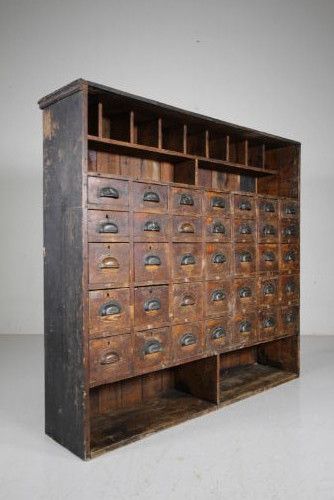
Document storage forms range from standard upright chests to tambour-front units, campaign boxes, and forty-drawer collectors cabinets.
What varies in quality
The distinction between standard office furniture and top-tier pieces lies in the selection of timber, such as burr walnut or figured mahogany, and the sophistication of the mechanism. Superior examples feature complex tambour doors, patent filing systems, and intact original brass hardware.
Build quality is evident in the weight of the timber, the tight tolerances of the drawer dovetails, and the smoothness of any sliding or drop-flap action. Pieces retaining their original polished finish and specialised interior filing dividers command greater regard.
Amberg
The Victorian Filing Cabinet Glossary
- Tambour front
- A flexible door made of narrow wooden slats glued to a canvas backing, designed to slide smoothly around a curved track. This mechanism allowed efficient access to interior filing compartments without swinging doors taking up room.
- Campaign filing cabinet
- Portable furniture constructed in sections with brass corners and recessed carrying handles, originally built for travel. These pieces dismantle or fold to endure rigorous transport while maintaining secure document storage.
- Bank of drawers
- A multi-tiered assembly of numerous shallow wooden drawers housed within a single tall frame. Such units were utilised in offices and estate rooms for sorting large volumes of flat papers.
- Wellington chest
- A tall, narrow chest of drawers secured by a sturdy locking side-bar that fastens with a key. This design protected sensitive documents and ledgers from unauthorized access.
- Collectors cabinet
- A specialised piece containing numerous small drawers intended for botanical, geological, or manuscript storage. These interiors often feature shallow, velvet-lined or plain wooden trays.
Frequently Asked Questions
How do I use a tambour front cabinet?
The slatted wooden door slides horizontally or vertically along a concealed track within the frame. Pulling the handle smoothly reveals the interior pigeonholes or filing slots.
Ensure the track remains free of dust and debris to maintain smooth operation without forcing the wooden slats.
Where were these cabinets originally placed?
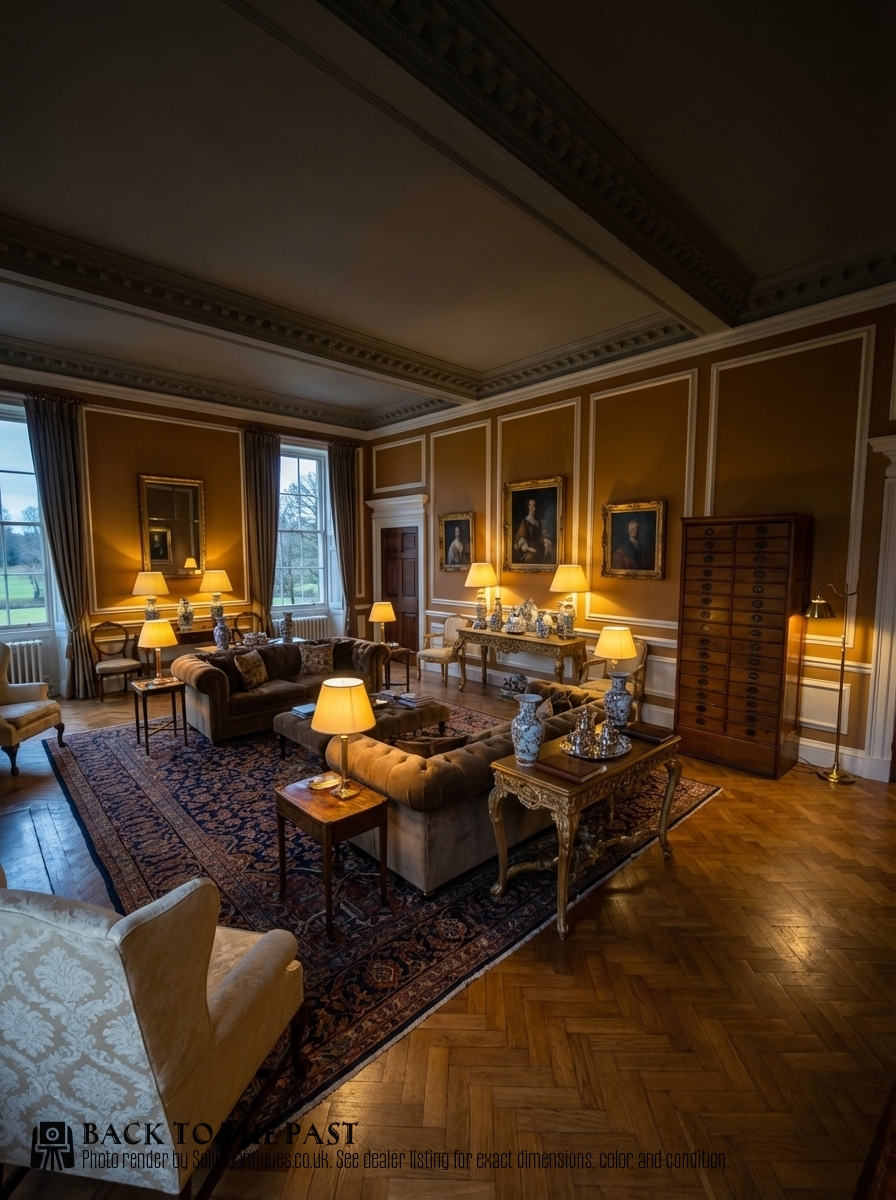
These units stood in Victorian estate offices, legal chambers, counting houses, and private libraries. They managed the heavy flow of paper correspondence generated by expanding businesses.
Today, they transition easily into modern home studies and living spaces as practical storage for modern paperwork.
How do I distinguish oak from mahogany versions?
Oak displays a prominent, open grain with visible medullary rays, often finished with a warm polished lustre. Mahogany presents a tighter, straighter grain with deeper red-brown or dark brown tones.
Both timbers were chosen for their strength, but mahogany often appeared in higher-status executive office pieces.
What is a patent letter file?
A patent letter file incorporates specific mechanical filing innovations, such as Amberg's indexed drop-flap or spring-clip retention systems. These allowed letters to be filed alphabetically or chronologically within dedicated compartments.
Such additions transformed standard storage into an organised indexing system for busy Victorian clerks.