


![Pen and Ink Sketch - Female Nudes by William Edward Frost [1810-1877]](https://www.sellingantiques.co.uk/photosnew/dealer_kendallhouse/dealer_kendallhouse_full_1758970795762-8493507346.jpg)


Victorian Female Watercolour
These Victorian female watercolour works capture sitters in paper and pigment, offering a direct window into nineteenth-century portraiture and genre scenes.
Victorian Female Watercolour
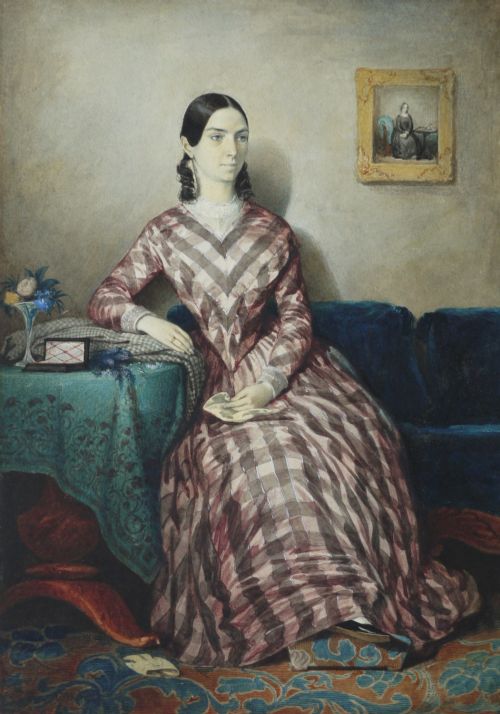
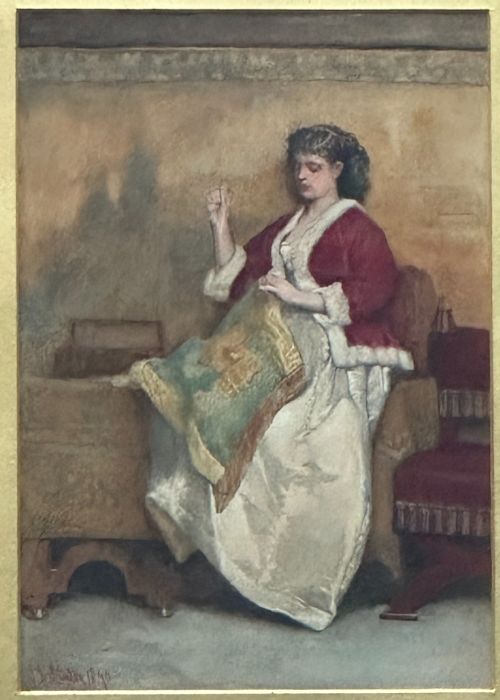
When searching for a victorian female watercolour, buyers encounter framed portraits and studies executed on paper during the nineteenth century. These pieces record young ladies, gypsies, and female figures through detailed pigment work.
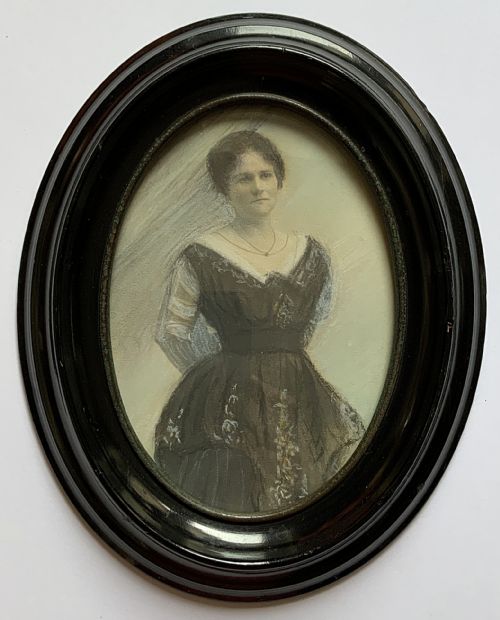
The selection ranges from intimate miniature paintings set in ebonised wood or birds eye maple frames to larger framed artwork. Subjects often appear adorned with meadow flowers, holding items, or posed in academic realism.
Materials and Techniques
Artists painted primarily with watercolour and gouache on paper supports, sometimes incorporating pen, ink, and pencil lines for precise detail. Highlights and facial expressions emerge from the skilful handling of these fluid mediums.
Framing forms an integral part of the survival of these works, utilising wood, ebonised wood, gold leaf, and glass to protect the delicate paper beneath. Maple and gilt mouldings provide structural support while framing the artwork.
The listings span the nineteenth century into the early twentieth, utilising paper, gouache, and wood frames.
Assessing Quality
Quality rests upon the precision of the brushwork and the psychological depth captured in the sitter's expression. Masterful control of watercolour and gouache reveals intricate details in hair, fabric, and surrounding foliage.
The integrity of the original frame, whether maple, ebonised wood, or gilded, contributes significantly to the piece. Preservation of the paper surface without excessive fading or damp staining marks the finer examples.
Sir James Dromgole Linton·Alice Anne Renshaw·Henry E Hobson·William Edward Frost·Madeline Hughes·Robert Kemp·Charles Edward Wilson·Montagu Barstow·Bernard Foster
The Victorian Female Watercolour Glossary
- Watercolour
- A paint consisting of a pigment suspended in a water-based solution. It allows for translucent washes and delicate layering on paper.
- Gouache
- An opaque watercolour paint containing pigment mixed with a binding agent and white filler. It produces solid matte areas of colour with strong opacity.
- Miniature
- A small-scale painting, often a portrait, requiring fine detail and tiny brushes. These pieces frequently measure only a few inches across.
- Ebonised wood
- Timber treated to resemble ebony, typically through staining or finishing a dark black colour. It provides a stark contrast against gilt mounts and paper.
Victorian Female Watercolour: Frequently Asked Questions
How should I hang these watercolours?
Keep these works away from direct sunlight to prevent the watercolour pigments from fading over time. Maintain a stable room temperature to protect both the paper and the wooden frame.
Ensure the glass does not touch the paper surface directly to avoid moisture damage. Proper hanging preserves the integrity of the original backing and seals.
What subjects appear in these paintings?
Portraits of young ladies dominate the selection, often depicted with flowers, hats, or period dress. Other works portray genre scenes such as fisherwomen, girls peeling potatoes, or allegorical figures like nymphs.
Artists also produced intimate miniature studies and academic figure drawings. Each subject reflects nineteenth-century ideals of portraiture and narrative art.
How do I identify a Victorian period piece?
Examine the materials, framing styles, and signatures matching nineteenth-century conventions. Paper stocks, handwritten inscriptions, and framing methods such as birds eye maple or ebonised mouldings offer key dating clues.
Many works bear artist signatures, dates, or biographical spans placing them firmly in the Victorian era. Comparing the costume and hairstyle of the sitter also helps confirm the period.
Are these works usually framed?
Most pieces survive within their period frames, which range from simple wooden surrounds to ornate gilt mouldings. Glass protects the delicate watercolour and gouache surface from dust and handling.
Original framing often includes backing boards and historic labels that document the maker or framing establishment. Preserving these elements maintains the historic context of the artwork.