
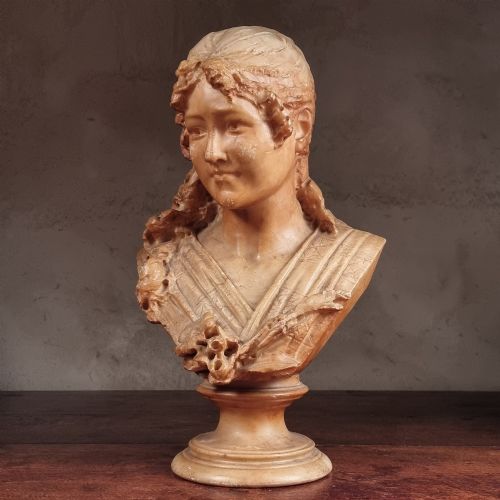
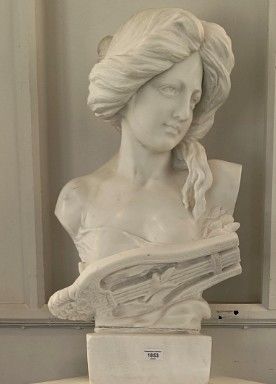
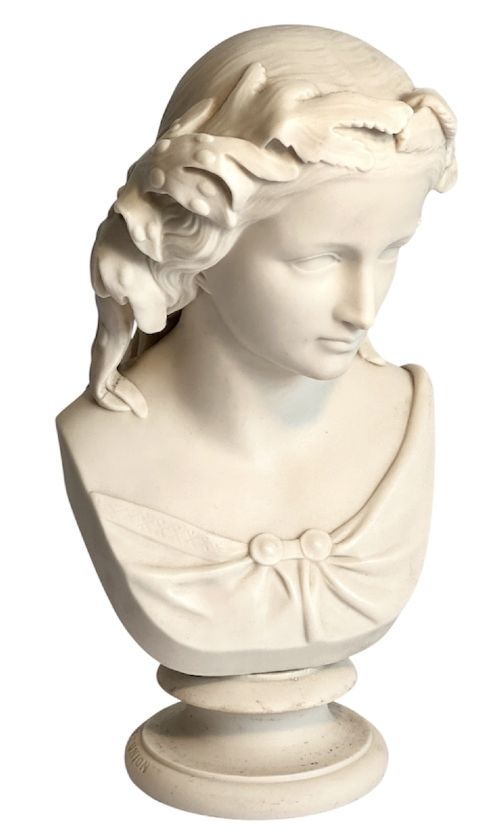
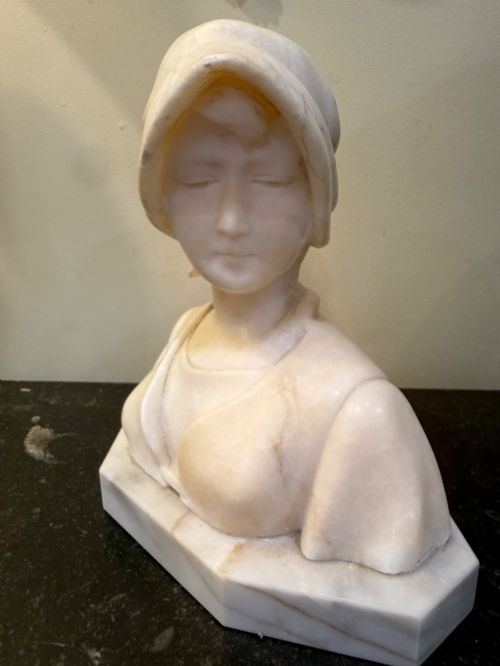


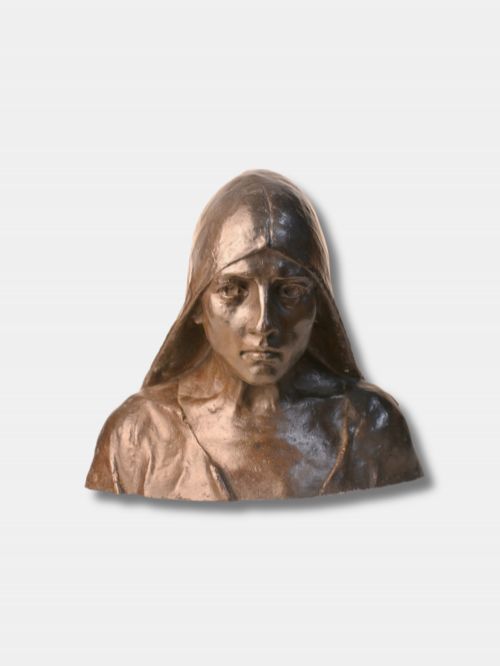


Victorian Female Bust
When you search for a victorian female bust, you seek a carved or cast likeness capturing nineteenth-century ideals.
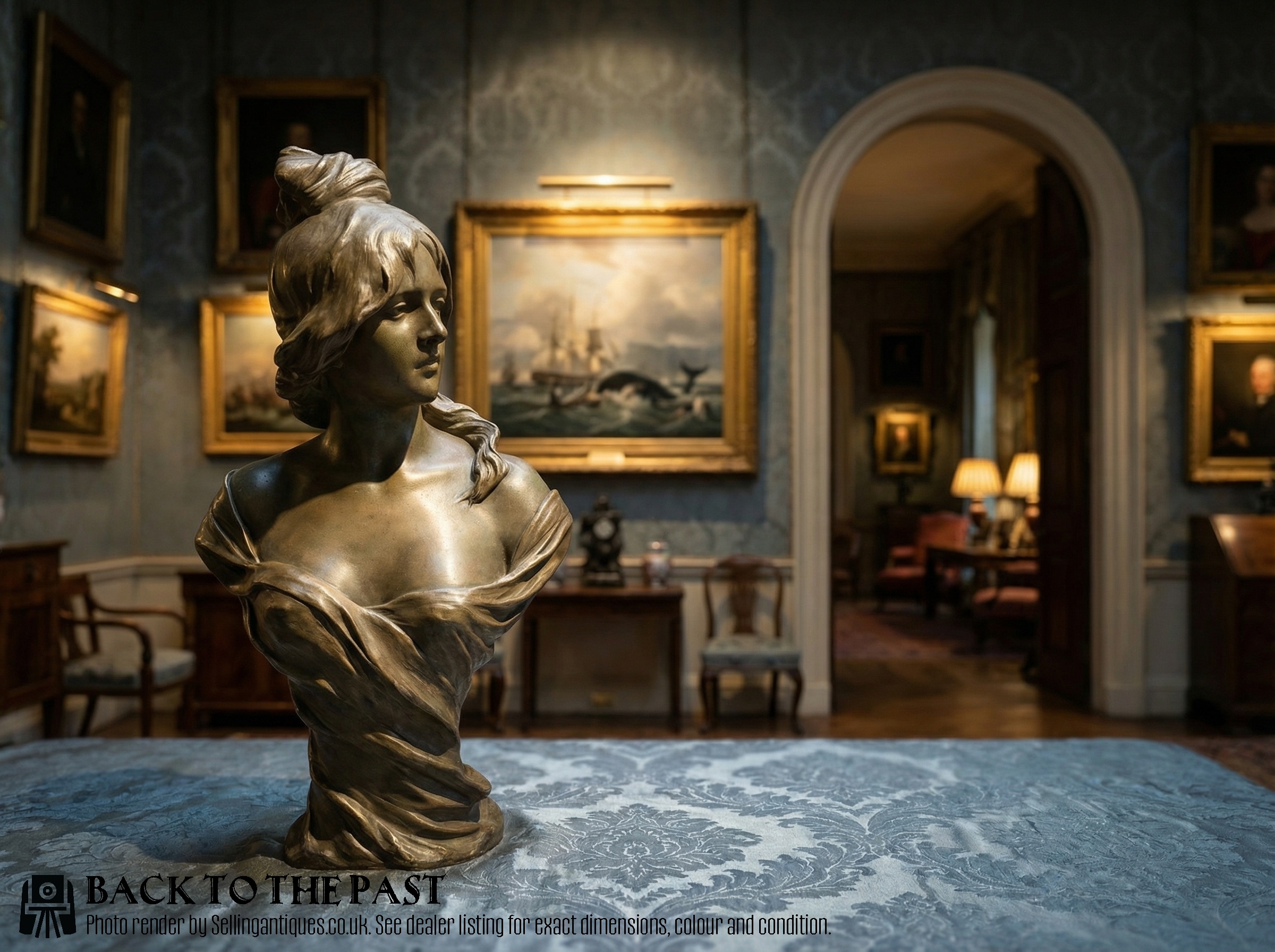
Victorian Female Bust
A victorian female bust captures the likeness of women, mythological figures, and allegorical subjects through sculpted forms. The pieces available here span from the mid-nineteenth century into the early twentieth century, reflecting varied interpretations of the human face and form.
The objects take several distinct shapes, predominantly freestanding marble and alabaster sculptures, alongside metal castings in bronze and spelter. Many pieces draw directly on neoclassical or nineteenth-century French artistic traditions, portraying specific characters such as Muses or literary figures.
Originating largely from British, French, and Italian workshops, these works serve as enduring examples of portraiture. They range from modest parian porcelain figures to monumental carved stone and mixed-media sculptures.
Materials and construction
Carved stone provides the foundation for many pieces, utilising white marbles like Carrara alongside softer alabaster. Artisans shaped these materials using hand-chiselling and polishing techniques to render smooth skin textures and detailed drapery.
Metal castings utilise bronze, cast iron, and spelter, often paired with contrasting marble bases or gilt accents. Parian porcelain offers an alternative ceramic medium, cast in moulds to achieve a matte surface resembling marble.
French and British neoclassical styles dominate the sculptural forms recorded in the archive.
Distinctions in craftsmanship
The finesse of the carving dictates the distinction between standard production pieces and superior works of art. Subtle handling of facial expressions, delicate rendering of hair, and the crisp fall of fabric separate accomplished sculptors from routine makers.
Choice of material also defines the tier of the object, with solid Carrara marble or finely chased bronze sitting above cast iron or spelter. The integration of supporting elements, such as multi-coloured marble bases, adds complexity to the construction.
Emile Jespers·Eutrope Bouret·Eugene Laurent·Goldscheider
The Victorian Female Bust Glossary
- Parian porcelain
- A fine-grained, unglazed ceramic developed in the nineteenth century to imitate carved marble. It was frequently used for literary and classical portrait figures.
- Spelter
- A zinc alloy used as a less expensive substitute for bronze in nineteenth-century metal castings. It is typically given a patinated finish to resemble true bronze.
- Neoclassical
- An artistic style inspired by the art and culture of ancient Greece and Rome. It emphasises balance, idealized proportions, and classical subjects.
- Caryatid
- A sculpted female figure serving as an architectural support in place of a column or pillar. They appear frequently on pedestals and architectural elements.
Victorian Female Bust: Frequently Asked Questions
What materials are these busts made from?
The pieces utilise a range of media, including carved marble, alabaster, bronze, and parian porcelain. Some examples incorporate mixed materials, combining metal figures with stone bases or gilt details.
Less common materials include terracotta, cast iron, and spelter. Each medium dictates the weight and visual texture of the finished sculpture.
How do I identify the period of a bust?
Dating relies on stylistic clues, material choices, and the specific clothing or hairstyles depicted. Nineteenth-century pieces often lean toward neoclassical or French academic traditions.
Signatures or foundry marks stamped onto metal or ceramic components provide further confirmation of the date. Comparing the carving style with known historical examples helps narrow down the decade.
Where should I display a heavy marble bust?
Solid stone and bronze sculptures require sturdy surfaces capable of supporting substantial weight. A dedicated pedestal or a robust wooden console table provides a secure foundation.
Placement should avoid areas of direct sunlight and extreme temperature fluctuations, which can affect mixed-media elements or patinated surfaces over time.
What is the difference between marble and parian ware?
Marble is a natural stone carved directly by a sculptor using chisels and abrasive stones. Parian ware is a type of white porcelain poured into moulds and fired in a kiln.
While parian porcelain was manufactured in multiple identical copies, a carved marble bust remains a unique object shaped by hand.