
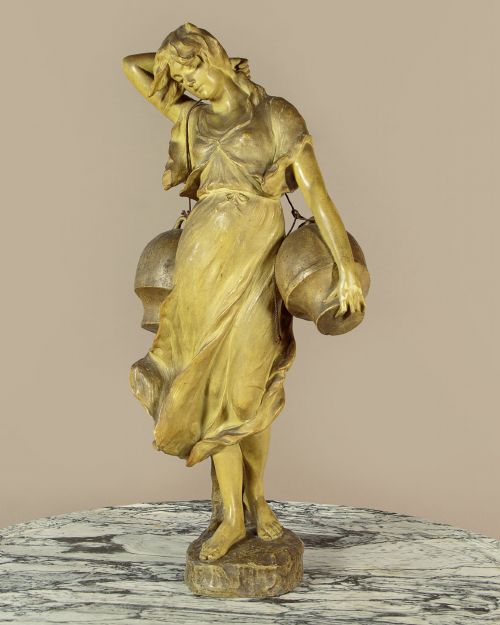


Art Nouveau Terracotta Statue
An art nouveau terracotta statue brings fluid organic lines and expressive figurative modelling straight into a room, capturing the distinct aesthetic of the turn of the century.

Art Nouveau Terracotta Statue
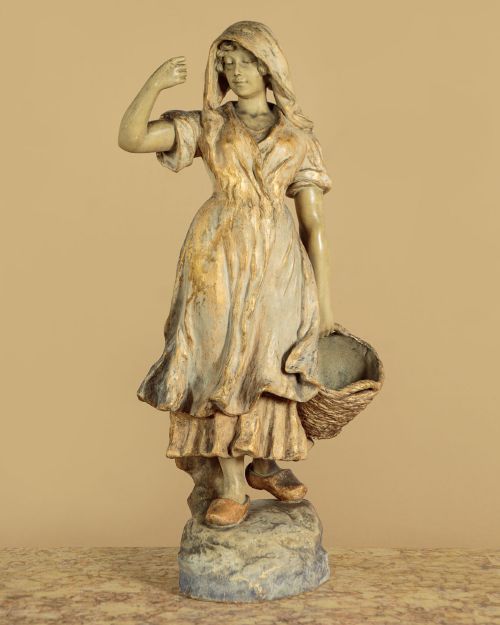
An art nouveau terracotta statue typically portrays graceful female figures, mythological subjects, or domestic scenes shaped during the late nineteenth and early twentieth centuries. These works span the Victorian, Edwardian, and 1900 periods, reflecting the stylistic shift towards natural forms and flowing drapery.
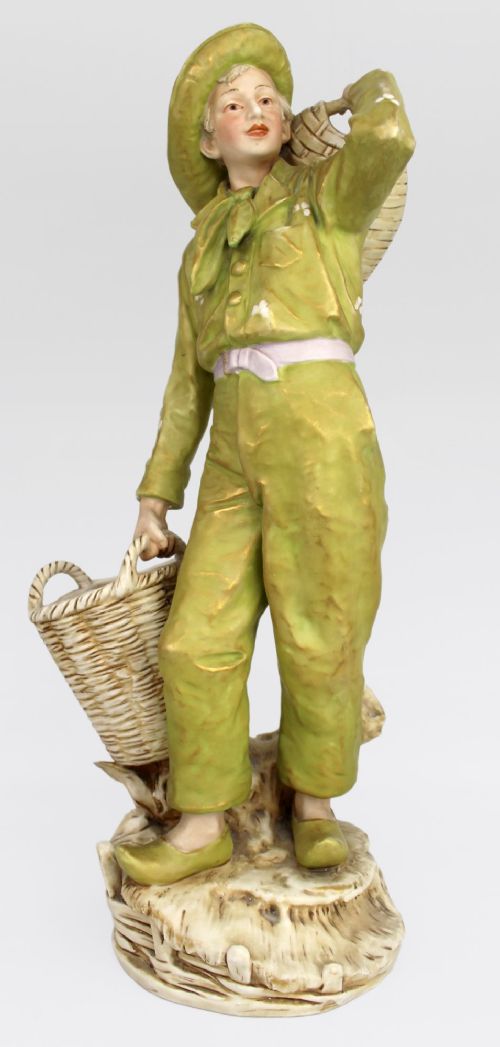
The most common examples on this page are figural sculptures, busts, and larger decorative groups originating from major European workshops. Pieces range from intimate tabletop figurines to monumental statues measuring over forty centimetres in height.
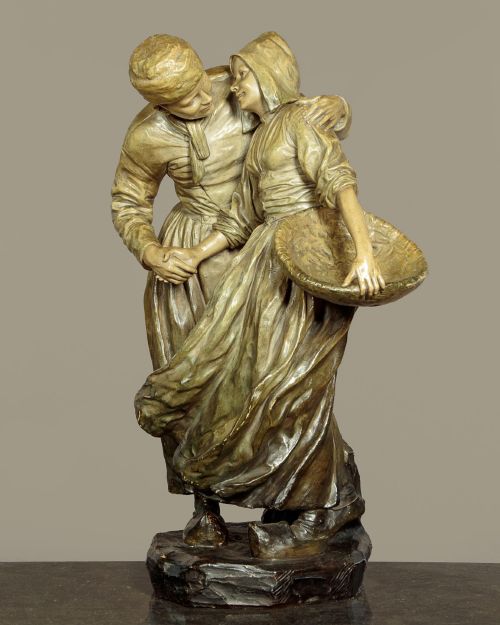
Makers and designers of this era produced both single portrait busts and elaborate figural groups depicting maidens, water carriers, and allegorical subjects. These sculptures bridge the gap between decorative arts and fine sculpture, serving as focal points for interior spaces.
How they were made
Makers utilised slip casting and traditional hand-modelling techniques to shape the earthenware clay before firing the pieces in kilns. This allowed workshops to produce both intricate detail in the hair and drapery and substantial structural forms.
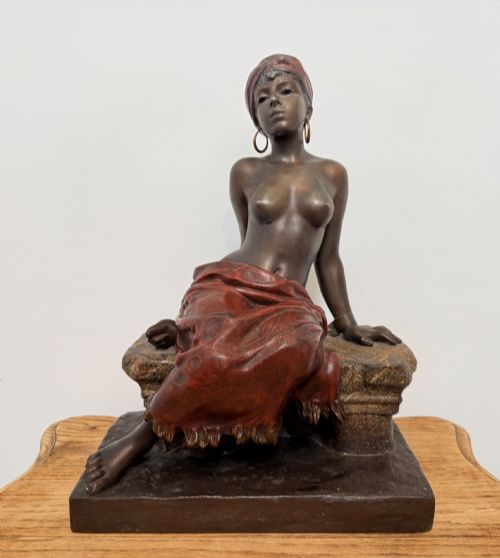
Many surfaces received applied treatments such as polychrome paint, bronzed slip finishes, or gilt highlights to enhance the visual texture. These decorative layers emphasise the sculptural contours typical of the French Art Nouveau and Orientalist styles.
Listings feature works spanning the 1880s through the 1920s, predominantly utilising terracotta, earthenware, and polychrome paint.
What varies in quality
The sophistication of the modelling and the crispness of the casting define the upper tier of these sculptures. Finer pieces display subtle facial expressions, delicate hand placement, and precise rendering of textiles.
The complexity of the surface finish also distinguishes standard production from exceptional works. Skilled application of polychrome paint, metallic slips, and gilt detailing adds depth and character that simpler glazed or plain terracotta lacks.
Goldscheider·Royal Dux Bohemia·Friedrich Goldscheider·Ernst Whaliss·Georges Morin
The Art Nouveau Terracotta Statue Glossary
- Terracotta
- A porous earthenware clay fired at relatively low temperatures, ranging in colour from pale buff to deep reddish-brown. It serves as the primary medium for these sculptural works.
- Slip cast
- A manufacturing technique where liquid clay slip is poured into a plaster mould to create hollow figures with consistent wall thickness. This method allowed workshops to replicate complex sculptural forms efficiently.
- Bronzed slip
- A liquid clay coating infused with metallic pigments to imitate the appearance of cast bronze. It provides a dark, lustrous finish common on turn-of-the-century figures.
- Figurine
- A small three-dimensional sculpture depicting a human or animal figure. In this context, they are typically designed for interior display on furniture or mantels.
Art Nouveau Terracotta Statue: Frequently Asked Questions
How do I clean terracotta?
Dust these sculptures gently with a dry, soft-bristled brush to prevent particulate buildup in the recessed details of the modelling.
Avoid using water, damp cloths, or chemical solvents, as unsealed earthenware and painted surfaces absorb moisture easily.
Where should I display my statue?
Place your sculpture on a stable mantel, sideboard, or dedicated pedestal away from direct sunlight and moisture.
Because these materials are relatively heavy and sometimes porous, ensure the supporting surface remains level and secure.
How do I identify the period?
Examine the sculpture for impressed model numbers, factory stamps, or artist signatures usually found near the base. Stylistic cues such as flowing hair, organic drapery, and specific aesthetic motifs also point toward the turn of the century.
Are these figures fragile?
Terracotta and earthenware possess a brittle nature that makes them susceptible to chipping or cracking upon heavy impact. Handle the pieces with both hands supporting the base and main body during any relocation.