

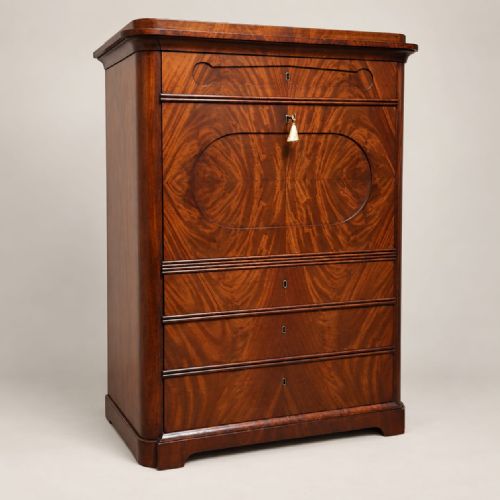
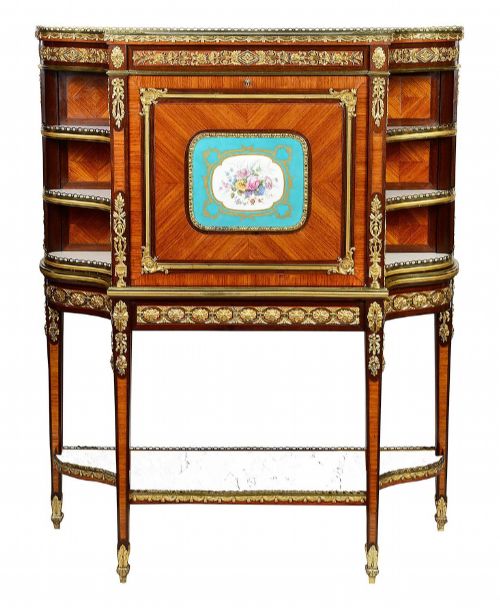


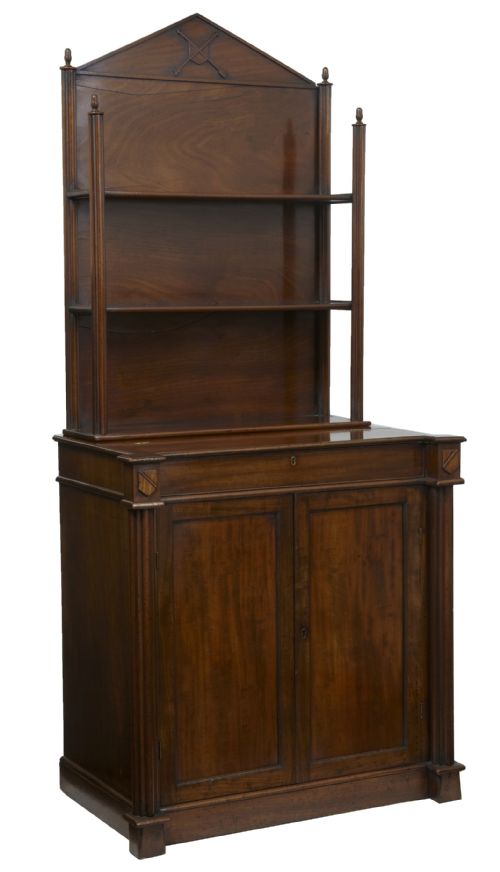


Victorian Fall Front Secretaire
A victorian fall front secretaire is a clever writing cabinet with a hinged flap, offering a hidden desk space behind panelled doors.

Victorian Fall Front Secretaire
When you search for a victorian fall front secretaire, you enter a world of dual-purpose furniture designed for correspondence and storage. These pieces combine a writing surface with drawers or bookcases, operating as practical desks that close away neatly.
The selections span various forms, including tall secretaire abattants, military campaign chests, and elaborate bookcases. Mahogany and pine dominate the offerings, appearing alongside rosewood, walnut, and oak.
Styles range from straightforward Victorian country pieces to Louis XVI Revival models and late Victorian inlaid designs. You will encounter compact writing cabinets as well as large glazed bookcases fitted with internal compartments.
What varies in quality
Quality rests in the choice of timber and the precision of the cabinet work within the internal stationery compartments and secret drawers. Finer examples display carefully matched veneer grains and thoughtful integration of hardware.
Simpler pine or country pieces rely on robust construction and honest utility rather than elaborate decorative veneers. The sophistication of the internal mechanism and the condition of the writing surface distinguish finer city workshops from rural production.
Victorian Fall Front Secretaire Retail Price Guide 2026
Typical asking prices for victorian fall front secretaire among the pieces listed under this phrase on Sellingantiques today, from the lower quarter to the upper quarter. They describe what is for sale here now, not the wider market.
Listings feature woods including mahogany, walnut, rosewood, oak, amboyna, maple, and pine, alongside brass and glass.
Blake London·Gregory And Co·Gillows
The Victorian Fall Front Secretaire Glossary
- Secretaire abattant
- A tall, vertical cabinet featuring a drop-down writing flap that conceals internal pigeonholes and small drawers.
- Escritoire
- A traditional term for a writing cabinet or desk used for correspondence and document storage.
- Veneer
- A thin layer of decorative timber applied to a secondary wood base to create patterned surface finishes.
- Baize
- A coarse woolen material traditionally used to cover writing slopes and desk surfaces.
- Secret drawers
- Hidden compartments integrated into the interior architecture of a desk, accessed via concealed releases.
Victorian Fall Front Secretaire: Frequently Asked Questions
How do I open the fall front?
Most fall fronts are secured by a key lock that releases the hinged writing flap when turned.
Lower the flap gently, as many rely on internal stays or desk lid chains to support the weight.
Where were these desks used?
These cabinets belonged in principal reception rooms, libraries, and private bedchambers for managing correspondence.
Their enclosed design kept private papers out of sight when guests visited.
How do I care for the wood surface?
Dust regularly with a soft, dry cloth and apply natural beeswax periodically to nourish the polished timber.
Keep these cabinets away from direct heat sources to prevent the wood veneers from drying and cracking.
What is inside the writing section?
Opening the flap reveals an arrangement of small pigeonholes, tiny drawers, and sometimes hidden compartments.
This fitted interior was designed for holding stationery, inkwells, and letters securely.