


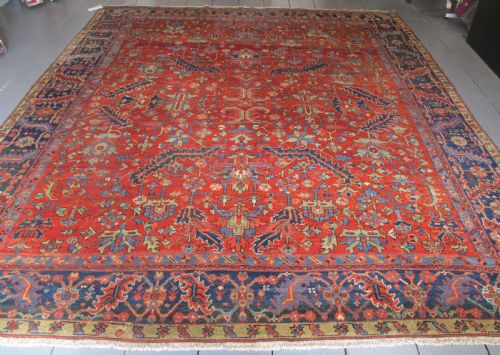


Victorian Era Oriental Rug
A victorian era oriental rug brings distinct nineteenth-century depth into a room, spanning tribal Persian weaving to fine Anatolian and Indian workshops.
Victorian Era Oriental Rug
A victorian era oriental rug encompasses hand-knotted floor coverings produced during the nineteenth century, particularly from the eighteen-eighties and eighteen-nineties. These pieces bridge the gap between traditional nomadic production and workshop commissions tailored for Western interiors.
Buyers frequently encounter regional classifications such as Fereghan, Ushak, Agra, Karaja, and various tribal pieces including Baluch, Tekke, and Turkmen carpets. The designs range from geometric tribal motifs to expansive all-over floral patterns suited to large drawing rooms.
Originating across Persia, Anatolia, the Caucasus, and India, these rugs reflect the diverse aesthetic exchanges of the Victorian period. Each piece carries structural characteristics specific to its weaving group, visible in the handling of the wool and the formation of the foundation.
Materials and construction
The foundation relies predominantly on cotton for warps and wefts, providing a stable grid for the dense pile. Pile materials consist of wool and hand-spun wool, yielding varying surface textures depending on regional processing and shearing traditions.
Weavers utilised natural dyes to achieve rich colour palettes, resulting in patinas that develop gracefully over decades of use. The knotting technique anchors the pile firmly to the foundation, ensuring structural integrity across large carpets and smaller tribal rugs alike.
Victorian Era Oriental Rug Retail Price Guide 2026
Typical asking prices for victorian era oriental rug among the pieces listed under this phrase on Sellingantiques today, from the lower quarter to the upper quarter. They describe what is for sale here now, not the wider market.
Several Baluch rugs carry purposeful small weave irregularities left by nomadic makers to ward off the evil eye.
Evaluating quality and execution
Quality rests on the fineness of the knotting and the precision with which the design translates across the field. Finer execution allows for intricate rendering of border details and central motifs, distinguishing workshop pieces from simpler tribal formats.
The integrity of the wool and the depth of the dye work dictate how well the surface ages. Superior materials retain vibrancy and handle with a suppleness that reflects careful preparation before weaving.
The Victorian Era Oriental Rug Glossary
- Warp
- The stationary vertical strings stretched on the loom that form the skeleton of the rug. Fringe ends typically reveal these foundational threads.
- Weft
- The horizontal threads passed across the warps between rows of knots to secure the pile. They bind the structure together from side to side.
- Pile
- The upright cut or looped wool fibres forming the plush surface of the rug. Its height and density determine how the design reads underfoot.
- Gul
- A primary medallion motif frequently utilised in Turkmen and tribal weaving traditions. These repeating octagonal forms often identify specific tribal groups.
- Mina khani
- A repeating grid pattern of floral heads and connecting vines spread across the field. This classic Persian layout appears frequently in nineteenth-century room-size carpets.
Victorian Era Oriental Rug: Frequently Asked Questions
How do I clean an old carpet?
Professional specialist cleaning is essential for nineteenth-century textiles to protect delicate hand-spun wool and historic dye formulas. Avoid domestic washing methods and harsh chemicals that strip natural oils from the fibre.
Regular gentle vacuuming without a rotating beater bar prevents dust accumulation within the pile. Keeping the rug out of direct sunlight preserves the original tones of the dyes.
Can I place these rugs in heavy traffic areas?
Many nineteenth-century carpets and rugs were engineered for daily utility and tolerate normal domestic use when paired with a quality underlay. Placing a thick felt or rubber pad underneath absorbs foot pressure and prevents slipping.
Delicate tribal bags or smaller decorative fragments suit low-traffic display spaces better than room-size carpets. Assessing the pile density and foundation strength provides guidance on suitable placement.
How do I distinguish regional styles?
Regional attribution relies on examining the structural elements, such as the colour of the warps, the edge finishing, and specific knotting habits. Turkmen and Baluch pieces often display distinct geometric palettes and tribal symbols.
Persian workshop carpets like Fereghan or Agra demonstrate refined floral compositions and curved drawing styles. Comparing border arrangements helps clarify the origin of ambiguous specimens.
What underlay should I use on wood floors?
A breathable, non-slip underlay protects both the wooden flooring and the textile from friction damage. It stops the rug from shifting while allowing air circulation beneath the cotton foundation.
Select a pad slightly smaller than the rug dimensions so the edges rest flat on the floor. This prevents curling and maintains the clean lines of the carpet.