




Victorian Equestrian Flatback
These Victorian equestrian flatback figures bring 19th-century subjects on horseback into your home, offering bold ceramic presence for your mantelpiece.
Victorian Equestrian Flatback
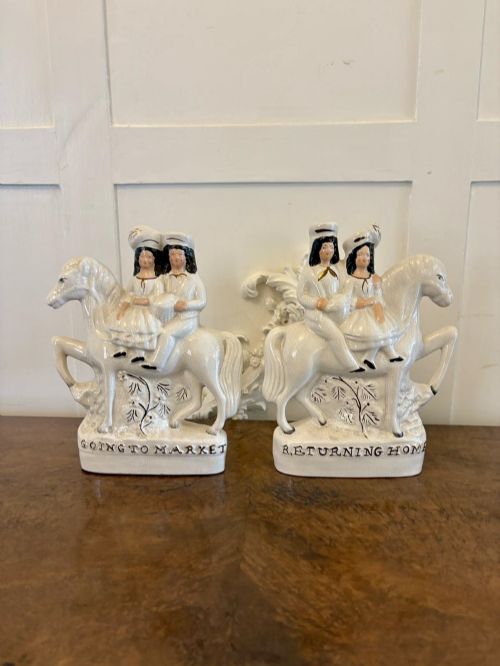
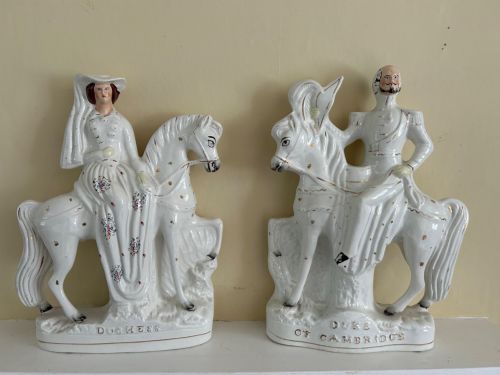
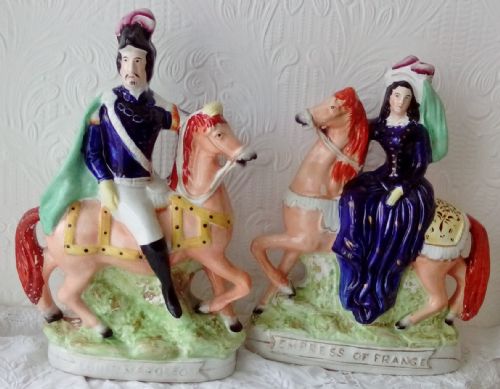
A victorian equestrian flatback is a ceramic figure designed to sit against a wall, depicting riders and animals from the nineteenth century. These pieces include royal figures, military leaders, Scottish highlanders, jockeys, and literary characters mounted on horses.
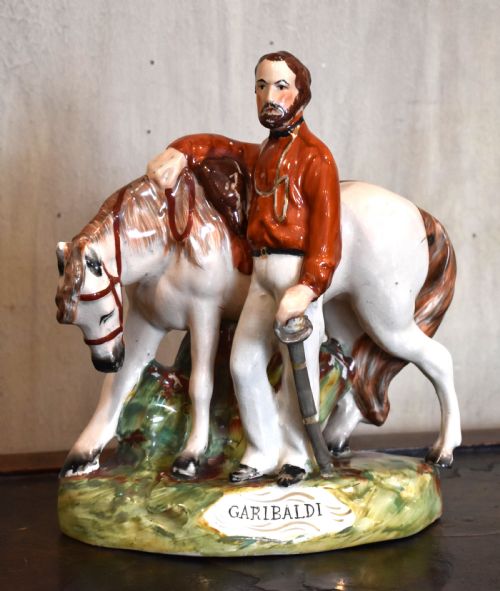
You will encounter single figures and pairs representing subjects such as the Duke and Duchess of Cambridge, Louis Napoleon, Joan of Arc, and Garibaldi. The flatback construction means the reverse is often unglazed or minimally finished, intended for display on a shelf or mantel.
Dating primarily from the mid to late nineteenth century, these earthenware objects capture popular heroes, royalty, and theatrical personalities of the Victorian era. They serve as tactile records of popular culture and local Staffordshire pottery production from the period.
How they were made
Potters shaped these figures using earthenware clay, pressing the material into moulds to create the hollow forms characteristic of the flatback style. The open backs reduced weight and prevented the ceramic from cracking during the firing process in the kiln.
Highwayman Tom King makes an unexpected appearance on horseback alongside generals and royalty.
What varies in quality
Painting execution separates standard output from finer work, with careful brushwork on the eyes, lips, and enamel decoration defining the superior pieces. The richness of the glaze and the sparing application of gilt accents further differentiate the visual impact.
The Victorian Equestrian Flatback Glossary
- Flatback
- A ceramic figure modelled fully on the front and sides while the reverse remains flat and partially unglazed. This design allowed the piece to sit flush against a wall or mantelpiece.
- Earthenware
- A porous pottery body fired at lower temperatures than stoneware or porcelain. It forms the structural base for nineteenth-century Staffordshire figures.
- Lead glaze
- A glossy coating containing lead oxide applied to pottery before firing. It creates a smooth, shiny surface that protects the painted enamel colours beneath.
- Enamel paint
- Opaque, vitrifiable colours applied over the glaze and fired at a lower temperature to fix them. These paints provide the vibrant hues on uniforms and horses.
- Gilt
- A thin layer of gold or gold-coloured leaf applied to ceramic highlights. It brings metallic brilliance to uniform buttons, titles, and base lines.
Victorian Equestrian Flatback: Frequently Asked Questions
What subjects do these figures show?
These ceramic works depict historical figures, royalty, military leaders, and literary characters on horseback. Common subjects include monarchs, generals, jockeys, and Scottish highlanders.
Makers drew inspiration from contemporary news, political events, and popular theatre to appeal to Victorian households. Each piece serves as a small monument to figures who captured public imagination during the nineteenth century.
Why are the backs flat?
Potters shaped these figures with flat backs to save clay and to make them lighter for transport and display. This construction allowed the pieces to sit securely against cottage walls and mantelpieces.
Because they were designed to be viewed strictly from the front and sides, the reverse often lacks detail or glaze. This functional choice defines the entire category of Staffordshire flatback figures.
How do I date a figure?
Dating relies on the historical subject depicted, the style of the clothing, and the characteristics of the ceramic body and glaze. Figures portraying specific mid-nineteenth-century personalities align with the active production periods of Staffordshire potteries.
Examining the enamel colours and the crispness of the moulding also helps place a piece within the broader Victorian era. Comparisons with documented examples provide further chronological context.
How should I display them?
Display these figures on stable surfaces such as mantelpieces, bookshelves, or dedicated display cabinets where they can be viewed from the front. Because their flat backs allow them to rest close to vertical surfaces, they fit well on narrow ledges.
Keep them away from areas of high foot traffic or direct sunlight to protect the enamel painted surfaces and lead glazes over time. Simple dusting with a dry cloth keeps the glazed ceramic finish clean.