

Victorian Epergne Centerpiece
A victorian epergne centerpiece brings towering, multifaceted glass and gleaming metal to the dining table.
Victorian Epergne Centerpiece
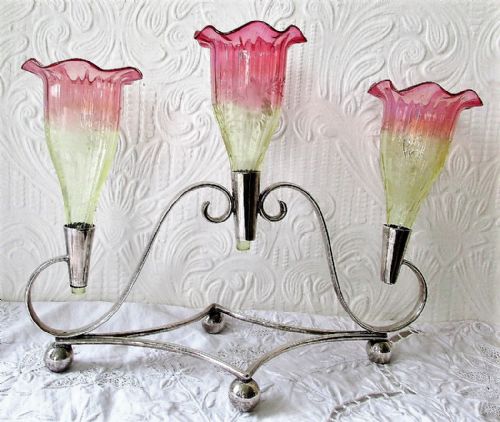
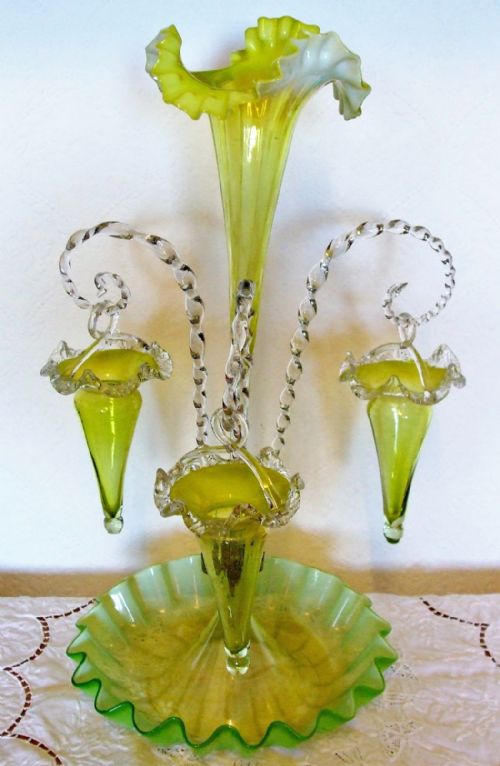
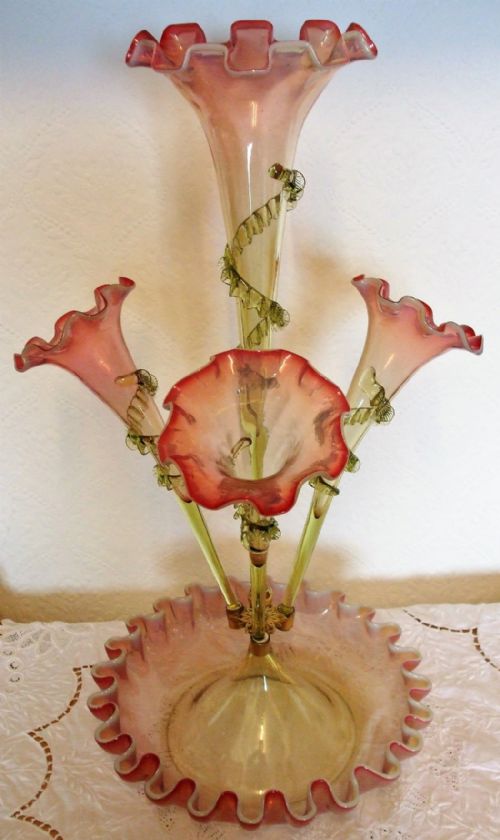
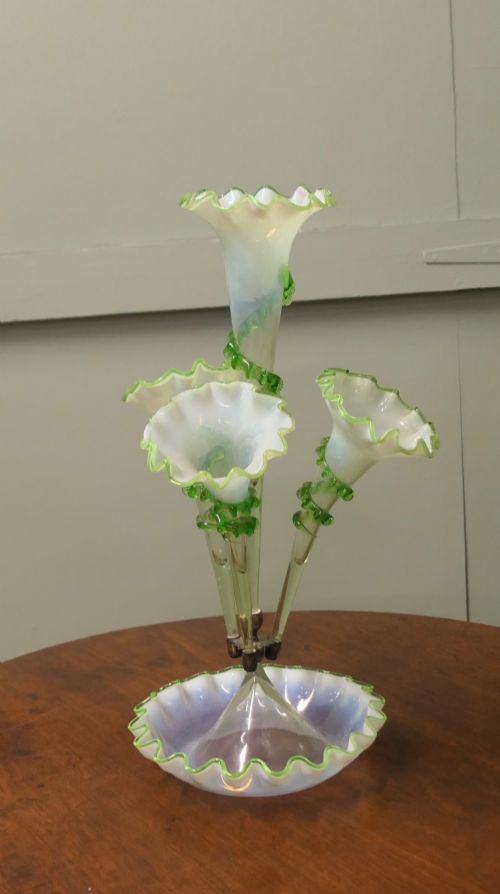
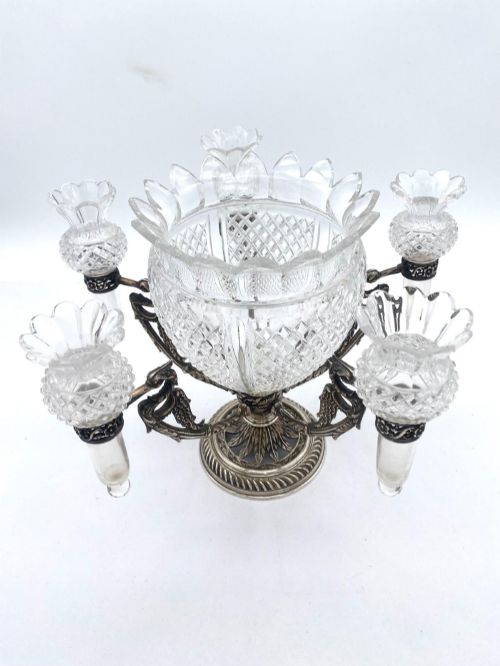
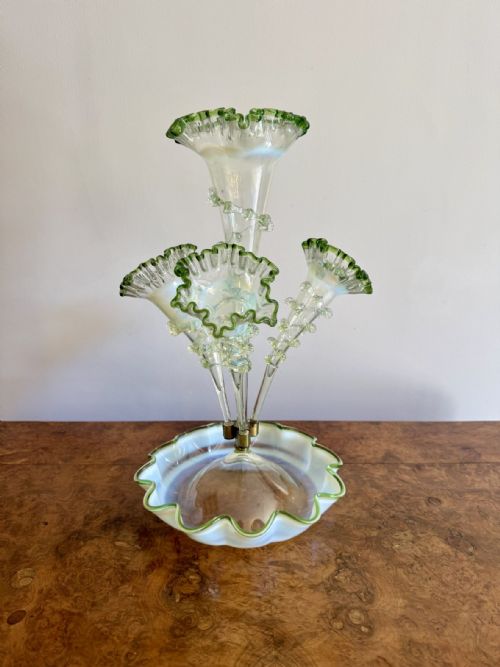
A victorian epergne centerpiece stands as a multi-tiered table decoration designed to hold fruit, sweets, or cut flowers. These dramatic arrangements typically comprise a central stand paired with smaller hanging baskets, flanking vases, or trumpets.
The pieces appearing on this page stem predominantly from the nineteenth century, spanning Victorian, Edwardian, and French nineteenth-century aesthetic traditions. English and French workshops dominate the selection, bringing together moulded glass and plated metals.
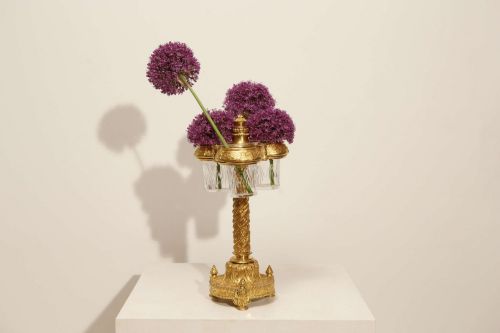
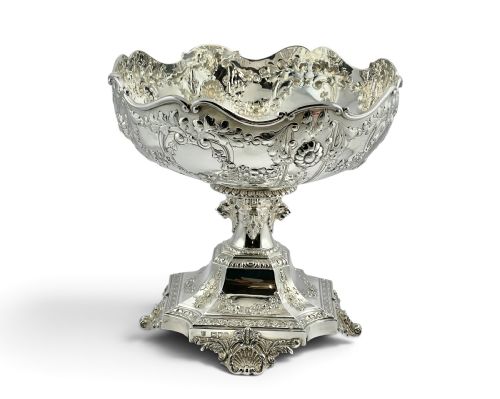
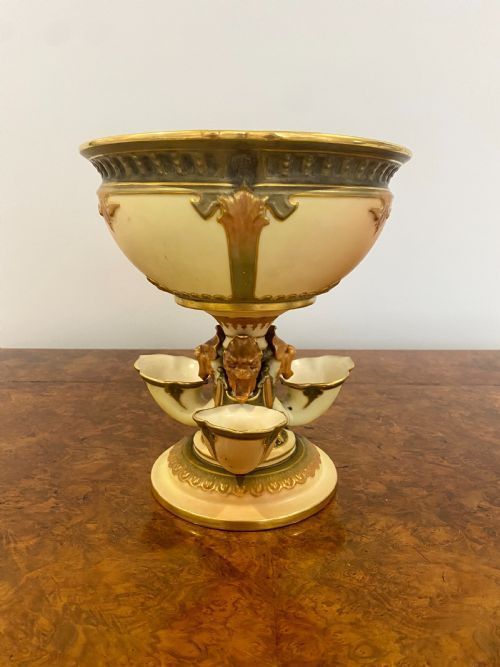
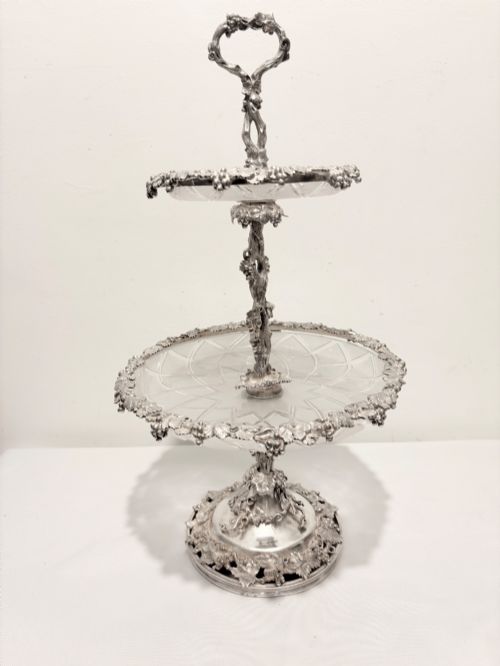
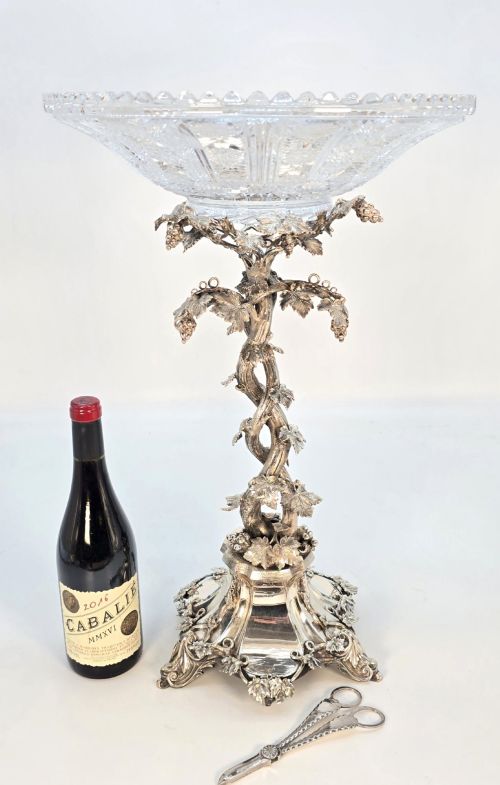
Most examples lean towards complex multi-trumpet glass designs, often featuring detachable hanging baskets suspended from silver plated arms. Simpler forms include single centrepiece bowls mounted on gilt bronze or silver plated stands.
Materials and Technique
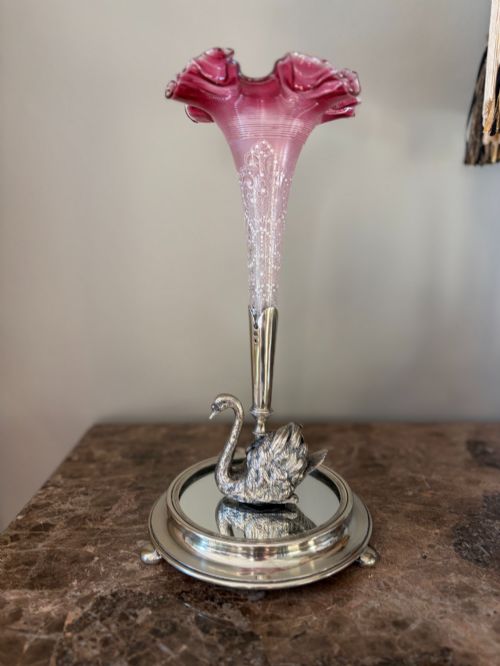
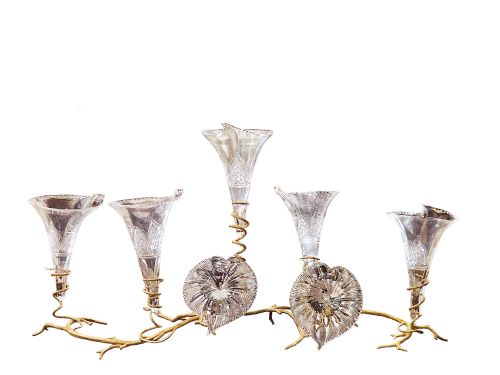
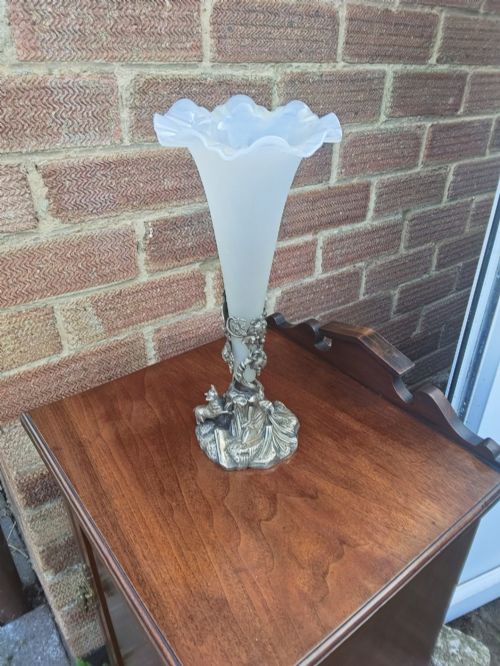
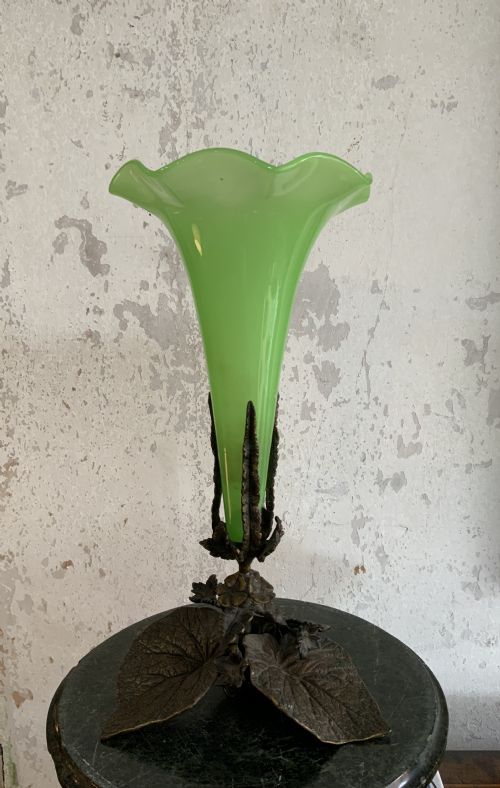
Makers constructed the structural frames of these objects using silver plate, EPNS, brass, white metal, and gilt bronze. Metalsmiths shaped mounts through casting and electroplating, frequently incorporating naturalistic motifs such as palm trees, swans, and foliate scrolls.
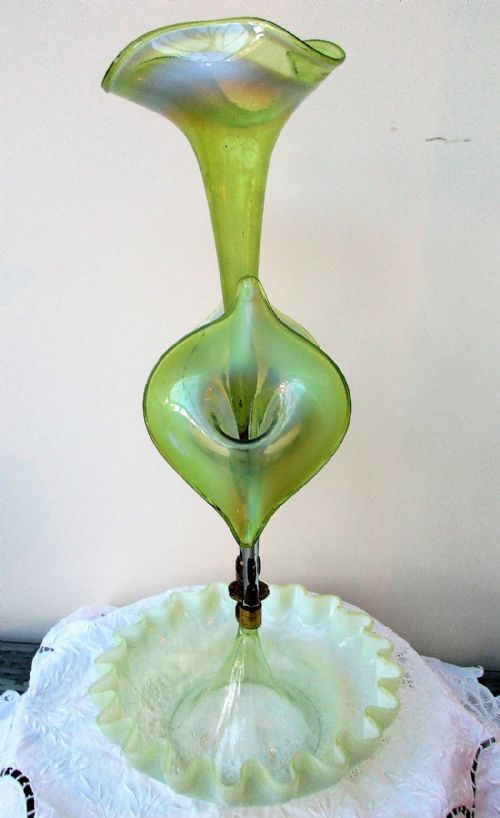
The glass components rely on hand-blown and hand-cut techniques, yielding striking hues of cranberry, green, opaline, and uranium glass. Artisans often added applied trailing, ruffled rims, and etched patterns to individual trumpets and baskets.
Victorian Epergne Centerpiece Retail Price Guide 2026
Typical asking prices for victorian epergne centerpiece among the pieces listed under this phrase on Sellingantiques today, from the lower quarter to the upper quarter. They describe what is for sale here now, not the wider market.
Craftsmanship and Proportion
Superior examples demonstrate harmonious proportion between the heavy metal base and the delicate glass trumpets it supports. Lesser pieces suffer from clunky metal casting or replacement glass elements that do not match the original collar fittings.
The refinement of the glasswork dictates the upper tier of the market, where skilled hand-blowing creates thin, perfectly balanced vessels with crisp optical clarity. Exceptional pieces also feature detailed silver plating and complex structural engineering from known manufacturers.
Royal Worcester·Elkington & Co·Osler·Fox & Grapes·Baccarat·Walker & Hall·James Deakin·James Dixon
The Victorian Epergne Centerpiece Glossary
- Epergne
- A large table centrepiece featuring multiple branching holders for fruit, flowers, or sweetmeats. These showpieces dominated grand dining tables during the Victorian era.
- Vaseline glass
- A transparent yellowish-green glass containing uranium dioxide that glows under ultraviolet light. It appears frequently in nineteenth-century decorative tableware.
- Cranberry glass
- A rich red glass produced by adding gold chloride to the molten batch. It is especially common in Victorian ornamental table glass.
- Silver plate
- A base metal such as copper or white metal coated with a thin layer of silver. This technique allowed Victorian makers to produce elaborate centrepieces at a lower cost than solid silver.
- Gilt bronze
- Bronze that has been coated with a fine layer of gold or gold amalgam. French makers utilised this technique extensively for nineteenth-century decorative mounts.
Victorian Epergne Centerpiece: Frequently Asked Questions
How were they used on the table?
These grand table dressings served as the visual focal point of a formal Victorian dining table, often placed directly in the centre.
Hosts used the branching trumpets for cut blooms and the lower dishes for fresh fruit or sweetmeats, creating a layered display that commanded attention.
How do I clean an antique epergne?
Cleaning requires removing all detachable glass trumpets and baskets from the metal base before washing them separately in warm, soapy water.
Avoid submerging silver plated or gilt bronze stands in water, wiping them instead with a soft cloth to preserve the finish.
How can I tell cranberry glass from ruby glass?
Cranberry glass achieves its distinct pinkish-red tone through the addition of gold, resulting in a warm translucency when held to the light.
Ruby glass often relies on copper or other agents and tends to appear denser and darker in colour compared to true Victorian cranberry ware.