



French Bronze Vases
When you search for french bronze vases, you uncover grand nineteenth-century decorative urns and classical vessels prized for their opulent metalwork and architectural presence.
French Bronze Vases
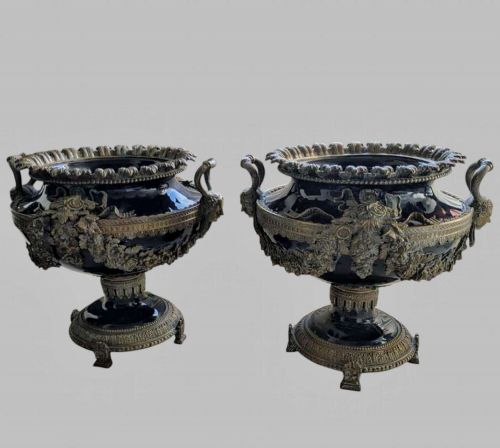
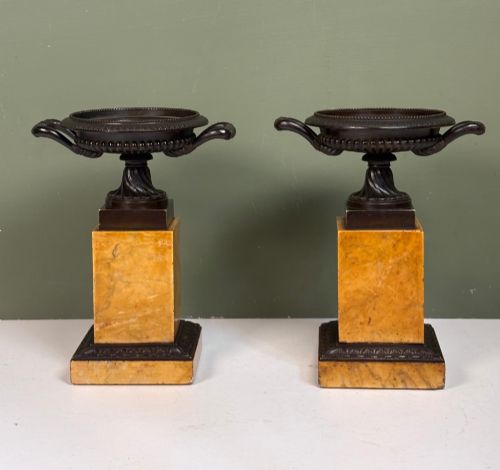
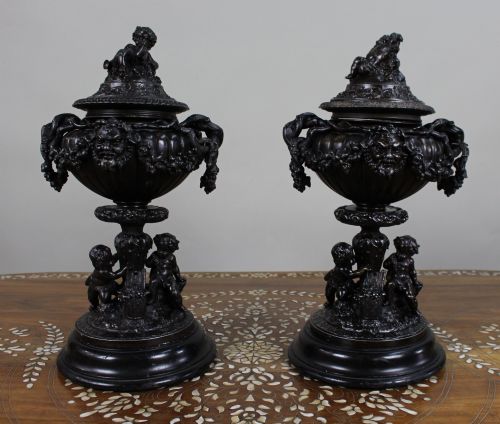
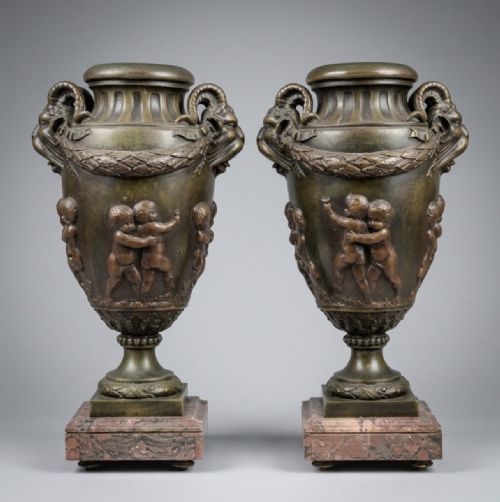
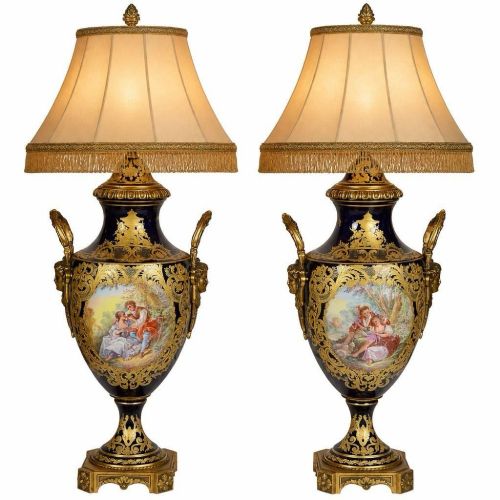
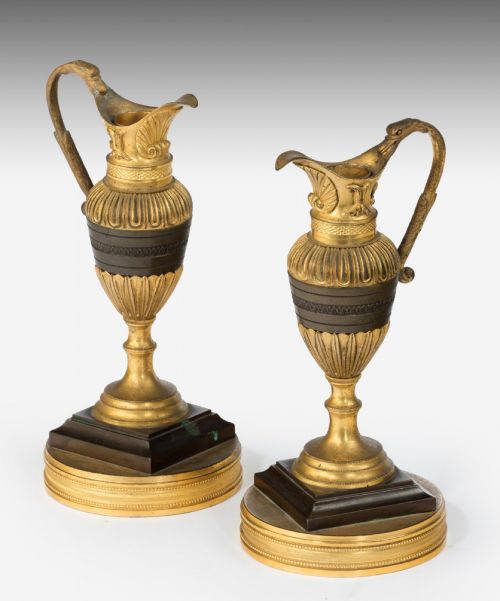
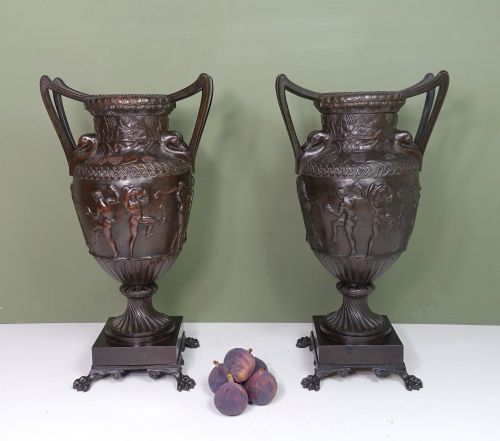
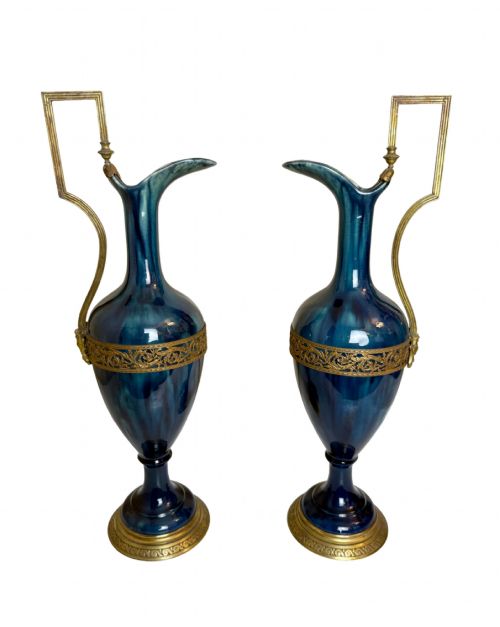
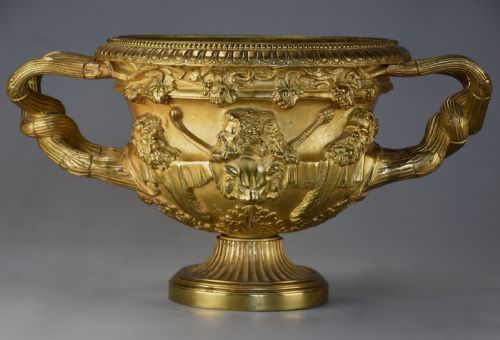
French bronze vases encompass nineteenth-century decorative urns, campana vessels, and classical ewers often paired with marble bases or ceramic bodies. You will frequently encounter matched pairs designed as mantel garnitures or grand decorative centerpieces.
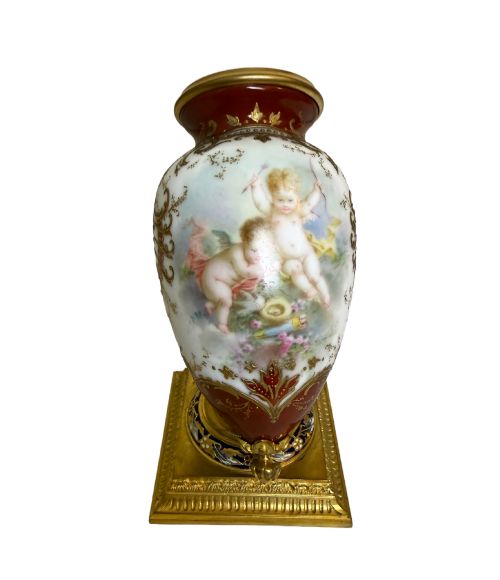
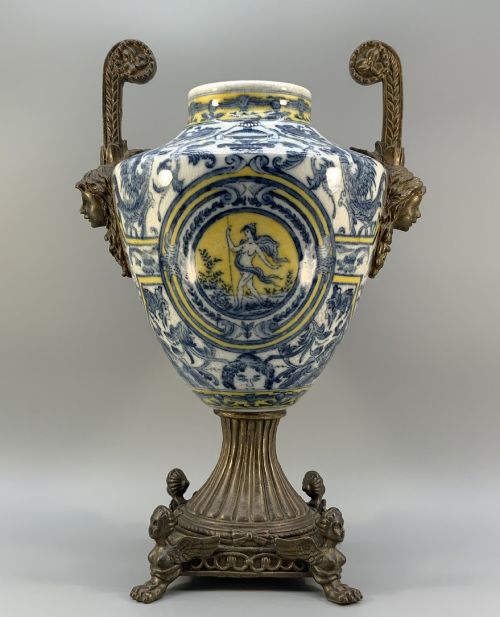
The selection ranges from neoclassical Grand Tour souvenirs and ornate Renaissance Revival ewers to fluid Art Nouveau figural pieces. Many incorporate porcelain bodies, including Sevres style ceramics, held by elaborate metal mounts.
Originating predominantly from French workshops during the 1800s, these objects reflect shifting historicist tastes from strict classical symmetry to lavish rococo revival and organic floral forms.
How they were made
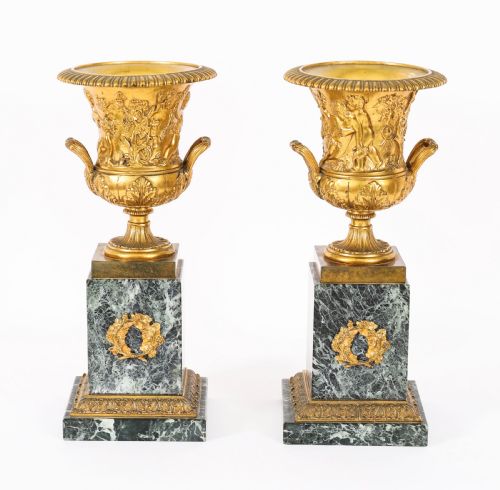
Foundries utilised traditional lost-wax or sand-casting techniques to shape the primary bronze and spelter structures, finishing the surfaces with fine hand-chasing and applied patinas. Ormolu elements achieved their brilliant golden lustre through mercury gilding or modern electroplating methods upon a bronze base.
Listings feature pieces spanning the eighteenth century through to the nineteenth century, including specific dates such as 1860, 1870, 1880, 1890, and 1900.
What varies in quality
The distinction between ordinary production and top-tier pieces rests entirely on the crispness of the casting and the depth of the subsequent hand-chasing. Superior examples exhibit sharply rendered facial expressions, distinct foliage, and clean joints where separate cast components meet.
Material integration also dictates merit, as heavier marbles, genuine fire-gilded ormolu, and hand-painted porcelain insert panels elevate an object far above simple spelter castings mounted on plain wooden or light stone plinths.
Charles Korschann
The French Bronze Vases Glossary
- Ormolu
- Gilt bronze produced by applying a finely ground high-carat gold mercury amalgam to a bronze object before heating. This technique creates a durable, warm golden surface found on many fine nineteenth-century French mounts.
- Campana
- An inverted bell-shaped vessel form derived from ancient Roman pottery. These classical urns frequently appear in nineteenth-century bronze with flared rims and twin scroll handles.
- Champleve
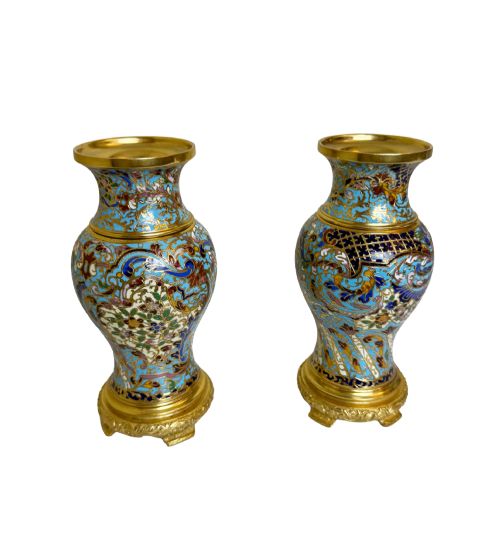
- An enamelling technique where troughs are gouged into the surface of a metal object and filled with vitreous enamel powder before firing. The resulting coloured patterns sit flush with the surrounding metal borders.
- Cassolette
- A decorative vase featuring a reversible lid that functions either as a closed urn or an incense burner with a pierced top. French makers often paired these with marble bases during the nineteenth century.
- Spelter
- A zinc alloy frequently utilised as a less expensive substitute for bronze during the nineteenth century. It accepts patination and metallic paint finishes well, though it remains softer and lighter than true bronze.
French Bronze Vases: Frequently Asked Questions
What is the difference between bronze and spelter?
Bronze is a heavy alloy of copper and tin that takes fine detail and holds a deep patina over centuries. Spelter is a softer, lighter zinc-based metal that nineteenth-century makers frequently used as a cost-effective alternative.
You can often distinguish them by weight and by examining the underside or interior for the greyish metal tone characteristic of zinc under worn finishes.
Were these vases meant to hold water?
Most French bronze and ceramic vases served strictly as decorative garnitures, mantel ornaments, or architectural table centrepieces rather than functional flower vessels. Many feature internal construction rods, delicate enamel work, or porous ceramic bodies that would be damaged by moisture.
It is safer to use them as dry decorative objects or display them independently on their marble plinths.
How do I date a nineteenth-century French bronze?
Dating relies upon stylistic cues, such as the strict symmetry of Charles X neoclassical pieces, the ornate Revival motifs of the mid-Victorian era, or the sinuous plant forms of Art Nouveau. Maker marks, foundry stamps, and the construction methods of internal assembly screws also provide clues.
Examining the wear patterns on the base and the composition of the marble plinth helps narrow the production window.
What is a Grand Tour vase?
Grand Tour vases are miniature or reduced-scale bronze and marble copies of famous ancient monuments and archaeological discoveries in Italy. Wealthy nineteenth-century travellers purchased them as sophisticated souvenirs to display their classical education.
Famous ancient models, such as the Warwick Vase, were frequently reproduced by French foundries in various sizes.