
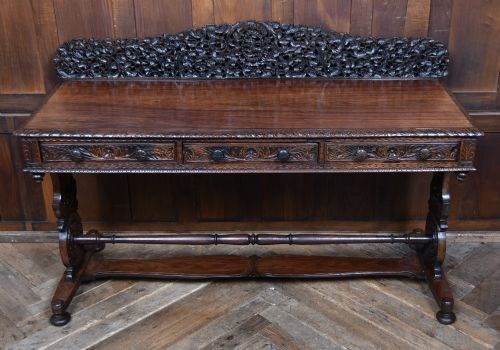
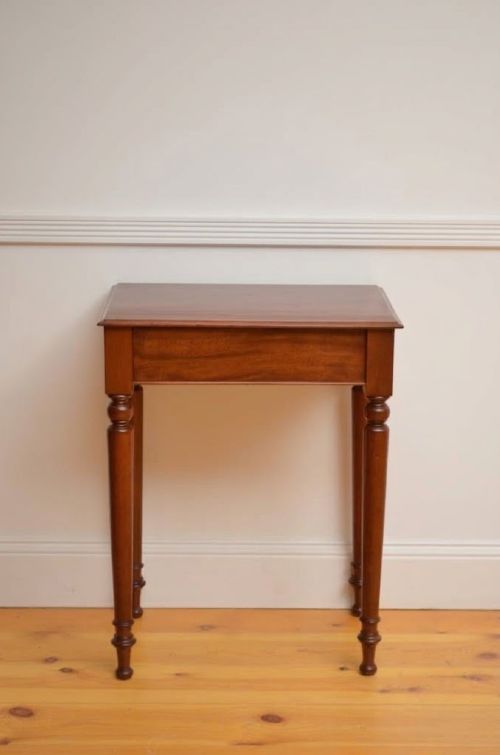
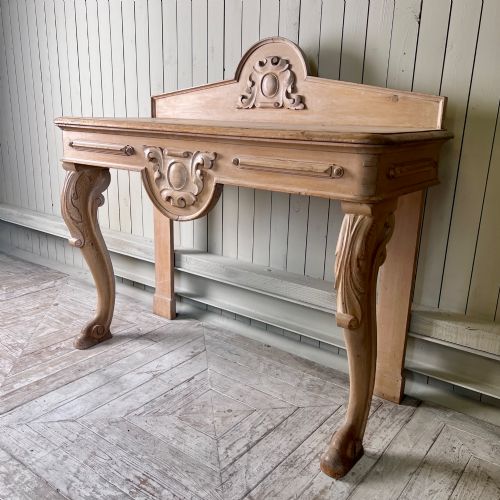
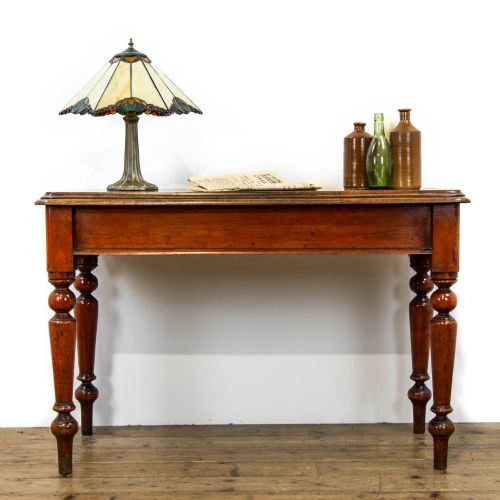


Victorian Entryway Console
A victorian entryway console is a practical hall furnishing designed to anchor a narrow corridor with timber and marble.
Victorian Entryway Console
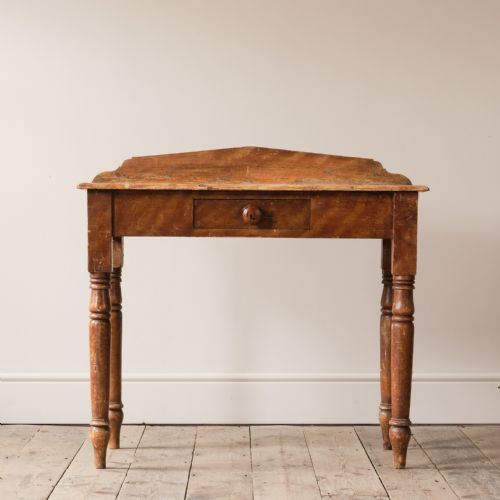
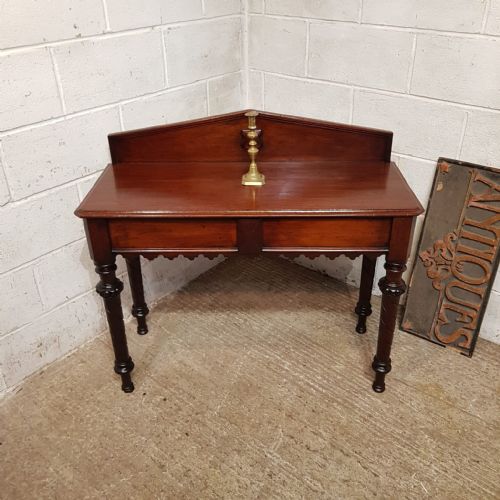
A victorian entryway console encompasses console tables, hall tables, hall stands and wall mirrors made during the nineteenth century. These furnishings served to greet visitors and hold hats, sticks or visiting cards near the front door.
The version most commonly met on this page is the mahogany console table, often paired with a marble top or mirror back. Oak and walnut examples also appear frequently, spanning forms from simple country hall tables to elaborate carved designs.
How they were made
Cabinet makers utilised dense hardwoods such as mahogany, oak, walnut and rosewood to construct these substantial hallway pieces. Surfaces frequently incorporate inset marble slabs, glass mirrors and brass fittings alongside original paint.
Construction methods range from straightforward joinery on country oak pieces to complex scroll carving, bobbin turning and gilt finishing on formal reception tables.
Certain oak hall tables feature carved Green Man faces glaring out from the timber to ward off unwelcome visitors.
What varies in quality
The standard of a victorian entryway console depends largely on the selection of timber and the ambition of the carving. Figured grains like flame mahogany and burr walnut mark out superior examples.
Design complexity also separates pieces, with sculptural elements such as Green Man motifs, marble tops and integrated mirror backs indicating higher workshop production.
The Victorian Entryway Console Glossary
- Console table
- A table designed to stand against a wall, frequently supported by brackets or console legs rather than four independent posts.
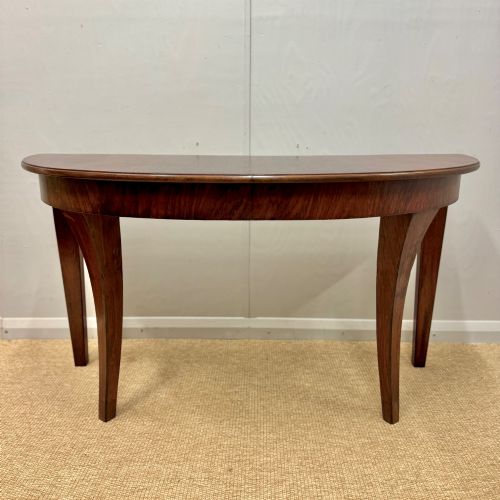
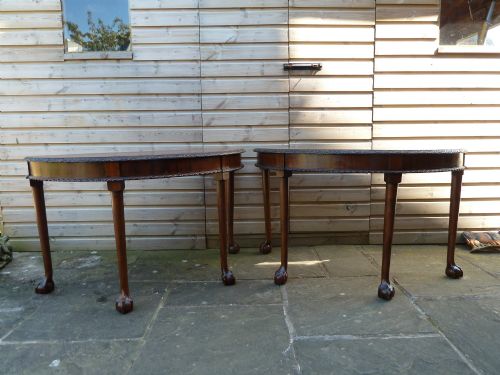
- Demi lune
- A half-moon shape common in the tops and frames of smaller hallway tables designed for tight spaces.
- Hall stand
- A tall hallway furnishing combining a table surface, coat hooks and a central mirror for everyday use.
- Serpentine
- A gently undulating curved front line characteristic of finer nineteenth-century cabinet work.
Victorian Entryway Console: Frequently Asked Questions
What is a victorian entryway console used for?
These furnishings were placed in entrance halls to provide a surface for dropping keys, post and calling cards upon entering the home. Many incorporated hooks and umbrella wells to manage outdoor garments.
Today they serve a similar functional purpose in modern hallways while establishing a period aesthetic right inside the front door.
How do I identify a hall stand?
A hall stand differs from a standard console table by rising vertically to incorporate clothes hooks, hat pegs and usually a mirror. They often include lower trays or wells specifically for umbrellas and walking sticks.
They represent the larger end of entryway furniture from this period, built to handle heavy outdoor wear.
What woods were used?
Makers relied heavily on mahogany, oak and walnut for these hallway furnishings. Figured varieties like flame mahogany and burr walnut appear on more decorative pieces.
Pine and other softer timbers were also employed, frequently found beneath original paint or used in country house variants.
Are marble tops common?
Marble inset tops appear regularly on nineteenth-century console tables intended for formal reception spaces. They provided a durable, cool surface that resisted moisture from wet items.
White and veined marble slabs are typical, paired with mahogany or walnut frames.