
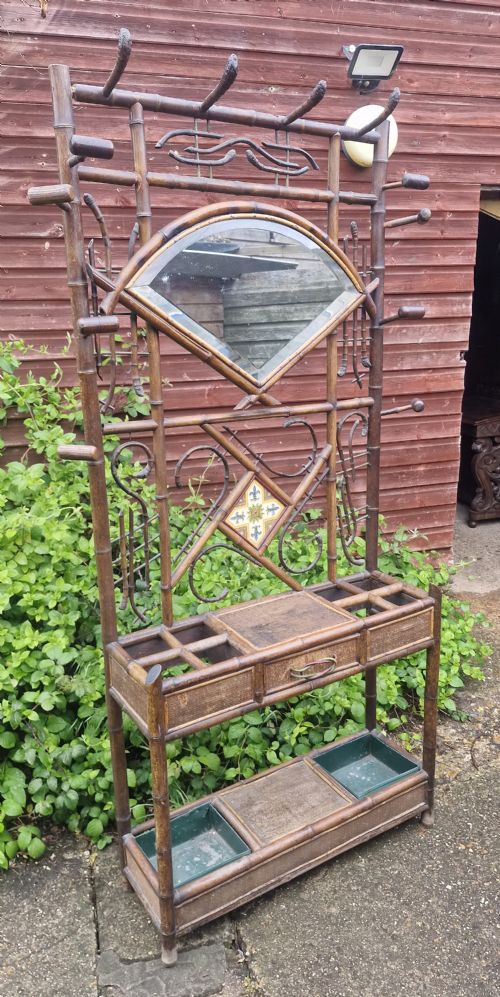
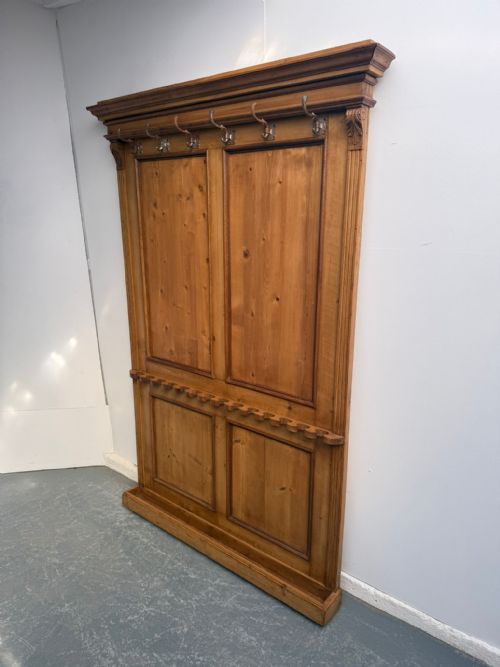


Victorian Entry Stand
A victorian entry stand anchors a hallway with practical timber architecture designed to catch hats, coats, sticks and umbrellas.
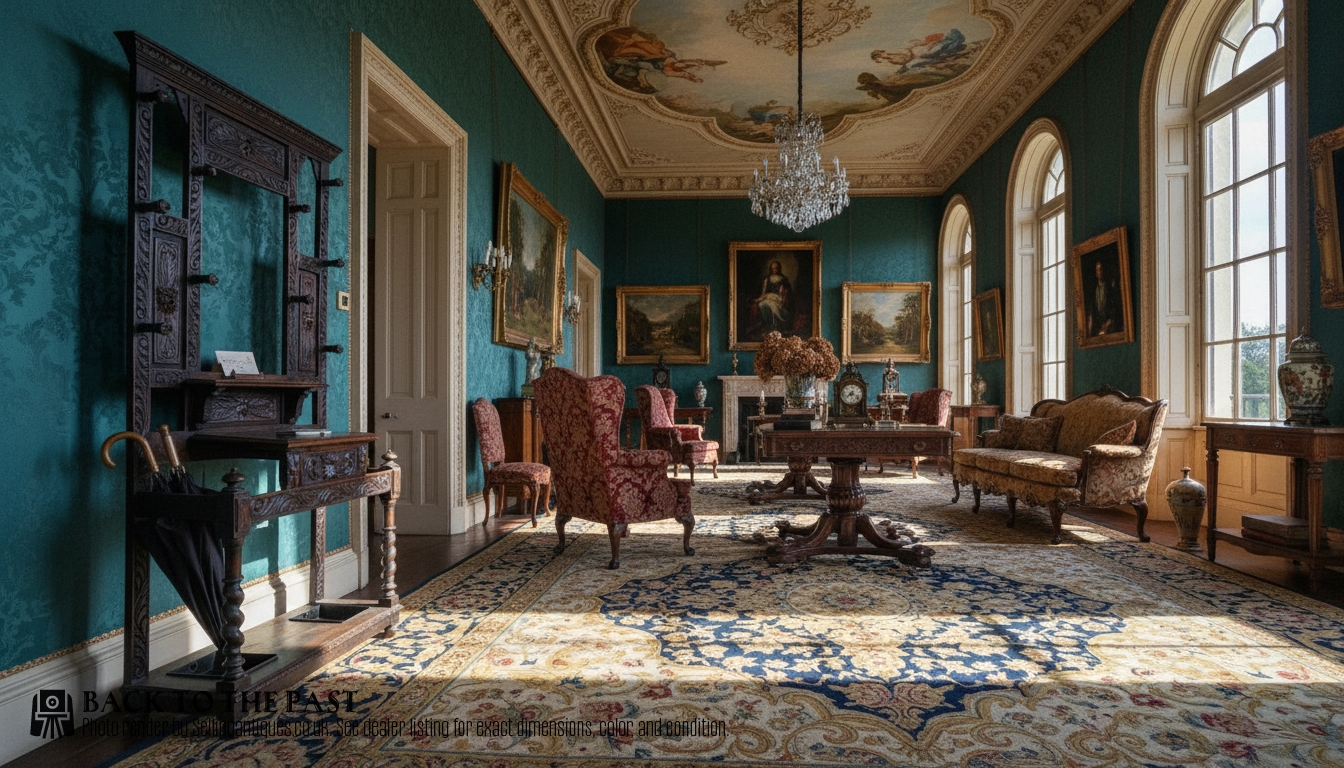
Victorian Entry Stand
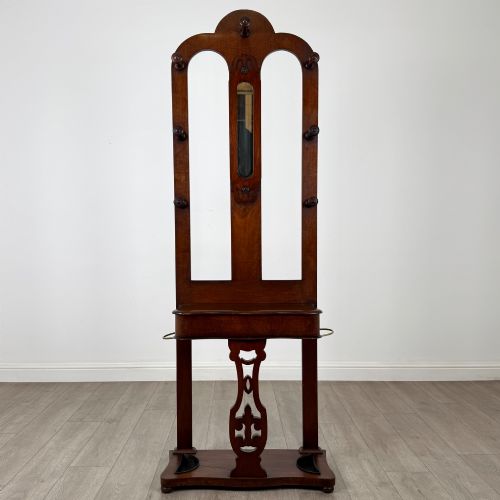
When you search for a victorian entry stand, you encounter substantial hallway furniture that merges umbrella storage, coat hooks and central mirrors into a single standing piece. These items appear across the nineteenth century in various configurations, ranging from narrow standing frames to broad cabinet pieces.
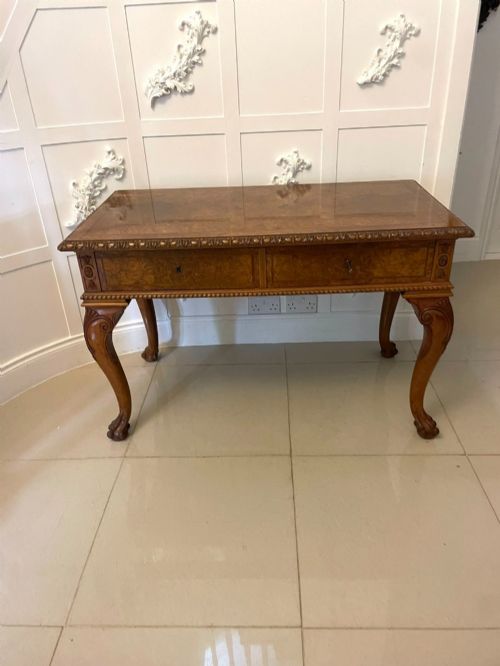
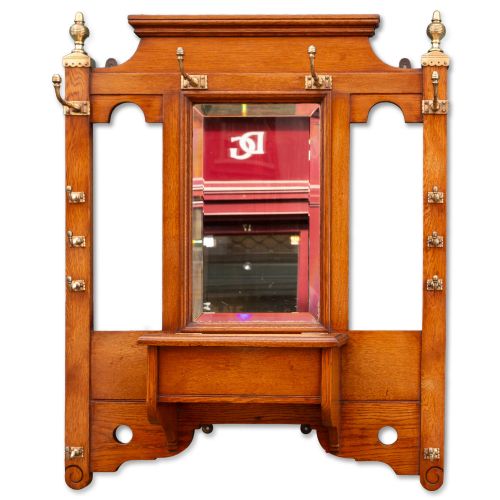
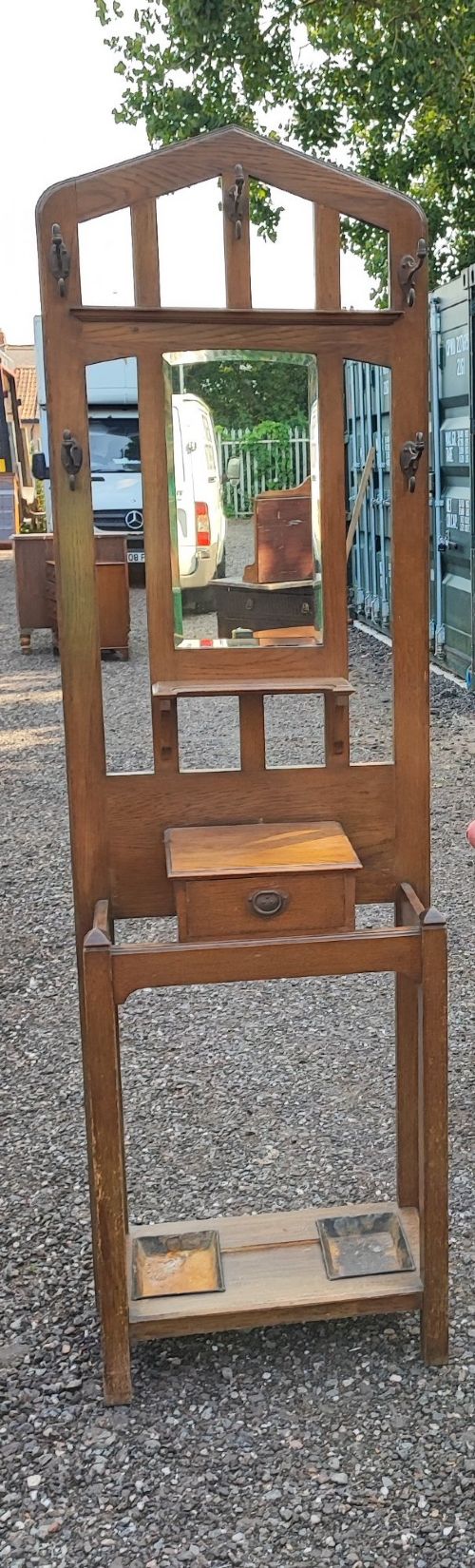
The versions most commonly met on this page are carved oak hall stands alongside mahogany designs, often incorporating cast iron drip pans and bevelled mirror plates. Alongside these traditional standing forms, you find console tables, wall-mounted coat racks and bamboo umbrella stands spanning the Victorian and Edwardian eras.
Makers utilised these pieces to furnish domestic hallways efficiently, combining hat pegs and stick holders within a compact footprint. The material palette draws heavily on native and imported timbers, supplemented by metal hooks and marble surfaces.
Materials and Construction Techniques
Cabinetmakers built these pieces primarily from solid hardwoods like oak, walnut, mahogany and pine, frequently applying intricate relief carving to the crests and panels. Turned wooden pegs, brass coat hooks and cast iron frameworks provide the functional hardware for hanging garments and containing wet umbrellas.
Many examples incorporate cast iron components, particularly from foundries such as Coalbrookdale, where structural frames or stick stands were cast with openwork patterns. Integrated mirror plates, sometimes featuring original bevelling, are secured into carved wooden surrounds, while marble tops appear on console variants.
Distinctions in Quality and Make
The distinction between standard domestic hall furniture and finer examples lies in the depth of the timber carving and the selection of figured woods like burr walnut or select mahogany. Higher-quality pieces display crisp detail in motifs such as Greenman masks or foliate scrolls, executed by skilled hands rather than routine production methods.
Structural integrity also separates the grades, visible in the stability of the central mirror frame and the robust mounting of brass and iron hardware. Finer stands utilise substantial timber sections that prevent wobble when heavy winter coats and walking sticks load the framework.
The Victorian Entry Stand Glossary
- Hall stand
- A piece of hallway furniture combining coat hooks, a mirror and umbrella receptacles. These items served as the primary greeting point for visitors in nineteenth-century homes.
- Console table
- A table designed to fit flush against a wall, frequently topped with marble or figured timber. They often accompany mirrors in narrow entrance spaces.
- Portmanteau
- A large hallway piece functioning as a combined wardrobe stand, mirror and storage unit for travel gear. These imposing pieces often dominated grand domestic entryways.
- Coalbrookdale
- A prominent nineteenth-century iron foundry known for producing decorative cast iron framework. Their output includes durable stands and structural umbrella holders.
- Bentwood
- Wood softened by steam and bent into curved structural components. This technique produced lightweight, resilient frameworks for late-period hall stands.
Victorian Entry Stand: Frequently Asked Questions
What is a hall stand?
A hall stand is a tall hallway furnishing designed to hold outdoor wear, featuring upright panels fitted with coat hooks, hat pegs and umbrella wells.
Most variations also incorporate a central mirror and a small shelf or compartment for gloves and visiting cards.
How do you date oak hall stands?
Dating oak hall stands involves examining the depth of the timber carving, the construction joints and the style of the hardware. Pieces from the middle of the nineteenth century typically display heavier proportions and hand-cut joinery compared to later items.
The presence of specific decorative motifs, such as Aesthetic Movement stylised leaves or Gothic revival arches, also helps pinpoint the manufacturing era.
Where were stick stands placed?
Stick stands and umbrella holders stood directly inside the front entrance of a house to catch dripping water from wet weather gear. They were integrated into the base of larger hall stands or placed as standalone cast iron or wooden receptacles.
Metal drip trays beneath the umbrella slots protected wooden floorboards from moisture damage.
Are these stands suitable for small hallways?
While many nineteenth-century hall stands were built to grand proportions for large entrance halls, narrow wall-mounted coat racks and compact console tables provide similar utility in restricted spaces. Slim bamboo or bentwood designs also offer a lighter visual footprint.
Careful measurement of hallway width ensures the protruding coat pegs and umbrella wells do not obstruct passage.