


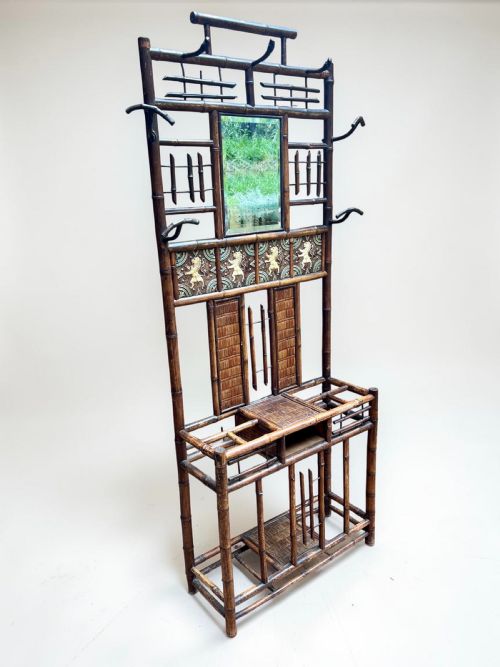

Entryway Hat Tree
An entryway hat tree brings order to the hall, holding coats, hats and umbrellas on sturdy pegs while anchoring the space with period character.
Entryway Hat Tree
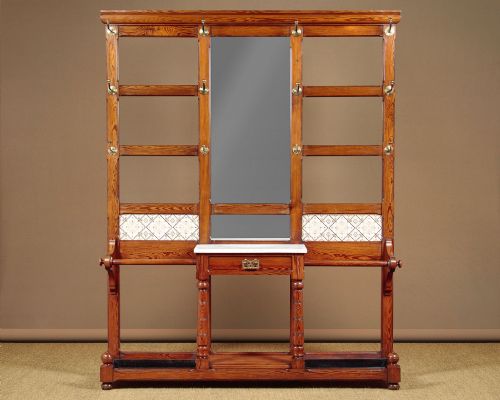
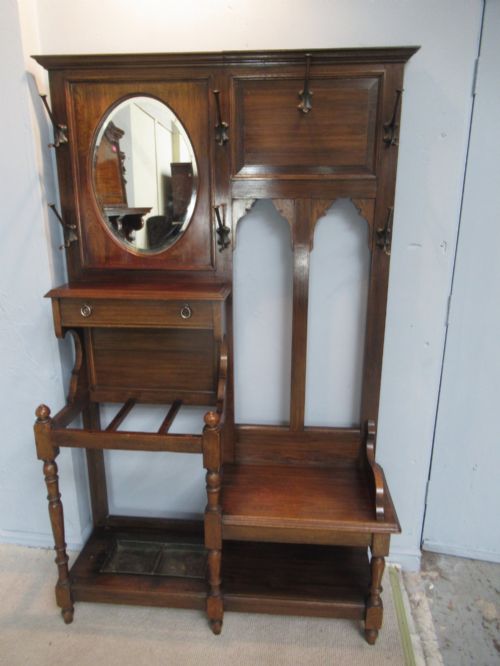
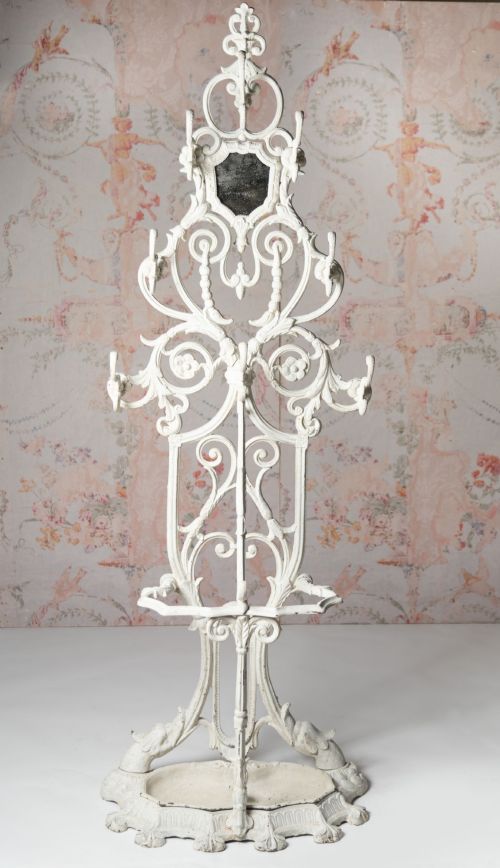
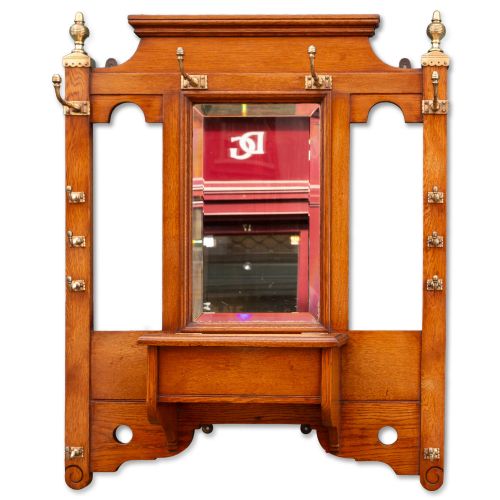
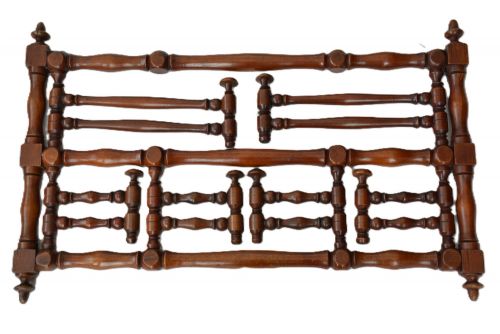
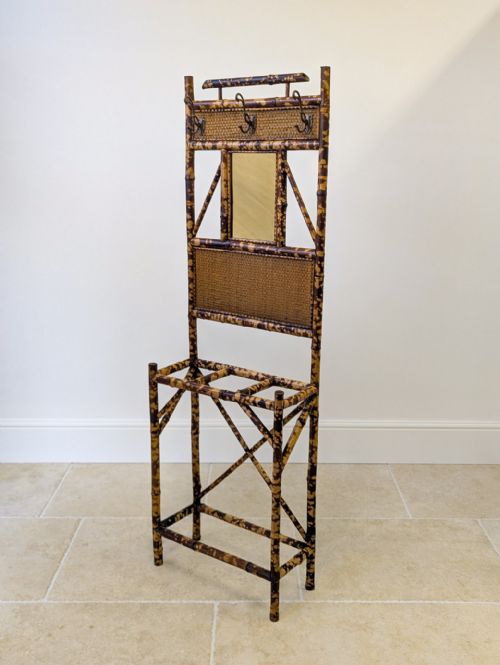
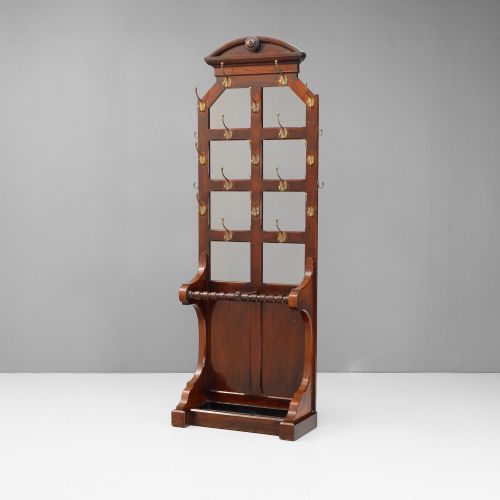
When you search for an entryway hat tree, you encounter pieces designed to manage outdoor garments as soon as people step inside the house. The selection spans substantial freestanding items with integrated mirrors and umbrella trays down to wall-mounted racks with brass hooks.
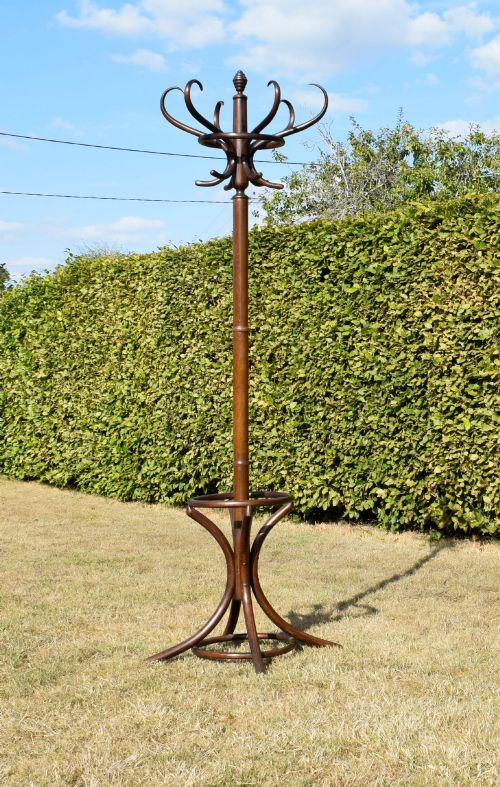
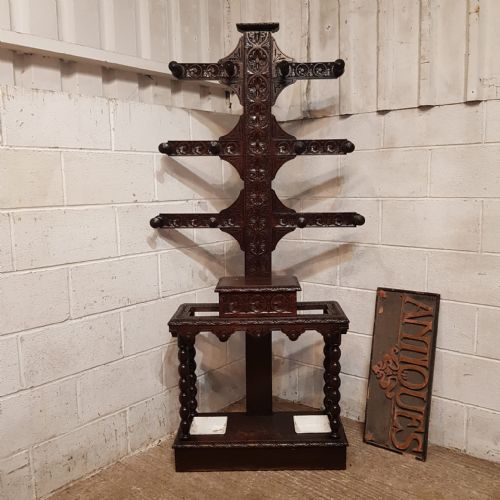
Most examples hail from the Victorian and Edwardian eras, with oak, mahogany and bentwood forming the backbone of the inventory. Makers configured these pieces for domestic utility, often combining coat hooks, umbrella wells and central panels into a single heavy piece of furniture.
How they were made
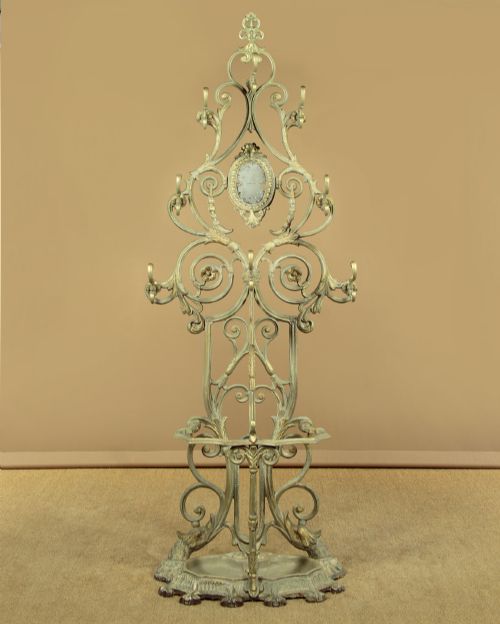
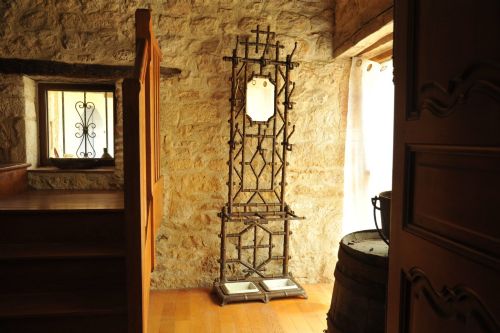
Cabinetmakers utilised solid timbers like oak and mahogany alongside beech for bentwood frames, shaping sturdy uprights to bear heavy winter garments. Iron foundries cast heavy structural elements in iron, sometimes forming faux bamboo or intricate openwork patterns designed to resist moisture from wet umbrellas.
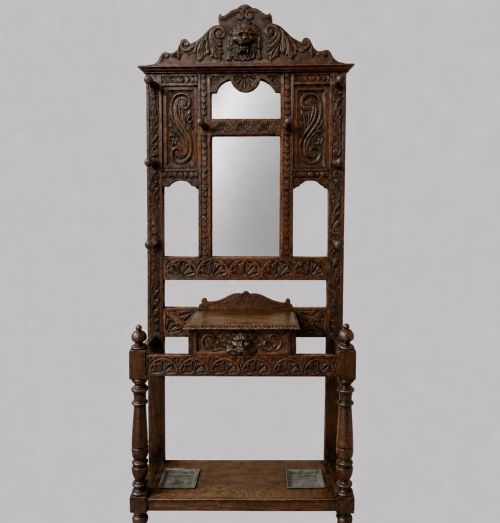
Carving, turning and steam-bending defined the construction techniques of the period, with master craftsmen applying detailed ornamentation like Green Man motifs or floral Art Nouveau lines. Brass fittings, mirrors and marble inserts were integrated securely into the wooden frames to withstand daily household use.
A carved Black Forest bear stands ready to hold your walking stick.
What varies in quality
The distinction between standard utility items and finer examples lies in the ambition of the timber selection and the depth of the carving. Golden oak, highly figured mahogany and substantial walnut elevate a piece beyond basic hallway furniture.
Structural complexity also dictates standing, as pieces featuring bevelled mirrors, cast brass hooks and integrated drip pans represent more elaborate workshop production than simple wall-mounted rails.
Falkirk Foundry·Fischel
The Entryway Hat Tree Glossary
- Hallstand
- A piece of hallway furniture combining coat hooks, a hat shelf, a mirror and umbrella stands. These large items dominated Victorian and Edwardian entryways.
- Bentwood
- Wood softened by steam and bent into curved structural shapes. This technique produced lightweight yet resilient coat stands.
- Faux bamboo
- Wood or cast iron carved, turned or moulded to imitate natural bamboo stalks. It reflects the nineteenth-century fascination with exotic natural forms.
- Aesthetic Movement
- A late nineteenth-century design style emphasising visual beauty over narrative function. Pieces from this movement often utilise bamboo and Japonisme motifs.
Entryway Hat Tree: Frequently Asked Questions
What is an entryway hat tree?
An entryway hat tree is a piece of furniture designed to hold hats, coats and umbrellas in a hallway or lobby.
They appear as both large freestanding wooden stands with mirrors and compact wall-mounted racks with metal hooks.
How were hall stands used?
Households used them to receive guests and store outdoor clothing immediately upon entering the home.
The central mirror allowed last-minute adjustments, while metal trays caught rainwater from dripping umbrellas.
How do I date a hat stand?
Dating relies on stylistic clues, materials and construction methods associated with specific decades.
Victorian pieces often feature heavy oak or mahogany carving, whereas Edwardian and later examples lean towards lighter frames or bentwood.
Where should I place one?
These pieces suit entrance halls, boot rooms and corridors where coats and hats accumulate.
Freestanding versions require sufficient wall space and floor clearance to balance their height and utility.